
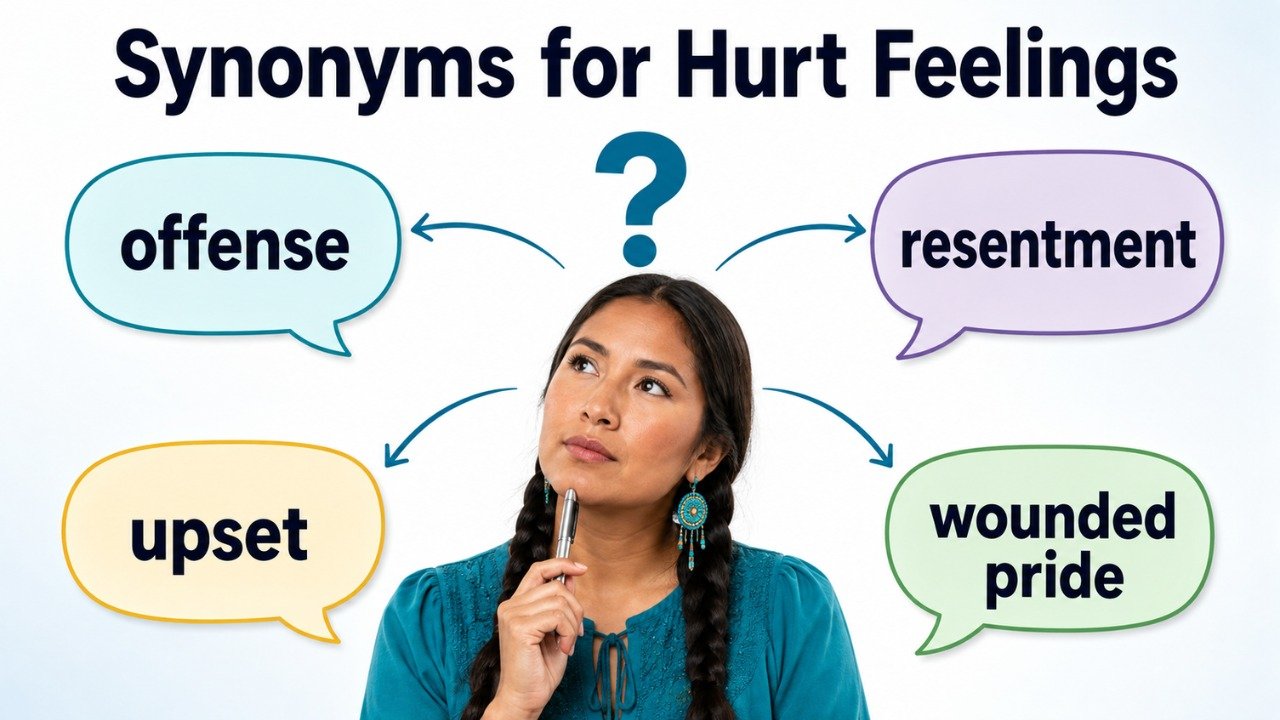
Quick Answer: Common synonyms for hurt feelings include emotional pain, offense, distress, upset, sadness, wounded feelings, resentment, disappointment, heartache, and wounded pride. The best choice depends on context. Use emotional pain for a broad and serious description, offense when someone’s words or actions feel insulting, distress for stronger emotional suffering, upset for everyday conversation, resentment for lasting hurt mixed with anger, and wounded pride when the pain involves dignity or self respect.
Pronunciation and Word Details
Word: Hurt feelings.
Pronunciation: /hɜːrt ˈfiːlɪŋz/
Part of Speech: Plural noun phrase.
Meaning: Emotional pain or sadness caused by something another person says, does, or fails to do.
US Pronunciation:
UK Pronunciation:
What Does “Hurt Feelings” Mean?
Hurt feelings means emotional pain, sadness, embarrassment, or offense caused by another person’s words, actions, attitude, rejection, or lack of consideration.
The phrase is a plural noun phrase and is commonly used when someone feels personally wounded rather than physically injured. A careless comment, broken promise, criticism, exclusion, rejection, or insensitive joke can all cause hurt feelings.
In everyday conversation, the phrase often describes emotional discomfort that may be temporary.
Example: Her hurt feelings faded after they talked openly about the misunderstanding.
It can also describe deeper emotional pain when the situation involves trust, friendship, family, respect, or personal dignity.
Example: Years of unresolved hurt feelings created distance between the two relatives.
Meaning, Tone, and Context of “Hurt Feelings”
Hurt feelings is a common, neutral, and conversational expression. It communicates emotional pain without sounding overly dramatic or highly technical.
Conversational Tone: The phrase works naturally in ordinary discussions about relationships, misunderstandings, criticism, and conflict.
Example: I did not mean to cause any hurt feelings.
Emotional Tone: It can express sadness, disappointment, embarrassment, rejection, or offense depending on the situation.
Example: His dismissive response left her with hurt feelings.
Polite Tone: The phrase is useful when discussing conflict carefully because it can describe emotional harm without directly accusing someone of cruelty.
Example: We should discuss the hurt feelings caused by the misunderstanding.
Formal Context: In formal writing, more precise alternatives such as emotional distress, offense, resentment, or disappointment may sometimes communicate the exact emotion more effectively.
Example: The repeated criticism caused considerable emotional distress.
Relationship Context: Hurt feelings commonly appears in discussions about friendships, families, romantic relationships, workplaces, and other situations involving trust and respect.
When and How to Use “Hurt Feelings”
For Emotional Pain: Use hurt feelings when another person’s behavior causes sadness or personal emotional discomfort.
Example: The harsh criticism caused hurt feelings among several members of the group.
For Personal Offense: Use it when a remark or action feels insulting, disrespectful, or insensitive.
Example: His joke led to hurt feelings because it touched on a sensitive subject.
For Rejection: The phrase can describe the emotional effect of being excluded, ignored, or rejected.
Example: Being left out of the invitation caused hurt feelings.
For Misunderstandings: Use it when people unintentionally upset one another through poor communication.
Example: A simple misunderstanding created hurt feelings on both sides.
For Relationship Conflict: The expression works well when describing emotional tension between people who care about each other.
Example: They talked openly about the hurt feelings that had damaged their friendship.
For Apologies: Hurt feelings is useful when acknowledging the emotional effect of your behavior.
Example: I apologize for the hurt feelings my comment caused.
Best Synonyms for Hurt Feelings
Emotional Pain: Inner suffering caused by rejection, criticism, loss, or another upsetting experience.
Example: The rejection caused emotional pain that took time to overcome.
Offense: A feeling of being insulted, disrespected, or personally slighted.
Example: She took offense at the dismissive remark.
Distress: Strong emotional discomfort, worry, sadness, or suffering.
Example: The argument caused considerable distress.
Upset: A common conversational word for emotional disturbance or unhappiness.
Example: There was understandable upset after the disappointing conversation.
Wounded Feelings: Emotional pain caused by a remark, action, or personal slight.
Example: His apology helped soothe her wounded feelings.
Resentment: Lasting hurt mixed with anger because someone feels unfairly treated.
Example: Unresolved resentment gradually damaged their relationship.
Disappointment: Sadness caused when reality does not meet hopes, expectations, or promises.
Example: She felt deep disappointment when he failed to keep his promise.
Heartache: Deep emotional sadness, especially involving relationships or loss.
Example: Their separation brought considerable heartache.
Wounded Pride: Emotional pain caused by damage to a person’s dignity, confidence, or sense of importance.
Example: His wounded pride made it difficult for him to accept the criticism.
Emotional Distress: Significant emotional suffering, often stronger and more formal than hurt feelings.
Example: The ongoing conflict caused emotional distress for everyone involved.
50 Synonyms for Hurt Feelings with Short Meanings
- Emotional Pain: Inner suffering caused by an upsetting experience.
- Offense: A feeling of being insulted or disrespected.
- Distress: Strong emotional discomfort or suffering.
- Upset: Emotional disturbance or unhappiness.
- Sadness: Unhappiness caused by disappointment or pain.
- Wounded Feelings: Feelings emotionally injured by words or actions.
- Bruised Feelings: Mild emotional pain caused by criticism or rejection.
- Injured Feelings: Personal emotions damaged by insensitive treatment.
- Emotional Hurt: Pain experienced emotionally rather than physically.
- Emotional Distress: Noticeable or serious emotional suffering.
- Emotional Upset: A state of being emotionally troubled.
- Heartache: Deep sadness involving relationships, rejection, or loss.
- Sorrow: Deep and often lasting sadness.
- Disappointment: Sadness when expectations are not fulfilled.
- Resentment: Lasting hurt mixed with anger.
- Bitterness: Persistent resentment after unfair or painful treatment.
- Anguish: Severe emotional suffering.
- Humiliation: Pain caused by embarrassment or loss of dignity.
- Embarrassment: Discomfort caused by feeling exposed or foolish.
- Indignation: Anger and hurt caused by perceived unfairness.
- Displeasure: Mild unhappiness or dissatisfaction.
- Irritation: Annoyance that may accompany emotional hurt.
- Grievance: A feeling that one has been treated unfairly.
- Personal Offense: Hurt caused by taking something as insulting.
- Personal Hurt: Emotional pain experienced on an individual level.
- Inner Pain: Emotional suffering felt privately.
- Inner Hurt: Personal emotional discomfort or sadness.
- Emotional Wound: Lasting emotional damage caused by painful treatment.
- Wounded Emotions: Feelings damaged by rejection or criticism.
- Bruised Emotions: Emotional sensitivity after an upsetting experience.
- Wounded Pride: Hurt involving dignity or self respect.
- Bruised Pride: Mild damage to confidence or dignity.
- Hurt Pride: Emotional pain caused by embarrassment or criticism.
- Wounded Ego: Hurt caused when confidence or self importance is challenged.
- Rejection Pain: Emotional hurt caused by being refused or excluded.
- Feeling Slighted: Feeling ignored, undervalued, or insulted.
- Feeling Offended: Experiencing emotional discomfort because of perceived disrespect.
- Feeling Insulted: Feeling hurt because words or actions seem disrespectful.
- Feeling Rejected: Experiencing pain from exclusion or refusal.
- Feeling Unappreciated: Feeling hurt because effort or value is not recognized.
- Feeling Overlooked: Feeling hurt because one is ignored or forgotten.
- Emotional Soreness: Lingering sensitivity after an upsetting experience.
- Emotional Sensitivity: Increased vulnerability to upsetting words or actions.
- Painful Feelings: Unpleasant emotions caused by a difficult experience.
- Lingering Hurt: Emotional pain that continues over time.
- Deep Hurt: Strong and meaningful emotional pain.
- Personal Distress: Emotional suffering experienced because of a personal situation.
- Emotional Discomfort: Mild emotional uneasiness or pain.
- Aggrievement: A feeling of having been wronged or treated unfairly.
- Mortification: Intense embarrassment that causes emotional pain.
Read Also:
Synonyms for Disdain
Synonyms for Hurt Feelings by Context
When Hurt Feelings Means Emotional Pain
Emotional pain is one of the broadest replacements for hurt feelings. It works especially well when the experience feels deeper or more serious.
Useful alternatives include emotional hurt, inner pain, deep hurt, heartache, anguish, and emotional distress.
Example: The broken promise caused emotional pain that lasted for weeks.
Example: Her dismissive behavior created deep hurt within the family.
When Hurt Feelings Means Being Offended
When the emotional pain comes from an insulting or disrespectful remark, offense is usually more precise.
Other useful choices include personal offense, indignation, feeling insulted, feeling slighted, and aggrievement.
Example: He took offense at the suggestion that his work was unimportant.
Example: Her feeling of being slighted came from being excluded from the discussion.
When Hurt Feelings Means Disappointment
Sometimes hurt feelings come mainly from unmet expectations rather than direct disrespect.
Useful synonyms include disappointment, sadness, sorrow, upset, and displeasure.
Example: She felt disappointment when her contribution went unrecognized.
Example: His absence caused sadness rather than anger.
When Hurt Feelings Means Lasting Resentment
Hurt feelings can develop into stronger and more persistent emotions when a conflict remains unresolved.
Useful words include resentment, bitterness, grievance, lingering hurt, and aggrievement.
Example: Years of resentment followed the unresolved dispute.
Example: Lingering hurt prevented them from rebuilding trust.
When Hurt Feelings Means Damaged Pride
If someone feels hurt because their confidence, dignity, or sense of importance has been challenged, choose wounded pride, bruised pride, hurt pride, or wounded ego.
Example: His wounded pride was more painful than the criticism itself.
Example: The public correction bruised her pride.
When Hurt Feelings Means Embarrassment
When emotional hurt comes from public awkwardness or loss of dignity, embarrassment, humiliation, or mortification may be more accurate.
Example: The public comment caused considerable embarrassment.
Example: She felt mortification when the private mistake was discussed in front of everyone.
Another Word for Hurt Feelings
The best broad replacement for hurt feelings is emotional pain. It clearly communicates that the person has been emotionally rather than physically hurt.
However, the strongest alternative depends on the exact situation. Offense works better for insulting behavior, disappointment for unmet expectations, resentment for lasting anger, and wounded pride for damage to dignity.
Original: His careless words caused hurt feelings.
Better Option: His careless words caused emotional pain.
Original: She had hurt feelings after the insulting comment.
Better Option: She took offense at the insulting comment.
Original: His failure to keep the promise caused hurt feelings.
Better Option: His failure to keep the promise caused disappointment.
Original: The public criticism left him with hurt feelings.
Better Option: The public criticism wounded his pride.
When Not to Use “Hurt Feelings”
Hurt feelings is useful in many situations, but a more specific word can sometimes communicate the emotional experience more accurately.
Avoid relying on the phrase when you need to describe severe emotional suffering, long term resentment, strong humiliation, or a specific emotional reaction.
Weak: The repeated betrayal caused hurt feelings.
Better: The repeated betrayal caused deep emotional pain and resentment.
The phrase may also sound too general when the exact emotion is obvious.
Weak: She had hurt feelings because she was publicly insulted.
Better: She felt humiliated by the public insult.
Repeated use can make writing sound vague.
Weak: He had hurt feelings, and those hurt feelings caused more hurt feelings during the argument.
Better: He felt offended, and his unresolved resentment intensified the argument.
In formal contexts, emotional distress, grievance, disappointment, or offense may provide greater precision.
Weak: The disagreement resulted in several hurt feelings within the group.
Better: The disagreement caused considerable emotional distress within the group.
Words Commonly Confused With Hurt Feelings
Hurt Feelings vs Emotional Pain: Hurt feelings usually refers to emotional pain caused by a personal interaction. Emotional pain is broader and can arise from rejection, grief, disappointment, loss, or many other experiences.
Hurt Feelings vs Offense: Hurt feelings emphasizes emotional pain. Offense specifically suggests that someone feels insulted or disrespected.
Hurt Feelings vs Resentment: Hurt feelings may be temporary. Resentment is usually more lasting and often includes anger over perceived unfair treatment.
Hurt Feelings vs Disappointment: Hurt feelings often involve another person’s behavior. Disappointment focuses more on expectations not being met.
Hurt Feelings vs Sadness: Sadness is a broad emotional state. Hurt feelings is more specifically connected with feeling emotionally wounded.
Hurt Feelings vs Humiliation: Hurt feelings can be mild or moderate, while humiliation involves embarrassment and damage to dignity.
Hurt Feelings vs Wounded Pride: Hurt feelings can come from many emotional causes. Wounded pride specifically involves confidence, dignity, or self respect.
Which Synonym Should You Choose?
Choose emotional pain when you need a broad, clear term for emotional suffering.
Choose upset for everyday speech and relatively mild emotional disturbance.
Choose offense when someone’s words or behavior feel insulting or disrespectful.
Choose distress when the emotional reaction is stronger or when the writing is more formal.
Choose disappointment when expectations, promises, or hopes have not been fulfilled.
Choose resentment when the hurt continues and becomes mixed with anger.
Choose wounded feelings when you want a close and natural substitute for hurt feelings.
Choose heartache when describing deeper emotional sadness involving relationships, rejection, or loss.
Choose humiliation when the hurt involves embarrassment or damage to dignity.
Choose wounded pride when criticism, correction, or rejection damages someone’s confidence or self respect.
In reports or formal writing, emotional distress is often clearer than hurt feelings.
In essays about relationships or human behavior, emotional pain, resentment, disappointment, and offense allow greater precision.
In emails involving conflict, upset or offense can sound direct without being excessively dramatic.
In casual conversation, hurt feelings, upset, and wounded feelings usually sound the most natural.
Real Life Examples of “Hurt Feelings” in Sentences
Original: Her criticism caused hurt feelings among the members of the team.
Better Option: Her criticism caused considerable upset among the members of the team.
Original: He carried hurt feelings after being excluded from the gathering.
Better Option: He carried lingering hurt after being excluded from the gathering.
Original: The joke caused hurt feelings because it seemed disrespectful.
Better Option: The joke caused offense because it seemed disrespectful.
Original: She expressed her hurt feelings after the promise was broken.
Better Option: She expressed her disappointment after the promise was broken.
Original: Their disagreement resulted in hurt feelings on both sides.
Better Option: Their disagreement caused emotional distress on both sides.
Original: His hurt feelings became stronger when no apology came.
Better Option: His resentment grew stronger when no apology came.
Original: The public correction caused hurt feelings.
Better Option: The public correction bruised her pride.
Original: Years of hurt feelings had weakened their friendship.
Better Option: Years of lingering resentment had weakened their friendship.
Original: She tried to hide her hurt feelings after being rejected.
Better Option: She tried to hide her emotional pain after being rejected.
Original: A sincere conversation helped resolve their hurt feelings.
Better Option: A sincere conversation helped resolve their lingering emotional hurt.
Synonym Groups and Usage Differences
Emotional Pain Group
This group includes emotional pain, emotional hurt, inner pain, deep hurt, heartache, and anguish.
These words focus primarily on suffering rather than anger or blame. Emotional pain is broad, while anguish suggests much greater intensity.
Example: The rejection caused deep emotional pain.
Offense Group
This group includes offense, personal offense, indignation, feeling insulted, and feeling slighted.
Use these terms when the emotional reaction comes from perceived disrespect.
Example: She took offense at the dismissive remark.
Sadness Group
This group includes sadness, sorrow, disappointment, upset, and displeasure.
These alternatives work best when the experience is more about unhappiness than anger.
Example: His absence caused considerable disappointment.
Resentment Group
This group includes resentment, bitterness, grievance, lingering hurt, and aggrievement.
These words describe emotional pain that remains unresolved and may become mixed with anger.
Example: Lingering resentment made communication difficult.
Pride Group
This group includes wounded pride, bruised pride, hurt pride, and wounded ego.
Choose these alternatives when criticism or rejection damages someone’s confidence, dignity, or self image.
Example: His wounded pride prevented him from admitting the mistake.
Embarrassment Group
This group includes embarrassment, humiliation, and mortification.
These words are most appropriate when emotional pain involves feeling ashamed, exposed, or publicly uncomfortable.
Example: The public criticism caused deep humiliation.
Antonyms of Hurt Feelings
The opposite of hurt feelings depends on whether the phrase refers to sadness, offense, emotional discomfort, or damaged confidence.
Comfort: A feeling of emotional ease and relief.
Reassurance: Words or actions that reduce worry or emotional pain.
Happiness: A positive state of pleasure or contentment.
Contentment: Calm satisfaction without emotional distress.
Joy: Strong positive emotion and pleasure.
Emotional Ease: A state of feeling calm and emotionally comfortable.
Peace: Freedom from emotional conflict or distress.
Acceptance: A feeling of being welcomed, valued, or included.
Appreciation: Recognition that can make a person feel valued.
Confidence: Positive belief in oneself rather than wounded pride or insecurity.
Comparison: Hurt Feelings vs Related Words
Hurt Feelings vs Emotional Pain
Hurt feelings usually describes emotional pain connected with another person’s actions or words. Emotional pain has a wider meaning and can describe suffering caused by rejection, grief, loneliness, disappointment, or loss.
Example With Hurt Feelings: His insensitive remark caused hurt feelings.
Example With Emotional Pain: The end of the friendship caused lasting emotional pain.
Hurt Feelings vs Offense
Hurt feelings emphasizes the emotional effect of an interaction. Offense emphasizes the feeling that something was insulting or disrespectful.
Example With Hurt Feelings: Her dismissive answer caused hurt feelings.
Example With Offense: He took offense at the disrespectful comment.
Hurt Feelings vs Resentment
Hurt feelings can be immediate and temporary. Resentment usually develops when hurt or unfair treatment remains unresolved over time.
Example With Hurt Feelings: The forgotten invitation caused hurt feelings.
Example With Resentment: Years of unequal treatment created resentment.
Hurt Feelings vs Disappointment
Hurt feelings often results from a personal interaction. Disappointment occurs when something does not meet expectations or hopes.
Example With Hurt Feelings: His rude response caused hurt feelings.
Example With Disappointment: His failure to attend the ceremony caused disappointment.
Hurt Feelings vs Heartache
Hurt feelings can describe mild or moderate emotional pain. Heartache usually suggests deeper sadness involving love, relationships, rejection, separation, or loss.
Example With Hurt Feelings: The careless remark caused hurt feelings.
Example With Heartache: The end of their close friendship brought heartache.
Hurt Feelings vs Wounded Pride
Hurt feelings can result from many emotional situations. Wounded pride specifically concerns damaged dignity, confidence, or self respect.
Example With Hurt Feelings: She had hurt feelings after the disagreement.
Example With Wounded Pride: The public criticism wounded his pride.
Common Phrases and Expressions With Hurt Feelings
Hurt Someone’s Feelings: Cause another person emotional pain through words or actions.
Example: She apologized because she did not intend to hurt his feelings.
Have Hurt Feelings: Experience emotional pain because of something another person did.
Example: He still had hurt feelings after the disagreement.
Cause Hurt Feelings: Create emotional discomfort, sadness, or offense.
Example: Careless criticism can cause hurt feelings.
Avoid Hurt Feelings: Prevent unnecessary emotional pain or offense.
Example: Clear communication can help avoid hurt feelings.
Express Hurt Feelings: Tell someone about emotional pain or disappointment.
Example: She calmly expressed her hurt feelings.
Hide Hurt Feelings: Conceal emotional pain from other people.
Example: He tried to hide his hurt feelings behind a smile.
Deal With Hurt Feelings: Process or respond to emotional pain.
Example: Honest communication helped them deal with hurt feelings.
Resolve Hurt Feelings: Address emotional pain so that conflict can improve.
Example: Their conversation helped resolve the hurt feelings between them.
Lingering Hurt Feelings: Emotional pain that continues after the original event.
Example: Lingering hurt feelings made the next conversation difficult.
Apologize for Hurt Feelings: Acknowledge that one’s behavior emotionally affected another person.
Example: She apologized for the hurt feelings caused by her remark.
Common Mistakes to Avoid
One common mistake is treating every synonym for hurt feelings as interchangeable. The words overlap, but they describe different emotional experiences.
Wrong Synonym Choice: Do not use resentment for a brief moment of mild sadness unless the person actually feels lasting anger.
Better Approach: Use upset or disappointment for short term emotional discomfort.
Another mistake is using a very strong word for a mild situation.
Unnatural: She experienced anguish because her friend forgot to reply that afternoon.
Better: She felt upset because her friend forgot to reply that afternoon.
Avoid using hurt feelings repeatedly when a more precise emotion is known.
Repetitive: His hurt feelings created more hurt feelings between them.
Better: His disappointment developed into resentment and created greater tension between them.
Do not confuse offense with general sadness. Offense involves perceived disrespect, while sadness can exist without any insult.
Avoid describing physical pain as hurt feelings. The phrase specifically refers to emotional experiences.
Be careful with vague writing. If the context clearly involves rejection, humiliation, disappointment, or resentment, naming that emotion usually makes the sentence stronger.
Also avoid assuming that hurt feelings always means excessive sensitivity. The phrase simply describes emotional pain and does not by itself judge whether the reaction is reasonable.
Conclusion
Synonyms for hurt feelings include emotional pain, offense, distress, upset, wounded feelings, disappointment, resentment, heartache, and wounded pride. The strongest choice depends on what caused the emotional reaction. Use offense for disrespect, disappointment for unmet expectations, resentment for lasting hurt mixed with anger, and wounded pride for damaged dignity. Emotional pain is the most flexible general alternative. Choosing a precise synonym makes descriptions of relationships, conflict, rejection, criticism, and personal emotions clearer and more natural.
FAQs About Synonyms for Hurt Feelings
What is the best synonym for hurt feelings?
The best general synonym is emotional pain. For specific situations, offense, disappointment, resentment, distress, or wounded pride may be more precise.
What is another word for feeling emotionally hurt?
Useful choices include upset, wounded, distressed, offended, disappointed, saddened, and aggrieved. The best word depends on the cause and intensity of the emotion.
What is a stronger word for hurt feelings?
Anguish, deep hurt, emotional distress, or heartache can express stronger emotional suffering. Resentment is appropriate when the hurt lasts and becomes mixed with anger.
Is offense a synonym for hurt feelings?
Yes, but offense is more specific. It describes hurt caused by something perceived as insulting, disrespectful, or inappropriate.
Is resentment the same as hurt feelings?
Not exactly. Hurt feelings can be temporary, while resentment usually describes lasting emotional hurt combined with anger or a sense of unfair treatment.
What is a formal synonym for hurt feelings?
Emotional distress is a useful formal alternative. Depending on context, grievance, offense, disappointment, or emotional pain may also work.
What is a synonym for hurt feelings caused by criticism?
Wounded pride, bruised pride, offense, embarrassment, or emotional hurt can work. Wounded pride is especially useful when criticism affects confidence or dignity.
