
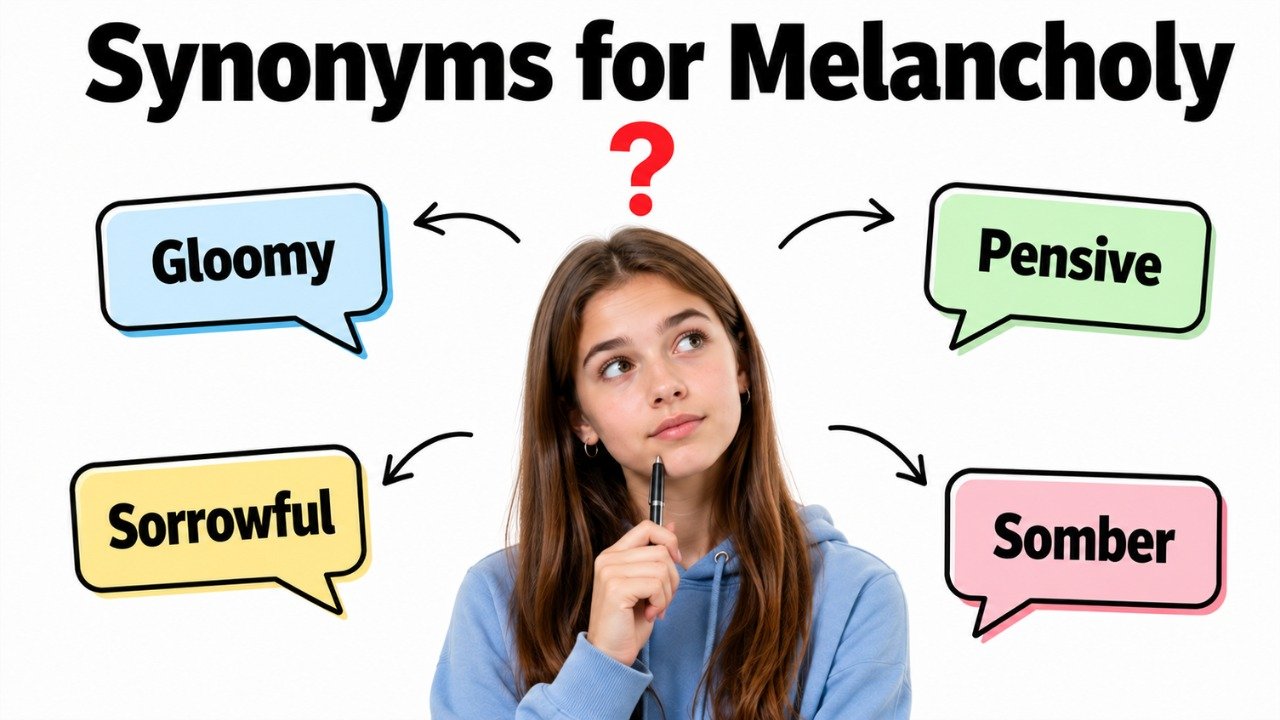
Quick Answer: The best synonyms for melancholy include sadness, sorrow, gloom, wistfulness, pensiveness, mournfulness, despondency, dejection, heartache, and nostalgia. Use sadness as a neutral and general replacement, sorrow for deep emotional pain, gloom for a dark mood or atmosphere, and wistfulness for gentle sadness connected with longing. Pensiveness suits thoughtful sadness, mournfulness relates to grief, despondency suggests lost hope, dejection describes low spirits, heartache expresses personal pain, and nostalgia describes bittersweet feelings about the past.
Pronunciation and Word Details
Word: Melancholy.
Pronunciation: /ˈmel.ən.kɑː.li/
Part of Speech: Noun and adjective.
Meaning: A quiet, thoughtful, or lasting feeling of sadness.
US Pronunciation:
UK Pronunciation:
What Does “Melancholy” Mean?
Melancholy means a deep, quiet, and often thoughtful form of sadness. It can describe an emotional state, a person’s expression, or the mood created by music, literature, weather, art, or a particular place.
As a noun, melancholy refers to the feeling itself.
Example: A sense of melancholy came over her as she looked through the old photographs.
As an adjective, melancholy describes something that expresses or produces quiet sadness.
Example: The singer performed a melancholy song about lost love.
Melancholy is usually more reflective and lasting than ordinary sadness. It often includes feelings of longing, regret, loneliness, remembrance, or emotional heaviness. However, it does not always suggest extreme suffering. A person may experience melancholy while remembering a meaningful period of life, watching autumn leaves fall, or hearing music connected with the past.
Meaning, Tone, and Context of “Melancholy”
Melancholy has an emotional, thoughtful, and slightly formal tone. It is common in literature, poetry, music reviews, personal essays, emotional descriptions, and conversations about memories or moods.
The word often suggests sadness with depth or beauty. Unlike words such as miserable or devastated, melancholy does not always describe overwhelming pain. It can express a calm, reflective sadness that remains in the background.
Formal Context: Melancholy can describe an emotional theme in literature, art, history, or psychology.
Example: The novel explores themes of loneliness, memory, and melancholy.
Conversational Context: The word may describe a quiet emotional state or a sad atmosphere.
Example: I felt slightly melancholy after leaving my childhood home.
Literary Context: Melancholy is often used to create emotional depth, beauty, or reflection.
Example: A melancholy silence settled over the empty garden.
Emotional Context: It can describe sadness connected with loss, regret, loneliness, or longing.
Example: His melancholy expression revealed how much he missed his family.
Melancholy can sound more poetic and expressive than sad. It is especially useful when the emotion is gentle, complex, reflective, or difficult to explain with a simpler word.
When and How to Use “Melancholy”
For Quiet Sadness: Use melancholy when the sadness is noticeable but not dramatic or overwhelming.
Example: She experienced a quiet melancholy after the celebration ended.
For Thoughtful Reflection: Use melancholy when sadness is connected with deep thought, memory, or personal reflection.
Example: Looking at the abandoned school filled him with melancholy.
For Longing for the Past: Use melancholy when a memory creates both warmth and sadness.
Example: The old family video gave her a feeling of melancholy.
For Music and Art: Use melancholy to describe creative work that has a sad, reflective, or emotionally moving quality.
Example: The painting has a melancholy beauty that attracts the viewer.
For Atmosphere: Use melancholy when a place, scene, or moment feels quiet and sad.
Example: Rain created a melancholy atmosphere in the empty streets.
For Facial Expressions: Use melancholy to describe a person who appears thoughtful, lonely, or quietly sad.
Example: A melancholy expression appeared on his face.
For Literature: Use melancholy when discussing themes of loss, isolation, regret, passing time, or emotional longing.
Example: Melancholy is one of the central emotions in the poem.
Best Synonyms for Melancholy
Sadness: A general feeling of unhappiness.
Example: A feeling of sadness remained after their final conversation.
Sorrow: Deep emotional pain caused by loss, disappointment, or suffering.
Example: Her voice was filled with sorrow as she described the farewell.
Gloom: A dark, unhappy, or hopeless mood.
Example: A sense of gloom spread through the house after the news arrived.
Wistfulness: Gentle sadness caused by longing for something that is absent or in the past.
Example: He spoke with wistfulness about his childhood summers.
Pensiveness: A quiet and thoughtful state that may contain sadness.
Example: Her pensiveness suggested that something important was troubling her.
Mournfulness: Sadness connected with grief, loss, or mourning.
Example: The mournfulness of the song moved everyone in the audience.
Despondency: A state of sadness caused by losing confidence or hope.
Example: Repeated rejection led him into a period of despondency.
Dejection: Low spirits caused by failure, disappointment, or discouragement.
Example: She could not hide her dejection after receiving the result.
Heartache: Strong emotional pain, especially after losing someone or ending a relationship.
Example: The letter expressed years of loneliness and heartache.
Nostalgia: A bittersweet feeling of affection and sadness for the past.
Example: The familiar melody filled him with nostalgia.
50 Synonyms for Melancholy with Short Meanings
Melancholy can function as both a noun and an adjective. The following list includes noun forms, adjective forms, and close alternatives that express different kinds of sadness, reflection, longing, or emotional heaviness.
- Sadness: A general feeling of unhappiness.
- Sorrow: Deep sadness caused by pain or loss.
- Gloom: A dark and unhappy emotional state.
- Wistfulness: Gentle sadness mixed with longing.
- Pensiveness: Quiet and serious thoughtfulness.
- Mournfulness: Sadness associated with grief or loss.
- Despondency: Sadness caused by a lack of hope.
- Dejection: Low spirits after disappointment or failure.
- Heartache: Deep personal or emotional pain.
- Nostalgia: Bittersweet longing for the past.
- Unhappiness: The state of not feeling happy or satisfied.
- Grief: Intense sadness caused by serious loss.
- Misery: Severe unhappiness or emotional suffering.
- Despair: Complete loss of hope.
- Desolation: Extreme sadness combined with loneliness.
- Forlornness: A state of feeling lonely and abandoned.
- Dolefulness: A sorrowful or mournful emotional quality.
- Woefulness: A condition of deep sadness or distress.
- Sorrowfulness: The quality of showing or feeling sorrow.
- Somberness: Seriousness combined with sadness.
- Glumness: A quiet, unfriendly, or unhappy mood.
- Moroseness: Gloomy and withdrawn unhappiness.
- Low Spirits: A temporary state of sadness or discouragement.
- Heaviness: A burdensome or emotionally weighted feeling.
- Ruefulness: Sadness combined with regret.
- Regret: Sadness about a past choice or event.
- Longing: A strong desire for something absent.
- Yearning: Deep emotional desire mixed with sadness.
- Mourning: The expression of sorrow after a loss.
- Lament: An expression of grief, sadness, or regret.
- Anguish: Severe emotional pain or distress.
- Disconsolateness: Sadness that is difficult to comfort.
- Downheartedness: A condition of feeling discouraged and sad.
- Crestfallenness: Disappointment that causes visible sadness.
- Bleakness: A cold, empty, or hopeless emotional quality.
- Blues: An informal word for sadness or low spirits.
- Solemnity: Seriousness that may carry a sad tone.
- Brooding: Deep thought about sad or troubling matters.
- Ennui: Weariness and dissatisfaction caused by boredom.
- Languor: A state of emotional or physical weariness.
- Tearfulness: A tendency to cry because of sadness.
- Heartbreak: Overwhelming emotional pain after loss.
- Sadness of Spirit: A deep feeling of emotional heaviness.
- Gloominess: A dark, sad, or pessimistic quality.
- Sad: Feeling unhappy or emotionally hurt.
- Sorrowful: Showing or experiencing deep sadness.
- Gloomy: Dark, unhappy, or lacking hope.
- Wistful: Sadly thoughtful about something desired or lost.
- Pensive: Deeply thoughtful and slightly sad.
- Downcast: Discouraged, unhappy, or lacking confidence.
Read Also:
Synonyms for Empty
Synonyms for Melancholy by Context
When Melancholy Means Quiet Sadness
The most useful synonyms are sadness, pensiveness, somberness, wistfulness, and low spirits. These words suit emotions that are calm, private, or reflective rather than intense.
Sadness: The broadest and most neutral alternative.
Example: A quiet sadness remained after everyone had left.
Pensiveness: Thoughtful silence that may contain sadness.
Example: His pensiveness made the others wonder what he was remembering.
Somberness: A serious and subdued emotional tone.
Example: The somberness of the ceremony reflected the importance of the occasion.
When Melancholy Means Thoughtful Longing
Wistfulness, nostalgia, longing, yearning, and ruefulness are strong choices when the sadness involves memories, missed opportunities, or something that cannot be recovered.
Wistfulness: Gentle longing for something absent.
Example: She smiled with wistfulness while remembering her school years.
Nostalgia: Affectionate sadness about the past.
Example: The smell of fresh bread gave him a sudden feeling of nostalgia.
Ruefulness: Sadness mixed with regret.
Example: He looked at the unfinished project with ruefulness.
When Melancholy Means Deep Sorrow
Sorrow, grief, heartache, anguish, mourning, and heartbreak are appropriate when the feeling is stronger and connected with serious emotional pain.
Sorrow: Deep sadness caused by loss or suffering.
Example: The entire family shared her sorrow.
Heartache: Personal pain connected with love, separation, or disappointment.
Example: Years of heartache shaped the emotional tone of her writing.
Grief: Intense sadness following a major loss.
Example: He needed time and support to process his grief.
When Melancholy Means Hopelessness
Despondency, despair, dejection, bleakness, and downheartedness work when sadness is connected with discouragement or loss of hope.
Despondency: A discouraged state in which hope has weakened.
Example: Despite his despondency, he continued looking for a solution.
Dejection: Sadness caused by a disappointing result.
Example: Her dejection was obvious after the interview.
Despair: An extreme feeling that nothing can improve.
Example: The character moves from uncertainty to complete despair.
When Melancholy Describes an Atmosphere
Gloom, somberness, mournfulness, bleakness, and solemnity can describe music, weather, places, colors, scenes, or creative works.
Gloom: A dark and unhappy atmosphere.
Example: Heavy clouds added gloom to the abandoned landscape.
Mournfulness: A sorrowful quality, especially in sound or expression.
Example: The mournfulness of the violin created an emotional atmosphere.
Bleakness: An empty, cold, and hopeless quality.
Example: The bleakness of the setting reflects the character’s isolation.
Another Word for Melancholy
Sadness is the best general replacement for melancholy because it is simple, familiar, and suitable for most situations. However, the strongest alternative depends on the exact emotion.
Use wistfulness when sadness involves longing. Use sorrow when the feeling is deep. Use gloom when describing a dark atmosphere. Use pensiveness when the person is quietly thoughtful.
Original: A feeling of melancholy filled the room after the farewell.
Better Option: A feeling of sadness filled the room after the farewell.
Original: She felt melancholy while remembering her childhood home.
Better Option: She felt nostalgic while remembering her childhood home.
Original: The melody had a melancholy quality.
Better Option: The melody had a mournful quality.
Original: His melancholy expression revealed that he was lost in thought.
Better Option: His pensive expression revealed that he was lost in thought.
When Not to Use “Melancholy”
Do not use melancholy when a simpler or more precise word communicates the meaning better. Although melancholy is expressive, it may sound overly literary in ordinary situations.
Avoid using it for minor inconveniences that cause irritation rather than genuine sadness.
Weak: I felt melancholy because the store had closed.
Better: I felt disappointed because the store had closed.
Do not use melancholy when describing an immediate and extreme emotional reaction.
Weak: She felt melancholy when she learned about the sudden tragedy.
Better: She felt devastated when she learned about the sudden tragedy.
Do not use melancholy as a direct replacement for a diagnosed medical condition. Depression can refer to a serious health condition, while melancholy usually describes a mood or emotional quality.
Weak: The doctor diagnosed him with melancholy.
Better: The doctor diagnosed him with depression.
Do not repeat melancholy several times within the same paragraph. Choose related words to improve clarity and variety.
Weak: The melancholy character entered the melancholy house and heard melancholy music.
Better: The sorrowful character entered the gloomy house and heard mournful music.
Avoid using melancholy when the main feeling is anger, fear, confusion, or boredom.
Weak: He became melancholy when the loud noise frightened him.
Better: He became anxious when the loud noise frightened him.
Words Commonly Confused With Melancholy
Melancholy vs Sadness: Sadness is a broad emotional term, while melancholy usually suggests quiet, reflective, or lasting sadness.
Melancholy vs Depression: Melancholy describes a mood or emotional quality. Depression may refer to a persistent emotional state or a medical condition and should not be treated as an automatic synonym.
Melancholy vs Nostalgia: Melancholy is general reflective sadness. Nostalgia specifically involves affectionate longing for the past.
Melancholy vs Grief: Melancholy can occur without a major loss. Grief is intense sadness caused by bereavement or another significant loss.
Melancholy vs Gloom: Melancholy often describes an internal emotion. Gloom can describe either a person’s mood or a dark atmosphere.
Melancholy vs Wistfulness: Melancholy is a wider emotional state. Wistfulness usually combines gentle sadness with longing or desire.
Melancholy vs Despair: Melancholy may still contain calmness, beauty, or hope. Despair suggests that hope has been completely lost.
Melancholy vs Pensiveness: Melancholy is primarily an emotion. Pensiveness describes deep thought that may or may not involve sadness.
Which Synonym Should You Choose?
Choose sadness when you need a clear and neutral word that most readers will understand immediately.
Choose sorrow when describing deep emotional pain caused by loss, hardship, or disappointment.
Choose wistfulness when sadness is gentle and connected with longing for something absent.
Choose nostalgia when someone remembers the past with both affection and sadness.
Choose pensiveness when the focus is on quiet thought rather than emotional pain.
Choose gloom when describing a dark mood, place, day, scene, or atmosphere.
Choose mournfulness when describing grief in a voice, expression, song, or artistic work.
Choose dejection when sadness results from failure, rejection, or disappointment.
Choose despondency when discouragement has caused a person to lose confidence or hope.
Choose heartache when discussing emotional pain connected with relationships, separation, or personal loss.
Choose grief when the sadness follows death, bereavement, or another major loss.
Choose somberness in formal descriptions of serious events, ceremonies, speeches, or literature.
For essays and literary analysis, melancholy, somberness, wistfulness, and mournfulness are effective choices.
For casual conversation, sadness, low spirits, feeling down, and the blues sound more natural.
For emotional storytelling, sorrow, heartache, longing, grief, and despair provide greater intensity.
Real Life Examples of “Melancholy” in Sentences
Original: She felt melancholy after returning from her childhood neighborhood.
Better Option: She felt nostalgic after returning from her childhood neighborhood.
Original: A melancholy silence followed his announcement.
Better Option: A somber silence followed his announcement.
Original: The old song gave him a melancholy feeling.
Better Option: The old song gave him a wistful feeling.
Original: His melancholy expression concerned his friends.
Better Option: His downcast expression concerned his friends.
Original: The film ends with a melancholy scene beside the sea.
Better Option: The film ends with a sorrowful scene beside the sea.
Original: Rain added a melancholy mood to the empty streets.
Better Option: Rain added a gloomy mood to the empty streets.
Original: Her voice sounded melancholy during the final verse.
Better Option: Her voice sounded mournful during the final verse.
Original: He experienced melancholy when he read the unfinished letter.
Better Option: He experienced heartache when he read the unfinished letter.
Original: The artist was known for melancholy landscapes.
Better Option: The artist was known for somber landscapes.
Original: A sense of melancholy followed the team’s final defeat.
Better Option: A sense of dejection followed the team’s final defeat.
Synonym Groups and Usage Differences
Quiet Sadness Group
This group includes sadness, pensiveness, somberness, low spirits, glumness, and downcast. These words describe subdued emotions without suggesting extreme suffering.
Example: His downcast expression showed that the criticism had affected him.
Reflective Longing Group
This group includes wistfulness, nostalgia, longing, yearning, ruefulness, and regret. These alternatives are useful when sadness is connected with memory, desire, or missed opportunities.
Example: She felt wistful whenever she remembered the friends she had left behind.
Deep Sorrow Group
This group includes sorrow, grief, heartache, heartbreak, anguish, and mourning. These words express stronger emotional pain than melancholy usually does.
Example: The family’s grief was shared by the entire community.
Dark Mood Group
This group includes gloom, gloominess, moroseness, bleakness, and misery. These alternatives describe a heavy or unpleasant emotional state.
Example: A feeling of gloom spread through the office after the announcement.
Hopelessness Group
This group includes despondency, despair, dejection, desolation, and downheartedness. These words suggest that sadness has been intensified by discouragement or lost hope.
Example: Repeated failure caused his initial disappointment to become despondency.
Grief and Mourning Group
This group includes mournfulness, mourning, lament, sorrowfulness, dolefulness, and woefulness. These terms are often associated with loss, remembrance, or visible expressions of sorrow.
Example: The mournfulness in her voice made the speech especially moving.
Literary and Artistic Group
This group includes melancholy, somberness, solemnity, pensiveness, wistfulness, and bleakness. These words are useful in descriptions of poems, novels, paintings, films, and music.
Example: The painting combines natural beauty with a sense of melancholy.
Antonyms of Melancholy
The opposite of melancholy depends on whether the word describes an emotion, attitude, expression, or atmosphere. Common antonyms communicate happiness, hope, energy, or emotional lightness.
Joy: A strong feeling of happiness.
Happiness: A general state of emotional pleasure and satisfaction.
Cheerfulness: A bright and positive emotional quality.
Delight: Great pleasure caused by something enjoyable.
Optimism: Confidence that good things will happen.
Hopefulness: A positive belief that a situation can improve.
Contentment: Peaceful satisfaction with one’s circumstances.
Elation: Intense happiness and excitement.
Lightheartedness: A relaxed and cheerful lack of worry.
Enthusiasm: Strong interest, excitement, or positive energy.
Gladness: A simple feeling of pleasure or happiness.
Joviality: Friendly, cheerful, and sociable behavior.
Exuberance: Energetic and openly expressed happiness.
Pleasure: A feeling of enjoyment or satisfaction.
Excitement: Strong positive emotion and anticipation.
Comparison Melancholy vs Related Words
Melancholy vs Sadness
Sadness is a general word for unhappiness. Melancholy is usually quieter, more reflective, and more emotionally complex. It may include longing, memory, loneliness, or regret.
Example With Melancholy: A feeling of melancholy came over her as the train left the town.
Example With Sadness: She felt sadness when her friend moved away.
Melancholy vs Wistfulness
Melancholy can describe many forms of reflective sadness. Wistfulness specifically describes gentle sadness caused by longing for something unavailable or lost.
Example With Melancholy: The empty house filled him with melancholy.
Example With Wistfulness: He spoke wistfully about the summers he had spent there.
Melancholy vs Gloom
Melancholy is often personal and reflective. Gloom feels darker and may suggest pessimism, discouragement, or an unpleasant atmosphere.
Example With Melancholy: Her letter had a melancholy tone.
Example With Gloom: The bad news created gloom throughout the office.
Melancholy vs Grief
Melancholy may arise from memories, loneliness, change, or reflection. Grief usually follows a serious loss and is often more intense.
Example With Melancholy: He felt melancholy when he remembered how quickly time had passed.
Example With Grief: He experienced deep grief after losing a close relative.
Melancholy vs Depression
Melancholy usually describes a mood, tone, or emotional quality. Depression may describe persistent symptoms that significantly affect a person’s life and can refer to a medical condition.
Example With Melancholy: The rainy afternoon left her feeling melancholy.
Example With Depression: Persistent depression made ordinary responsibilities difficult for him.
Melancholy vs Sorrow
Melancholy is quiet and reflective. Sorrow is deeper and more directly connected with emotional pain or loss.
Example With Melancholy: The photograph gave her a melancholy feeling.
Example With Sorrow: She felt profound sorrow after hearing about the loss.
Melancholy vs Nostalgia
Melancholy is a broad form of thoughtful sadness. Nostalgia is specifically connected with affectionate memories of the past.
Example With Melancholy: The empty playground created an atmosphere of melancholy.
Example With Nostalgia: The playground filled him with nostalgia for his childhood.
Melancholy vs Despondency
Melancholy does not necessarily involve hopelessness. Despondency describes sadness accompanied by discouragement and reduced hope.
Example With Melancholy: She became melancholy as the vacation ended.
Example With Despondency: Months of unsuccessful applications led to despondency.
Common Phrases and Expressions With Melancholy
Melancholy Mood: A quiet, thoughtful, and sad emotional state.
Melancholy Feeling: A personal sense of reflective sadness.
Melancholy Expression: A facial appearance showing quiet sorrow.
Melancholy Song: Music with a sad, reflective, or mournful quality.
Melancholy Tone: A style of speaking or writing that communicates sadness.
Melancholy Beauty: Beauty that creates sadness, longing, or emotional reflection.
Melancholy Memory: A memory that produces thoughtful sadness.
Melancholy Atmosphere: A setting or mood that feels subdued and sorrowful.
Melancholy Reflection: Serious thought involving sadness, regret, or remembrance.
Melancholy Silence: A quiet moment filled with emotional heaviness.
Common Mistakes to Avoid
Using Melancholy for Every Kind of Sadness: Melancholy is best for quiet, thoughtful, or lasting sadness. Use devastated, heartbroken, or anguished for stronger emotional reactions.
Confusing Melancholy With Depression: Melancholy can describe a temporary mood or artistic quality. Depression may refer to a serious and persistent condition, so the words are not always interchangeable.
Ignoring the Part of Speech: Melancholy can be a noun or an adjective. Make sure its role is clear within the sentence.
Correct Noun Use: A strange melancholy remained after the guests departed.
Correct Adjective Use: The room had a melancholy atmosphere.
Choosing a Synonym With the Wrong Intensity: Gloom, sorrow, grief, and despair express different levels and types of sadness. Select the word that matches the situation.
Unclear: She felt despair because her appointment was delayed.
Better: She felt disappointed because her appointment was delayed.
Repeating the Same Word: Repeatedly using melancholy can make writing sound unnatural. Use thoughtful alternatives where the meaning remains accurate.
Repetitive: The melancholy poem describes a melancholy character in a melancholy town.
Improved: The mournful poem describes a sorrowful character in a gloomy town.
Using Melancholy for Unrelated Emotions: The word does not normally describe fear, anger, surprise, or confusion.
Incorrect: The sudden crash made everyone melancholy.
Better: The sudden crash made everyone alarmed.
Using an Overly Literary Word in Casual Situations: In everyday conversation, sad, feeling down, or disappointed may sound more natural than melancholy.
Formal: I became melancholy when my lunch order was incorrect.
Natural: I felt disappointed when my lunch order was incorrect.
Forgetting the Cause of the Emotion: A sentence becomes clearer when it explains what creates the melancholy.
Vague: He felt melancholy.
Clearer: He felt melancholy while packing the belongings from his childhood room.
Conclusion
Understanding synonyms for melancholy helps you express sadness with greater precision and emotional depth. Sadness is the best neutral choice, while sorrow and grief describe deeper pain. Wistfulness and nostalgia suit feelings connected with longing or memory. Pensiveness describes thoughtful sadness, gloom creates a darker atmosphere, and dejection or despondency communicates discouragement. The right synonym depends on the cause, strength, and tone of the emotion. Choosing carefully makes descriptions, essays, conversations, and creative writing clearer and more expressive.
FAQs About Synonyms for Melancholy
What is the best synonym for melancholy?
Sadness is the best general synonym. Wistfulness, sorrow, gloom, and pensiveness may be better when the context is more specific.
Is melancholy the same as sadness?
Not completely. Sadness is a broad emotion, while melancholy usually suggests quiet, thoughtful, or lasting sadness.
What is a formal synonym for melancholy?
Somberness, sorrow, despondency, and pensiveness are useful formal alternatives, depending on the intended meaning.
What is a literary synonym for melancholy?
Wistfulness, mournfulness, sorrow, pensiveness, and gloom are effective literary synonyms.
Can nostalgia be a synonym for melancholy?
Nostalgia can be a synonym when the sadness is connected with affectionate memories or longing for the past.
Is depression a synonym for melancholy?
The words can overlap in some historical or general contexts, but they should not always be used interchangeably. Depression may refer to a serious medical condition.
What adjective can replace melancholy?
Sad, wistful, pensive, gloomy, somber, mournful, sorrowful, forlorn, or downcast can replace melancholy as an adjective.
