
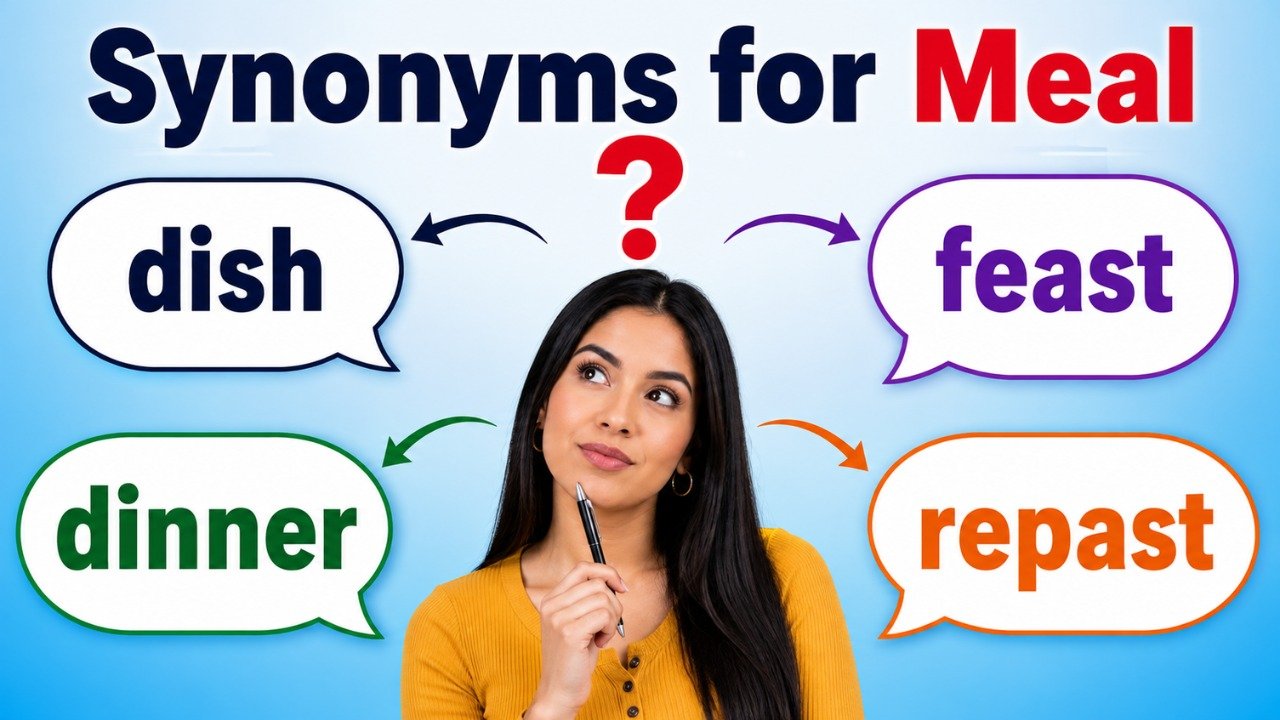
Quick Answer: The best synonyms for meal include repast, food, fare, feast, banquet, dinner, lunch, supper, refreshments, and spread. Among these synonyms for meal, repast works well in formal or literary writing, food is the broadest everyday choice, fare describes the type or quality of food served, feast suits a large or special meal, and banquet describes a formal celebration. Dinner, lunch, and supper are best when the time or type of meal matters, while refreshments suit light food and drinks.
Pronunciation and Word Details
Word: Meal.
Pronunciation: /miːl/.
Part of Speech: Noun.
Meaning: Food eaten at a particular time or an occasion when people eat food.
US Pronunciation:
UK Pronunciation:
What Does “Meal” Mean?
A meal is an occasion when a person eats food, usually at a regular or planned time. It is primarily used as a noun and can refer both to the eating occasion and to the food served during that occasion.
For example, breakfast is usually the first meal of the day, while lunch and dinner refer to meals eaten later. The word can also describe an organized eating event, such as a family meal, formal meal, holiday meal, or business meal.
In everyday conversation, meal is a neutral and flexible word. A person might say, “That was a delicious meal,” when referring to the food itself, or “We shared a meal together,” when emphasizing the social experience of eating.
Meal also has another, less common meaning involving grain or another substance that has been ground into a coarse powder. However, when people search for synonyms for meal, they usually mean food or an eating occasion. The synonyms in this article mainly focus on that common meaning.
Meaning, Tone, and Context of “Meal”
Meal has a neutral tone and works naturally in casual conversation, formal writing, educational content, restaurant descriptions, health discussions, travel writing, and everyday communication.
The word does not usually carry strong emotion by itself. Its meaning becomes more specific when descriptive words are added. A simple meal suggests something modest, while a festive meal suggests celebration and abundance.
In formal writing, alternatives such as repast, banquet, nourishment, and fare may be more precise depending on the intended meaning. In casual speech, people often use food, dinner, lunch, bite, grub, or chow.
Meal can describe food eaten alone or with others. It may refer to a regular daily eating occasion, a special event, a light serving of food, or a large gathering centered around eating.
Understanding these differences helps writers choose a synonym that communicates not only food, but also timing, size, purpose, atmosphere, and formality.
When and How to Use “Meal”
For a Regular Eating Occasion: Use meal when talking generally about breakfast, lunch, dinner, or another planned period of eating.
Example: We usually have our evening meal together.
For Food Being Served: Meal can refer to the food prepared and eaten during an eating occasion.
Example: She prepared a delicious meal for the family.
For a Social Occasion: Use meal when eating is part of spending time with other people.
Example: Sharing a meal gave everyone time to talk.
For a Formal Occasion: Meal works when describing organized dinners, celebrations, meetings, or ceremonies involving food.
Example: A formal meal was served after the ceremony.
For Nutrition: Meal is useful when discussing eating habits, nutrition, portions, and daily food routines.
Example: A balanced meal can include several different food groups.
For Travel or Hospitality: Use meal when discussing food provided during a journey, visit, stay, or event.
Example: The package included an evening meal.
For a Special Celebration: Meal can describe food shared during birthdays, holidays, weddings, reunions, or other important occasions.
Example: The family prepared a special meal for the celebration.
Best Synonyms for Meal
Repast: A meal, especially when described in formal or literary language.
Example: The guests enjoyed a peaceful repast after the ceremony.
Food: Anything eaten for nourishment, often used as the broadest everyday alternative.
Example: There was plenty of food for everyone at the gathering.
Fare: The food normally served or available in a particular place or situation.
Example: The restaurant offered simple local fare.
Feast: A large, rich, or celebratory meal.
Example: The family prepared a feast for the celebration.
Banquet: A large formal meal held for a special event.
Example: Hundreds of guests attended the banquet.
Dinner: A main meal, commonly eaten later in the day.
Example: We invited our neighbors over for dinner.
Lunch: A meal normally eaten around the middle of the day.
Example: They discussed the project over lunch.
Supper: An evening meal, often with a relaxed or traditional tone.
Example: Everyone gathered at the table for supper.
Refreshments: Light food and drinks offered at an event, meeting, or gathering.
Example: Refreshments were available after the presentation.
Spread: An informal term for a generous selection of food arranged for people to eat.
Example: They prepared an impressive spread for the guests.
50 Synonyms for Meal with Short Meanings
- Repast: A meal, especially in formal or literary language.
- Food: Something eaten for nourishment.
- Fare: Food served or regularly available.
- Feast: A large or special meal.
- Banquet: A formal meal for many guests.
- Dinner: A main meal, usually eaten later in the day.
- Lunch: A meal eaten around midday.
- Breakfast: The first main meal of the day.
- Supper: An evening meal.
- Brunch: A meal combining breakfast and lunch.
- Luncheon: A formal or traditional term for lunch.
- Snack: A small amount of food eaten between larger meals.
- Refreshments: Light food and drinks served to guests.
- Collation: A light meal or serving of food.
- Refection: A meal, especially in formal or traditional language.
- Nourishment: Food needed for health and growth.
- Sustenance: Food that provides strength and nourishment.
- Victuals: Food or provisions, especially in traditional usage.
- Provisions: Supplies of food prepared for future use.
- Rations: Fixed portions of food supplied to someone.
- Spread: A generous selection of foods.
- Board: Food provided regularly, especially with lodging.
- Grub: An informal word for food.
- Chow: A very casual word for food.
- Eats: An informal term for food.
- Bite: A small or quick amount of food.
- Course: One part of a meal served separately.
- Dish: A particular prepared food served during a meal.
- Serving: An amount of food given to one person.
- Portion: A particular quantity of food.
- Plateful: Enough food to fill a plate.
- Morning Meal: Food eaten during the morning.
- Midday Meal: Food eaten around the middle of the day.
- Evening Meal: Food eaten later in the day.
- Light Meal: A smaller meal that is not especially filling.
- Full Meal: A complete and substantial serving of food.
- Main Meal: The most substantial meal of the day.
- Family Meal: Food eaten together by family members.
- Communal Meal: A meal shared by a group of people.
- Formal Dinner: An organized evening meal with a formal atmosphere.
- Casual Dinner: A relaxed evening meal.
- Working Lunch: A midday meal combined with work or discussion.
- Picnic: A meal eaten outdoors, usually in a relaxed setting.
- Buffet: A meal where people choose food from a selection of dishes.
- Potluck: A shared meal to which different people contribute food.
- Cookout: An outdoor meal where food is commonly cooked outside.
- Dinner Party: A social gathering centered around an evening meal.
- Banquet Dinner: A formal and substantial meal served to a group.
- Supper Spread: A selection of foods served for an evening meal.
- Dining Occasion: An event or period during which people eat together.
Read Also:
Synonyms for Voice
Synonyms for Meal by Context
When Meal Means a Regular Eating Occasion
The most useful alternatives are breakfast, lunch, dinner, supper, brunch, repast, and dining occasion. These words focus on the event or time when people eat.
Example: Dinner is usually our largest meal of the day.
Example: We enjoyed a quiet repast before returning home.
When Meal Means Food Being Served
Food, fare, nourishment, sustenance, spread, grub, chow, and eats can replace meal when attention is placed on what people are eating.
Example: The local fare was simple but flavorful.
Example: There was enough food for every guest.
When Meal Means a Large Celebration
Feast, banquet, spread, banquet dinner, formal dinner, and dinner party work when the meal is large, special, or connected to a celebration.
Example: They prepared a feast for the family gathering.
Example: The organization held a banquet for its guests.
When Meal Means Light Food
Snack, refreshments, bite, collation, and light meal describe smaller amounts of food.
Example: We stopped for a quick bite before leaving.
Example: Light refreshments were served during the break.
When Meal Means Nutrition
Nourishment, sustenance, food, provisions, and rations are useful when the focus is on receiving enough food rather than enjoying a particular dining occasion.
Example: The supplies provided essential sustenance during the journey.
Example: Each traveler received sufficient provisions for the trip.
When Meal Means Informal Food
Grub, chow, eats, bite, and spread have a casual or conversational feeling.
Example: We stopped somewhere nearby to get some grub.
Example: There were plenty of good eats at the gathering.
Another Word for Meal
Another word for meal is repast, but the best replacement depends on what meal means in the sentence. Repast works especially well when referring to the complete eating occasion, while food is more natural when referring to what is eaten. Feast suggests abundance or celebration, and dinner is better when the specific daily meal matters.
Original: We enjoyed a pleasant meal together.
Better Option: We enjoyed a pleasant repast together.
Original: They prepared a large meal for the celebration.
Better Option: They prepared a large feast for the celebration.
Original: The meal served there is simple and traditional.
Better Option: The fare served there is simple and traditional.
Original: We stopped for a small meal before the journey.
Better Option: We stopped for a quick bite before the journey.
When Not to Use “Meal”
Meal is a useful general word, but it can sometimes be less precise than another alternative.
Avoid using meal repeatedly when the specific type of food occasion is already known. Words such as breakfast, lunch, dinner, supper, or snack may give the reader clearer information.
Weak: We had a meal at noon before returning to work.
Better: We had lunch before returning to work.
Meal may also sound too ordinary when describing a grand celebration.
Weak: The wedding guests attended a large meal.
Better: The wedding guests attended a banquet.
Using meal for very small amounts of food can also sound inaccurate.
Weak: I had a meal before leaving, but it was only a piece of fruit.
Better: I had a quick snack before leaving.
When describing the type or quality of food available somewhere, fare may sound more natural.
Weak: The restaurant is known for its traditional meal.
Better: The restaurant is known for its traditional fare.
When the focus is nutrition rather than a particular eating occasion, nourishment or sustenance may communicate the meaning more precisely.
Weak: The supplies provided enough meal to keep the travelers strong.
Better: The supplies provided enough sustenance to keep the travelers strong.
Words Commonly Confused With Meal
Meal vs Food: Meal usually refers to an eating occasion or the food eaten at that occasion. Food is the broader term for anything people or animals eat.
Meal vs Dish: A meal may contain several dishes. A dish is one particular prepared item, such as soup, pasta, or salad.
Meal vs Course: A course is one stage of a larger meal. A formal meal may include several courses.
Meal vs Snack: A meal is generally more substantial and planned, while a snack is usually smaller and eaten between regular meals.
Meal vs Dinner: Meal is a general category. Dinner describes a particular meal, commonly the main meal eaten later in the day.
Meal vs Feast: Meal is neutral regarding size. Feast specifically suggests a large, abundant, or celebratory meal.
Meal vs Banquet: Meal can be casual or formal. Banquet refers to a large and usually formal meal held for a special occasion.
Meal vs Fare: Meal focuses on the eating occasion, while fare often describes the kind or quality of food being served.
Which Synonym Should You Choose?
Choose repast when you need a formal, elegant, or literary alternative for meal.
Choose food when you are talking broadly about what people eat rather than a specific eating occasion.
Choose fare when describing the type, style, or quality of food available somewhere.
Choose feast when the meal is large, abundant, festive, or celebratory.
Choose banquet when describing a formal meal organized for many guests.
Choose dinner when referring specifically to a main meal later in the day.
Choose lunch when referring to a midday meal.
Choose supper when referring to an evening meal in a relaxed, traditional, or conversational context.
Choose refreshments when the food and drinks are light and served during a meeting, event, or gathering.
Choose spread when emphasizing a generous selection of food in casual speech.
Choose snack or bite when the amount of food is small.
Choose nourishment or sustenance when discussing health, survival, nutrition, or the physical need for food.
Choose provisions or rations when discussing food supplies rather than a social eating occasion.
Choose buffet when people select food from several available dishes.
Choose picnic when the meal takes place outdoors in an informal setting.
Choose working lunch when a meal is combined with professional discussion or work.
Real Life Examples of “Meal” in Sentences
Original: We shared a wonderful meal after the ceremony.
Better Option: We shared a wonderful repast after the ceremony.
Original: The hotel served a simple evening meal.
Better Option: The hotel served simple evening fare.
Original: Everyone gathered around the table for a large meal.
Better Option: Everyone gathered around the table for a feast.
Original: The guests attended a formal meal after the event.
Better Option: The guests attended a banquet after the event.
Original: We stopped for a small meal before continuing our journey.
Better Option: We stopped for a quick bite before continuing our journey.
Original: A light meal was available during the meeting.
Better Option: Refreshments were available during the meeting.
Original: The meal at noon lasted about thirty minutes.
Better Option: Lunch lasted about thirty minutes.
Original: They prepared an impressive meal for all the visitors.
Better Option: They prepared an impressive spread for all the visitors.
Original: The emergency supplies provided enough meals for several days.
Better Option: The emergency supplies provided enough provisions for several days.
Original: The meal gave the hikers the energy they needed.
Better Option: The nourishment gave the hikers the energy they needed.
Synonym Groups and Usage Differences
General Food Group
Food, fare, nourishment, sustenance, victuals, and provisions all relate to things that can be eaten, but they emphasize different ideas.
Food is the broadest term. Fare describes what is served or available. Nourishment and sustenance emphasize physical benefit. Provisions refer to stored or supplied food.
Example: The travelers carried enough provisions for the entire journey.
Regular Meal Group
Breakfast, lunch, dinner, supper, brunch, and luncheon identify particular eating occasions.
Breakfast usually refers to the first main meal of the day. Lunch and luncheon refer to midday eating. Dinner commonly describes a substantial later meal, while supper usually has a more relaxed evening association.
Example: We arranged a luncheon for the visiting guests.
Celebration Group
Feast, banquet, formal dinner, dinner party, spread, and banquet dinner suit special or social occasions.
Feast emphasizes abundance. Banquet emphasizes formality and a larger gathering. Dinner party emphasizes a social gathering hosted around food.
Example: The celebration ended with an elaborate feast.
Light Food Group
Snack, bite, refreshments, collation, and light meal describe smaller eating occasions.
Snack is the most familiar everyday word. Bite is particularly casual. Refreshments often refer to food and drinks served to guests.
Example: We had a quick snack before the meeting began.
Casual Food Group
Grub, chow, eats, bite, and spread are conversational alternatives.
Grub and chow are informal terms for food. Eats is also casual, while spread usually suggests several dishes presented together.
Example: They put out a generous spread for everyone.
Nutrition Group
Nourishment, sustenance, food, rations, and provisions focus more on meeting physical needs than on the social experience of eating.
Example: The food provided essential sustenance during the long trip.
Shared Eating Group
Family meal, communal meal, potluck, picnic, buffet, dinner party, and cookout describe meals shaped by the way people gather or how food is served.
Example: The neighbors organized a communal meal for the entire group.
Antonyms of Meal
Meal does not have one perfect direct antonym because it names an eating occasion rather than a quality with a simple opposite. However, several words can express the opposite idea of eating a meal in particular contexts.
Fasting: Deliberately going without food for a period.
Hunger: The physical feeling caused by needing food.
Starvation: A severe lack of sufficient food.
Abstinence: Deliberately avoiding something, which can include food in certain contexts.
Deprivation: A state in which necessary food or other essentials are lacking.
Foodlessness: The condition of having no food available.
Empty Stomach: An everyday expression describing the condition of not having eaten.
Comparison: A meal involves eating food, while fasting involves intentionally not eating for a period.
Comparison: Meal vs Related Words
Meal vs Repast
Meal is neutral and common in everyday English. Repast means essentially the same thing but sounds more formal, literary, or traditional.
Example With Meal: We enjoyed a quiet meal before leaving.
Example With Repast: We enjoyed a quiet repast before leaving.
Meal vs Food
Meal refers to an occasion when food is eaten or the food served at that occasion. Food is much broader and refers to anything consumed for nourishment.
Example With Meal: She prepared a meal for the visitors.
Example With Food: She bought enough food for the visitors.
Meal vs Fare
Meal emphasizes the eating occasion. Fare emphasizes the type or quality of food being served.
Example With Meal: We had a pleasant meal at the inn.
Example With Fare: The inn was known for its traditional fare.
Meal vs Feast
Meal can be small, ordinary, or large. Feast specifically suggests an abundant or celebratory amount of food.
Example With Meal: They prepared a meal for the family.
Example With Feast: They prepared a feast for the celebration.
Meal vs Banquet
Meal is a general term, while banquet describes a formal and often elaborate meal for a group.
Example With Meal: The guests shared a meal after the event.
Example With Banquet: The guests attended a banquet after the event.
Meal vs Dinner
Meal can refer to breakfast, lunch, dinner, supper, or another eating occasion. Dinner identifies a particular meal.
Example With Meal: We plan our meals at the beginning of the week.
Example With Dinner: We usually eat dinner together in the evening.
Meal vs Snack
A meal is generally more substantial and may follow a regular schedule. A snack is a smaller amount of food eaten between or instead of larger meals.
Example With Meal: He prepared a complete meal after work.
Example With Snack: He ate a small snack before work.
Meal vs Dish
A meal is the complete eating occasion, while a dish is one individual prepared food within that meal.
Example With Meal: The meal included several traditional recipes.
Example With Dish: The vegetable dish was especially popular.
Meal vs Course
A course is one stage or part of a meal.
Example With Meal: The entire meal lasted nearly two hours.
Example With Course: The final course was dessert.
Common Phrases and Expressions With “Meal”
Full Meal: A complete and substantial amount of food.
Light Meal: A smaller meal that is not especially heavy or filling.
Main Meal: The most substantial eating occasion of the day.
Family Meal: A meal shared by family members.
Evening Meal: Food eaten later in the day.
Midday Meal: Food eaten around the middle of the day.
Hot Meal: A meal served warm or freshly cooked.
Healthy Meal: A meal chosen with nutrition and wellbeing in mind.
Balanced Meal: A meal containing an appropriate variety of foods and nutrients.
Shared Meal: A meal eaten together by two or more people.
Common Mistakes to Avoid
One common mistake is treating every word related to food as an exact synonym for meal. Dish, course, serving, and portion are related words, but they describe parts or amounts of a meal rather than the entire eating occasion.
Avoid replacing meal with feast unless the food is genuinely abundant, special, or celebratory. Calling an ordinary sandwich a feast may sound exaggerated unless the exaggeration is intentional.
Banquet should also be reserved for formal or organized group meals. It usually sounds unnatural when describing an ordinary dinner at home.
Do not confuse meal with food in every sentence. Food refers broadly to things that are eaten, while meal often refers to a specific occasion.
Avoid excessive repetition when meal appears several times in the same paragraph. Depending on the meaning, use dinner, lunch, food, fare, repast, spread, or another accurate alternative.
Be careful with very informal choices such as grub, chow, and eats. They can work naturally in casual conversation, but they may sound unsuitable in academic essays, formal reports, professional messages, or serious informational writing.
Do not use nourishment or sustenance when describing a social dining occasion unless the focus is specifically on nutrition, energy, survival, or physical needs.
Choose synonyms based on meaning rather than simply replacing meal with a different word. The strongest synonym is the one that preserves the intended timing, formality, amount, purpose, and context.
Conclusion
The best synonyms for meal depend on whether you mean an eating occasion, food itself, a celebration, or nourishment. Repast is a strong formal alternative, food is the broadest everyday choice, and fare describes what is served. Feast and banquet suit special occasions, while dinner, lunch, breakfast, and supper identify specific daily meals. Refreshments and snack work for lighter eating. Understanding these differences makes it easier to use synonyms for meal naturally and choose vocabulary that matches the exact context.
FAQs About Synonyms for Meal
What Is the Best Synonym for Meal?
Repast is one of the closest direct synonyms for meal. However, food, fare, dinner, feast, or refreshments may be better depending on the sentence.
What Is Another Word for Meal in Formal Writing?
Repast is a useful formal alternative. Banquet works when the meal is a formal gathering, while luncheon can describe a formal midday meal.
What Is a Casual Synonym for Meal?
Grub, chow, eats, and bite are casual alternatives. Dinner and lunch are also natural choices when the particular meal is known.
What Is Another Word for a Large Meal?
Feast is one of the best choices for a large or abundant meal. Banquet is better when the occasion is formal and includes many guests.
What Is Another Word for a Small Meal?
Snack, bite, refreshments, collation, and light meal can describe smaller amounts of food.
Are Food and Meal the Same?
Not exactly. Food is anything eaten for nourishment, while a meal is normally a particular occasion when food is eaten or the collection of food served at that occasion.
What Synonym for Meal Is Best in Descriptive Writing?
Fare works well when describing the kind or quality of food served. Repast creates a more formal or literary tone, while feast emphasizes abundance and celebration.
