
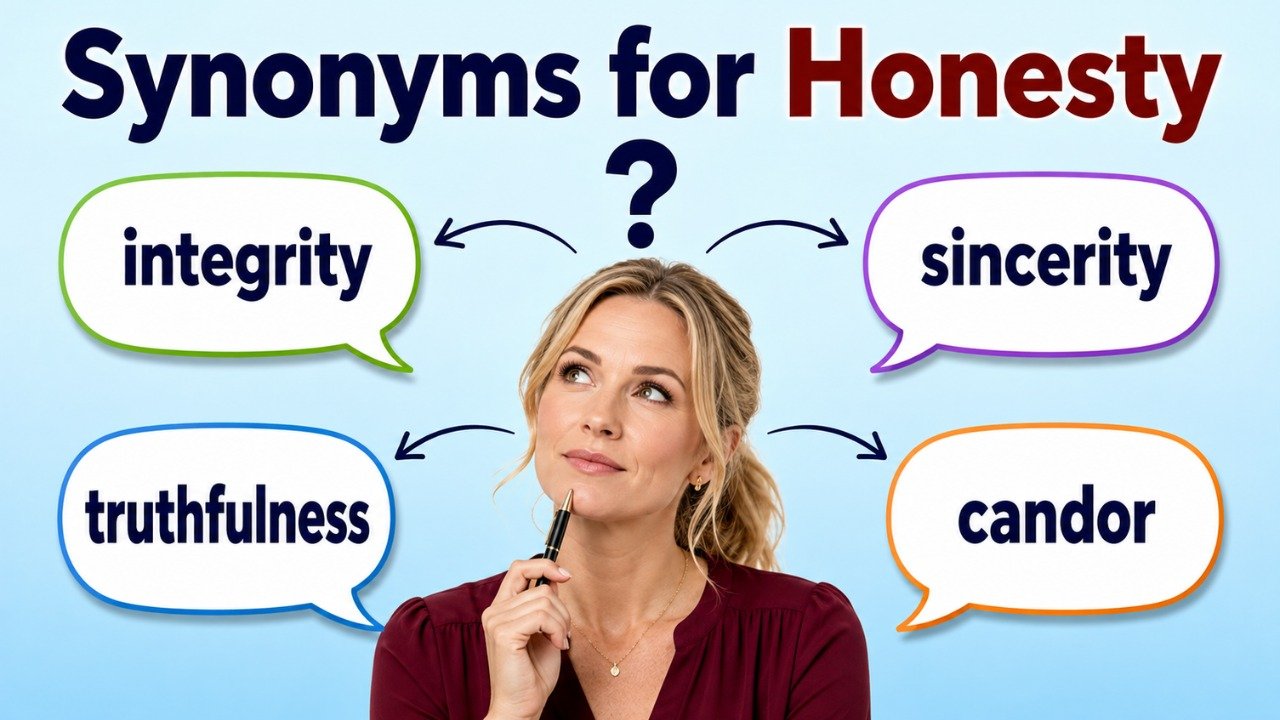
Quick Answer: The best synonyms for honesty include integrity, truthfulness, sincerity, candor, frankness, openness, forthrightness, probity, veracity, and uprightness. Among these synonyms for honesty, truthfulness is the clearest general replacement when referring to telling the truth. Integrity works best for strong moral character, sincerity for genuine feelings or intentions, candor and frankness for direct communication, openness for transparent discussion, probity for formal or professional contexts, and veracity for factual accuracy.
Pronunciation and Word Details
Word: Honesty.
Pronunciation: /ˈɒn.ə.sti/
Part of Speech: Noun.
Meaning: The quality of being truthful, sincere, fair, and free from deception.
US Pronunciation:
UK Pronunciation:
What Does “Honesty” Mean?
Honesty means the quality of telling the truth and behaving in a sincere, fair, and trustworthy way. It is a noun used to describe truthful communication, moral behavior, genuine intentions, and freedom from deception.
Honesty can describe what someone says, how someone behaves, or the principles that guide a person’s decisions. A person may show honesty by admitting a mistake, giving accurate information, keeping promises, or expressing genuine feelings.
Personal Context: Honesty can describe truthfulness between friends, relatives, or partners.
Professional Context: It can refer to ethical behavior, transparency, and accurate communication at work.
Moral Context: Honesty can describe a personal principle of avoiding lies, deception, or dishonest conduct.
Communication Context: It can mean speaking openly and truthfully about thoughts, feelings, facts, or problems.
The exact meaning often depends on whether the speaker is emphasizing truth, sincerity, morality, openness, or trustworthiness.
Meaning, Tone, and Context of “Honesty”
Honesty has a positive and generally neutral tone. It is widely used in everyday conversation, formal writing, academic discussion, professional communication, ethical debates, and descriptions of character.
The word can feel warm and personal when discussing relationships. It can sound serious and moral when describing character or conduct. In professional settings, honesty often suggests transparency, reliability, and ethical behavior.
Neutral Use: Honesty is a valued quality in communication.
Personal Use: Her honesty helped rebuild their trust.
Professional Use: The manager appreciated his honesty about the mistake.
Moral Use: Honesty is an important part of ethical behavior.
Emotional Use: Complete honesty can make difficult conversations more meaningful.
Some synonyms for honesty carry stronger or more specialized meanings. Integrity emphasizes moral principles, sincerity emphasizes genuine feeling, candor emphasizes open communication, and veracity emphasizes factual truth.
When and How to Use “Honesty”
For Telling the Truth
Use honesty when describing a person’s willingness to provide truthful information rather than lie or mislead.
Example: Her honesty about what happened prevented further confusion.
For Moral Character
Honesty can describe a person’s commitment to ethical and trustworthy behavior.
Example: His honesty earned the respect of his colleagues.
For Open Communication
Use honesty when someone communicates thoughts, concerns, or feelings without hiding important information.
Example: Honesty helped them discuss the problem more openly.
For Admitting Mistakes
Honesty is appropriate when someone accepts responsibility instead of denying an error.
Example: I appreciated her honesty about the mistake.
For Personal Relationships
The word often describes truthful and sincere communication between people.
Example: Trust grows when honesty becomes part of a relationship.
For Professional Conduct
Honesty can describe accurate reporting, ethical decisions, and transparent communication.
Example: The organization expects honesty in all professional dealings.
For Genuine Intentions
Honesty can also refer to sincerity rather than factual truth alone.
Example: There was clear honesty in his apology.
Best Synonyms for Honesty
Integrity: Strong moral principles and consistently ethical behavior.
Example: Her integrity guided every important decision she made.
Truthfulness: The quality of saying what is true and avoiding lies.
Example: His truthfulness made him a dependable witness.
Sincerity: Genuine feelings, intentions, or expressions without pretense.
Example: The sincerity of her apology was easy to recognize.
Candor: Honest and open communication, especially about difficult subjects.
Example: The team appreciated his candor during the discussion.
Frankness: Direct and honest expression without unnecessary avoidance.
Example: Her frankness helped everyone understand the problem.
Openness: Willingness to communicate information, thoughts, or feelings freely.
Example: Greater openness improved communication between the two groups.
Forthrightness: Direct and straightforward honesty in speech or behavior.
Example: His forthrightness made his position completely clear.
Probity: Strong honesty and moral integrity, especially in formal or professional situations.
Example: She was respected for her probity and responsible leadership.
Veracity: Truthfulness or factual accuracy, especially concerning statements or information.
Example: Investigators questioned the veracity of the account.
Uprightness: Morally correct, honest, and honorable behavior.
Example: His uprightness made him widely trusted.
50 Synonyms for Honesty with Short Meanings
- Integrity: Strong moral honesty and ethical character.
- Truthfulness: The quality of consistently telling the truth.
- Sincerity: Genuine and honest feeling or intention.
- Candor: Open and honest expression.
- Frankness: Directness and honesty in communication.
- Openness: Willingness to communicate honestly and freely.
- Forthrightness: Direct and straightforward honesty.
- Probity: Strong moral honesty and integrity.
- Veracity: Truthfulness and factual accuracy.
- Uprightness: Honest and morally correct behavior.
- Trustworthiness: The quality of deserving confidence and trust.
- Genuineness: The quality of being real and sincere.
- Authenticity: Being genuine rather than false or misleading.
- Straightforwardness: Clear, direct, and honest behavior.
- Directness: Open expression without unnecessary concealment.
- Fairness: Honest and impartial treatment of others.
- Decency: Morally respectable and honorable behavior.
- Honor: Strong principles of honesty and ethical conduct.
- Honorableness: The quality of behaving ethically and honestly.
- Principle: Commitment to moral standards.
- Righteousness: Morally correct behavior or character.
- Virtue: Good moral character and conduct.
- Rectitude: Strict moral correctness and honesty.
- Good Faith: Honest and sincere intention.
- Reliability: The quality of being consistently dependable.
- Credibility: The quality of being believable and trustworthy.
- Transparency: Openness that avoids hiding important information.
- Plainness: Simple and direct expression without disguise.
- Plain Speaking: Direct and truthful communication.
- Outspokenness: Willingness to speak openly and honestly.
- Genuine Expression: Honest communication of real thoughts or feelings.
- Authentic Expression: Sincere communication without pretense.
- Truth: Conformity with fact or reality.
- Factuality: The quality of being based on facts.
- Accuracy: Correctness and freedom from factual error.
- Faithfulness: Loyal adherence to truth, duty, or commitment.
- Conscientiousness: Careful behavior guided by moral responsibility.
- Ethical Conduct: Behavior that follows accepted moral principles.
- Moral Integrity: Commitment to ethical and honest behavior.
- Moral Uprightness: Strong adherence to honest principles.
- Straight Dealing: Fair and honest treatment of others.
- Fair Dealing: Honest and impartial conduct.
- Openheartedness: Sincere willingness to express genuine feelings.
- Earnestness: Serious and sincere intention.
- Guilelessness: Freedom from deceit or cunning.
- Innocence: Freedom from dishonest intention in certain contexts.
- Scrupulousness: Careful commitment to ethical standards.
- Responsibility: Willingness to act honestly and accept accountability.
- Accountability: Readiness to answer honestly for actions or decisions.
- Honorable Conduct: Behavior characterized by fairness and integrity.
Read Also:
Synonyms for Meal

Synonyms for Honesty by Context
When Honesty Means Truthfulness
Truthfulness, veracity, accuracy, factuality, and truth work best when honesty refers specifically to statements, information, or facts.
Example: The witness was respected for her truthfulness throughout the hearing.
Example: The veracity of the report needed to be confirmed.
When Honesty Means Moral Integrity
Integrity, probity, uprightness, rectitude, virtue, and moral integrity are useful when describing character or ethical principles.
Example: His integrity prevented him from accepting an unfair advantage.
Example: The leader was known for her moral uprightness.
When Honesty Means Sincerity
Sincerity, genuineness, authenticity, earnestness, and genuine expression are appropriate when the focus is on feelings, motives, apologies, or intentions.
Example: The sincerity of his apology helped repair the relationship.
Example: Her genuine expression of gratitude touched everyone present.
When Honesty Means Direct Communication
Candor, frankness, forthrightness, directness, straightforwardness, and plain speaking emphasize communicating openly.
Example: His candor made the difficult conversation more productive.
Example: I appreciated her straightforwardness about the situation.
When Honesty Means Transparency
Openness, transparency, accountability, and good faith work well in professional, organizational, or public communication.
Example: Greater transparency helped people understand the decision.
Example: Both parties entered the discussion in good faith.
When Honesty Means Trustworthy Behavior
Trustworthiness, reliability, fairness, straight dealing, and fair dealing focus on dependable and ethical conduct.
Example: Years of fair dealing made her a trusted business partner.
Example: His reliability strengthened the confidence others placed in him.
Another Word for Honesty
The best single replacement for honesty is often integrity, especially when describing someone’s moral character. However, the most accurate alternative depends on what kind of honesty you mean.
Use truthfulness for truthful speech, sincerity for genuine feelings, candor for open discussion, and integrity for ethical behavior.
Original: Everyone respected her honesty.
Better Option: Everyone respected her integrity.
Original: I appreciated his honesty about the problem.
Better Option: I appreciated his candor about the problem.
Original: Her honesty made the apology convincing.
Better Option: Her sincerity made the apology convincing.
Original: The witness was known for his honesty.
Better Option: The witness was known for his truthfulness.
When Not to Use “Honesty”
Honesty is useful, but it may be too broad when a more specific word would communicate the intended meaning more clearly.
Avoid relying on honesty when you specifically mean factual accuracy, moral integrity, emotional sincerity, or direct speech.
Weak: The report was praised for its honesty.
Better: The report was praised for its accuracy.
The better sentence makes it clear that the information was factually correct.
Weak: She showed honesty in following her principles.
Better: She showed integrity in following her principles.
Integrity is more precise when discussing moral character.
Weak: His honesty made the apology believable.
Better: His sincerity made the apology believable.
Sincerity better describes genuine emotion or intention.
Weak: I admired her honesty during the meeting.
Better: I admired her candor during the meeting.
Candor specifically emphasizes open and direct communication.
Avoid repeating honesty several times in a short paragraph. Choose more precise alternatives when the meaning changes.
Words Commonly Confused With Honesty
Honesty vs Integrity: Honesty usually concerns truthfulness and freedom from deception, while integrity refers more broadly to consistent moral and ethical principles.
Honesty vs Truthfulness: Honesty can include ethical conduct and sincere behavior, while truthfulness focuses specifically on telling or representing the truth.
Honesty vs Sincerity: Honesty concerns truth and ethical conduct, while sincerity focuses on whether feelings and intentions are genuine.
Honesty vs Candor: Honesty is broad, while candor specifically describes open and direct communication.
Honesty vs Frankness: Honesty means being truthful, while frankness emphasizes saying the truth directly and without excessive restraint.
Honesty vs Veracity: Honesty commonly describes people and behavior, while veracity often refers to the truthfulness or accuracy of statements, claims, or information.
Honesty vs Transparency: Honesty means not deceiving others, while transparency means making relevant information visible and accessible rather than hiding it.
Honesty vs Trustworthiness: Honesty can make someone trustworthy, but trustworthiness also includes reliability, consistency, and dependability.
Which Synonym Should You Choose?
Choose truthfulness when referring specifically to telling the truth or giving correct information.
Choose integrity when discussing moral character, ethics, values, leadership, or principled behavior.
Choose sincerity when describing genuine emotions, apologies, compliments, intentions, or personal expressions.
Choose candor when you want a formal or professional word for open and truthful discussion.
Choose frankness when someone expresses an opinion directly and honestly.
Choose openness when communication involves sharing thoughts, concerns, or information freely.
Choose forthrightness when someone speaks clearly and directly without avoiding the issue.
Choose probity in highly formal writing about strong moral character or professional ethics.
Choose veracity when discussing whether a statement, account, claim, or piece of information is true.
Choose uprightness when emphasizing honorable and morally correct character.
For essays and reports, integrity, truthfulness, sincerity, transparency, and veracity often provide greater precision than repeatedly using honesty.
For everyday conversation, truthfulness, sincerity, openness, and straightforwardness usually sound more natural.
Real Life Examples of “Honesty” in Sentences
Original: Her honesty helped the team identify the problem.
Better Option: Her candor helped the team identify the problem.
Original: His honesty made him a respected leader.
Better Option: His integrity made him a respected leader.
Original: I appreciated her honesty about her feelings.
Better Option: I appreciated her openness about her feelings.
Original: The child’s honesty surprised everyone.
Better Option: The child’s truthfulness surprised everyone.
Original: His honesty was obvious in the apology.
Better Option: His sincerity was obvious in the apology.
Original: The company valued honesty in its internal communication.
Better Option: The organization valued transparency in its internal communication.
Original: Her honesty about the risks helped us make a better decision.
Better Option: Her frankness about the risks helped us make a better decision.
Original: Everyone trusted him because of his honesty.
Better Option: Everyone trusted him because of his uprightness.
Original: The honesty of the statement was questioned.
Better Option: The veracity of the statement was questioned.
Original: His honesty during the interview made a positive impression.
Better Option: His forthrightness during the interview made a positive impression.
Synonym Groups and Usage Differences
Truthfulness Group
Truthfulness, veracity, factuality, accuracy, and truth belong to the group that emphasizes factual correctness and freedom from false statements.
Example: Her truthfulness made her account more credible.
Integrity Group
Integrity, probity, uprightness, rectitude, virtue, and moral integrity describe ethical character and principled behavior.
Example: His integrity remained strong even when the decision was difficult.
Sincerity Group
Sincerity, genuineness, authenticity, earnestness, and openheartedness describe honest emotions or intentions.
Example: The sincerity in her words made the apology meaningful.
Directness Group
Candor, frankness, forthrightness, straightforwardness, directness, and plain speaking focus on clear and honest communication.
Example: Her frankness prevented unnecessary confusion.
Transparency Group
Openness, transparency, accountability, and good faith emphasize sharing information honestly and behaving without hidden motives.
Example: Greater transparency increased confidence in the process.
Trust Group
Trustworthiness, reliability, credibility, fairness, and fair dealing describe qualities that make others confident in a person’s words or actions.
Example: His years of fair dealing created lasting trust.
Antonyms of Honesty
The opposite of honesty depends on whether the context involves lying, deception, insincerity, corruption, or concealment.
Dishonesty: The quality of being untruthful or deceptive.
Deceit: Deliberate behavior intended to mislead someone.
Deception: The act of causing someone to believe something false.
Falsehood: A statement or idea that is not true.
Lying: Deliberately making an untrue statement.
Insincerity: Lack of genuine feeling or intention.
Duplicity: Deliberately deceptive behavior involving contradictory intentions.
Fraud: Intentional deception for unfair or unlawful advantage.
Corruption: Dishonest or unethical conduct, especially involving power or responsibility.
Concealment: Deliberately hiding information that might otherwise be known.
Manipulation: Controlling or influencing someone through misleading methods.
Untruthfulness: The quality of not telling or representing the truth.
Comparison: Honesty vs Related Words
Honesty vs Integrity
Honesty focuses on being truthful and avoiding deception. Integrity is broader and describes consistently following strong moral principles.
Example With Honesty: Her honesty about the mistake was appreciated.
Example With Integrity: Her integrity prevented her from hiding the mistake.
Honesty vs Truthfulness
Honesty can describe overall character or conduct. Truthfulness is more specifically connected with statements and factual communication.
Example With Honesty: Honesty is essential in a healthy relationship.
Example With Truthfulness: The witness’s truthfulness was never questioned.
Honesty vs Sincerity
Honesty concerns truthfulness, while sincerity concerns genuine feelings and intentions.
Example With Honesty: He showed honesty by admitting what happened.
Example With Sincerity: He showed sincerity when he apologized.
Honesty vs Candor
Honesty is a broad moral and communicative quality. Candor refers specifically to speaking openly and directly.
Example With Honesty: Her honesty made her trustworthy.
Example With Candor: Her candor made the discussion more productive.
Honesty vs Frankness
Honesty means being truthful. Frankness adds the idea of direct, unrestricted expression.
Example With Honesty: I value his honesty.
Example With Frankness: I value his frankness when discussing difficult issues.
Honesty vs Transparency
Honesty means avoiding lies or deception. Transparency emphasizes making relevant information openly available.
Example With Honesty: The manager showed honesty when explaining the mistake.
Example With Transparency: The manager improved transparency by sharing the full process.
Honesty vs Veracity
Honesty commonly describes character and behavior. Veracity usually refers to whether information, claims, or statements are true.
Example With Honesty: Her honesty earned everyone’s trust.
Example With Veracity: Researchers examined the veracity of the claim.
Common Phrases and Expressions With Honesty
Complete Honesty: Total truthfulness without hiding important information.
Absolute Honesty: Full commitment to telling the truth.
Brutal Honesty: Very direct truthfulness that may sound harsh or uncomfortable.
Refreshing Honesty: Truthfulness that feels unusually open and welcome.
Intellectual Honesty: Willingness to evaluate ideas fairly and acknowledge evidence or mistakes.
Personal Honesty: Truthfulness with oneself and other people about personal matters.
Professional Honesty: Truthful and ethical conduct in professional situations.
Honesty and Integrity: A common combination describing truthfulness and strong moral principles.
Value Honesty: To consider truthfulness an important quality.
Honesty Builds Trust: An expression describing how truthful behavior strengthens confidence between people.
Common Mistakes to Avoid
One common mistake is treating every synonym for honesty as interchangeable. Each alternative has its own emphasis.
Use integrity for moral principles rather than simply factual accuracy. Use sincerity for genuine emotion rather than objective truth. Use candor or frankness for open communication rather than general ethical character.
Another mistake is using a highly formal synonym in casual conversation.
Unnatural: I appreciate your probity about missing the appointment.
Better: I appreciate your honesty about missing the appointment.
Probity is normally more appropriate when discussing serious moral character or professional ethics.
Avoid confusing transparency with honesty. Someone can answer a question honestly without voluntarily revealing every detail. Transparency involves greater openness about information or processes.
Do not overuse honesty in the same paragraph.
Repetitive: Her honesty showed that honesty was important to her, and everyone respected her honesty.
Better: Her truthfulness showed how strongly she valued integrity, and everyone respected her character.
Choose the synonym that matches the exact idea you want to express rather than replacing honesty merely to create variety.
Conclusion
The most useful synonyms for honesty include integrity, truthfulness, sincerity, candor, frankness, openness, forthrightness, probity, veracity, and uprightness. The right choice depends on meaning. Use truthfulness for telling the truth, integrity for moral character, sincerity for genuine feelings, candor or frankness for direct communication, and veracity for factual claims. Understanding these differences helps you choose language that is clearer, more natural, and more precise in conversations, essays, reports, professional writing, and personal communication.
FAQs About Synonyms for Honesty
What Is the Best Synonym for Honesty?
Integrity is one of the strongest general alternatives when honesty refers to moral character. Truthfulness is better when the focus is specifically on telling the truth.
What Is Another Word for Honesty in a Person?
Integrity, truthfulness, uprightness, sincerity, and trustworthiness can all describe honesty in a person. The best choice depends on the quality being emphasized.
Is Integrity the Same as Honesty?
Not exactly. Honesty mainly involves truthfulness and avoiding deception, while integrity includes consistently following strong moral principles.
What Is a Formal Synonym for Honesty?
Probity, integrity, rectitude, and veracity are useful formal alternatives. Probity is particularly suitable for moral or professional conduct, while veracity relates more closely to factual truth.
What Is a Synonym for Honesty in Communication?
Candor, frankness, openness, forthrightness, and straightforwardness are strong choices for honest communication.
What Word Means Honest and Genuine Feelings?
Sincerity is usually the best word for honest and genuine feelings. Genuineness and authenticity are also useful depending on the sentence.
Which Synonym for Honesty Is Best in Academic Writing?
Integrity works well for ethical principles, veracity for factual claims, transparency for openness, and truthfulness for accurate statements. The best choice depends on the specific academic context.
