
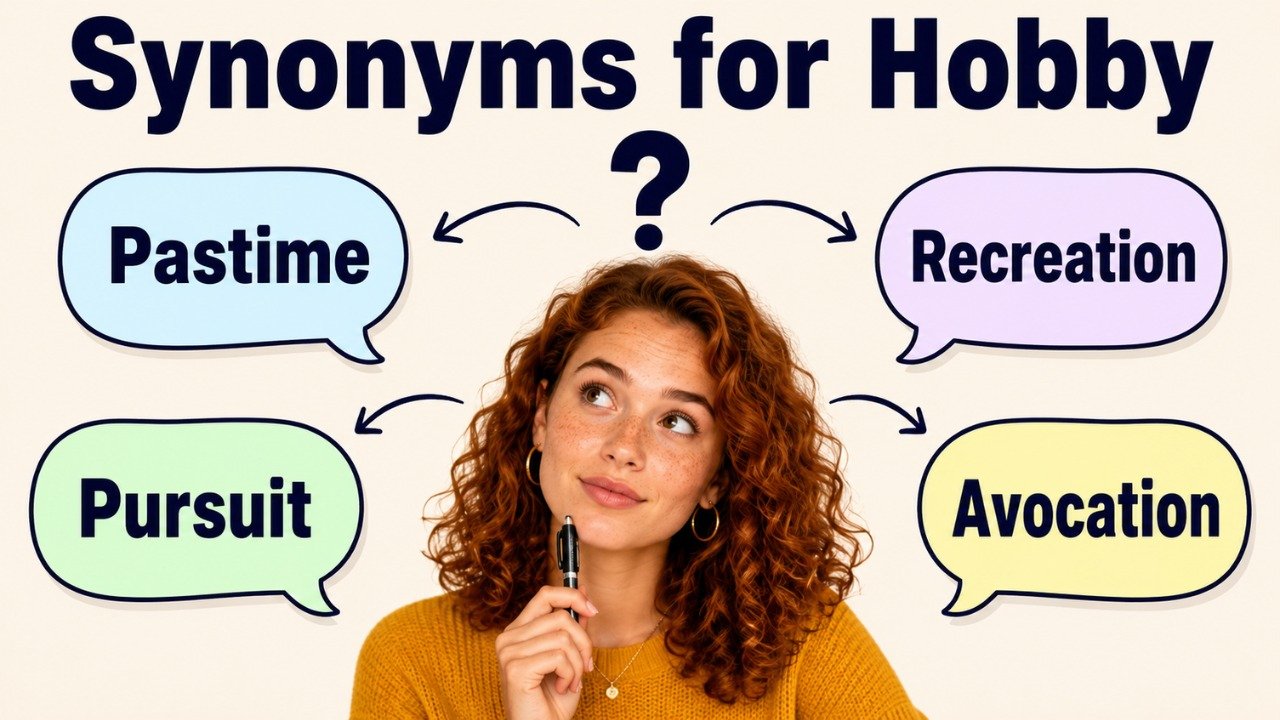
Quick Answer: The best synonyms for hobby include pastime, leisure activity, interest, pursuit, avocation, recreation, diversion, passion, craft, and personal project. Use pastime or leisure activity for something done during free time, interest for a subject someone enjoys, pursuit for a regular and purposeful activity, avocation in formal writing, recreation for relaxation, craft for a creative or practical skill, and passion when the hobby carries strong emotional importance.
Pronunciation and Word Details
Word: Hobby.
Pronunciation: /ˈhɑːbi/
Part of Speech: Noun.
Meaning: An activity or interest that someone enjoys regularly during free time.
US Pronunciation:
UK Pronunciation:
What Does “Hobby” Mean?
Hobby means an activity, subject, or interest that a person enjoys during free time for pleasure, relaxation, creativity, or personal development.
It is a countable noun. One enjoyable activity is a hobby, while several enjoyable activities are hobbies.
Example: Reading is her favorite hobby.
A hobby is usually separate from a person’s main job or required responsibilities. It may involve creativity, exercise, learning, collecting, making, performing, observing, or exploring.
Example: His hobbies include gardening, painting, and photography.
Some hobbies are relaxing and require little preparation. Others involve regular practice, specialist knowledge, equipment, or long periods of commitment.
Example: Building model ships became a serious hobby for him.
Hobby can also describe a subject that someone frequently discusses or studies. However, this use is less common than the meaning of an enjoyable free time activity.
The word works in several sentence patterns.
As a Subject: Gardening is a peaceful hobby.
As an Object: She recently started a new hobby.
After a Possessive Word: His hobby is collecting old maps.
In the Plural: Their hobbies include hiking and cooking.
With Descriptive Words: Photography is an expensive but rewarding hobby.
A hobby may remain a simple source of enjoyment, or it may gradually develop into a high level skill, a personal project, or even paid work. What makes it a hobby is usually the person’s voluntary interest and enjoyment.
Meaning, Tone, and Context of “Hobby”
Hobby has a positive, neutral, and conversational tone. It commonly suggests enjoyment, relaxation, curiosity, creativity, or personal fulfillment.
The word is suitable for everyday speech, school writing, personal descriptions, professional introductions, surveys, biographies, and general articles. It is less technical than avocation and less formal than recreational pursuit.
Casual Context: Hobby is natural when discussing how someone spends free time.
Example: My newest hobby is learning to bake bread.
Personal Context: The word often appears in conversations about interests, preferences, and lifestyle.
Example: She enjoys hobbies that allow her to work with her hands.
Educational Context: Teachers may discuss hobbies when encouraging creativity, reading, exercise, or skill development.
Example: A creative hobby can help students explore new abilities.
Professional Context: People may mention hobbies when introducing themselves or describing interests outside work.
Example: His hobbies include cycling and landscape photography.
Formal Context: Hobby is acceptable in most formal writing, although avocation, leisure pursuit, recreational activity, or personal interest may sound more precise in reports and essays.
Example: The survey examined the recreational activities of adult participants.
Emotional Context: A hobby can provide comfort, identity, satisfaction, and a sense of achievement.
Example: Painting became an important source of calm during a stressful period.
Technical Context: Researchers may use phrases such as leisure activity, recreational pursuit, or voluntary activity when classifying how people spend free time.
Hobby is generally positive, but context matters. Calling someone’s serious artistic work a hobby may sound dismissive if that person considers it a profession, discipline, or major commitment.
When and How to Use “Hobby”
For a Free Time Activity
Use hobby for an activity someone chooses to do during time away from work, school, or necessary duties.
Example: Gardening is a relaxing hobby that she enjoys on weekends.
For a Creative Interest
Use hobby for artistic, practical, or imaginative activities such as drawing, pottery, sewing, writing, or woodworking.
Example: He turned sketching into a regular hobby.
For Physical Recreation
Use hobby for enjoyable physical activities that are not primarily professional or competitive.
Example: Swimming became her favorite summer hobby.
For Collecting
Use hobby when someone regularly collects objects because of personal interest.
Example: Collecting postcards is a hobby that connects him with different places.
For Learning a Skill
Use hobby when someone studies or practices a skill mainly for enjoyment.
Example: Learning another language began as a hobby.
For Relaxation
Use hobby when an activity helps someone rest, reduce stress, or enjoy quiet time.
Example: Knitting is a calming hobby for many people.
For Social Connection
Use hobby when an activity brings people together through shared interests.
Example: Dancing became both a hobby and a way to meet new people.
For Personal Development
Use hobby when an activity builds patience, confidence, discipline, knowledge, or creativity.
Example: Chess is a hobby that can strengthen strategic thinking.
For a Serious Personal Pursuit
Use hobby when someone regularly gives time and effort to an activity without making it a primary occupation.
Example: Wildlife photography is more than a casual hobby for her.
For Describing Several Interests
Use the plural hobbies when discussing more than one activity.
Example: His hobbies include cooking, reading, and hiking.
Best Synonyms for Hobby
Pastime
Synonym: An activity done for enjoyment during free time.
Example: Reading detective stories is her favorite pastime.
Leisure Activity
Synonym: An activity chosen for relaxation or pleasure outside required work.
Example: Walking in the park is a simple leisure activity.
Interest
Synonym: A subject or activity that attracts attention and enjoyment.
Example: Local history has been a lifelong interest of his.
Pursuit
Synonym: An activity followed regularly with effort, purpose, or enthusiasm.
Example: Photography became a serious creative pursuit.
Avocation
Synonym: An activity pursued outside a person’s main occupation.
Example: Music remained his avocation throughout his professional career.
Recreation
Synonym: An enjoyable activity used for relaxation or refreshment.
Example: Gardening provides both exercise and recreation.
Diversion
Synonym: An activity that offers a pleasant break from routine or responsibility.
Example: Puzzles provided a welcome diversion after work.
Passion
Synonym: An activity or subject that creates strong enthusiasm and emotional commitment.
Example: Her interest in painting developed into a lasting passion.
Craft
Synonym: A creative or practical activity involving skill and making.
Example: Pottery is a craft that requires patience and practice.
Personal Project
Synonym: A self directed activity completed for interest, learning, or satisfaction.
Example: Restoring the old bicycle became a personal project.
50 Synonyms for Hobby with Short Meanings
- Pastime: An enjoyable activity done during free time.
- Leisure Activity: An activity chosen for pleasure or relaxation.
- Interest: A subject or activity that attracts attention.
- Pursuit: An activity followed with regular effort or enthusiasm.
- Avocation: An activity pursued outside a main occupation.
- Recreation: An activity that provides relaxation and enjoyment.
- Diversion: A pleasant activity that breaks routine.
- Amusement: Something done for entertainment or pleasure.
- Passion: An activity or subject loved deeply.
- Craft: A skilled creative or practical activity.
- Personal Project: A self chosen task completed for satisfaction.
- Spare Time Activity: Something done during unoccupied time.
- Free Time Activity: An optional activity enjoyed away from duties.
- Leisure Pursuit: An interest followed during periods of relaxation.
- Recreational Activity: An activity done mainly for enjoyment.
- Creative Outlet: An activity used to express ideas or emotions.
- Personal Interest: A subject or activity someone enjoys privately.
- Favorite Activity: An activity preferred over other choices.
- Pleasurable Activity: Something done because it brings enjoyment.
- Enjoyable Pursuit: A regular activity followed for pleasure.
- Relaxing Activity: Something that helps reduce tension or stress.
- Side Interest: An interest separate from someone’s main work.
- Pet Interest: A subject that receives special personal attention.
- Enthusiasm: A subject or activity that creates strong excitement.
- Preoccupation: An activity or subject that occupies much attention.
- Occupation: An activity that keeps someone pleasantly engaged.
- Undertaking: A task or project someone chooses to pursue.
- Practice: An activity repeated to improve skill or enjoyment.
- Discipline: An activity requiring regular study, effort, or training.
- Art: A creative activity involving imagination and expression.
- Handicraft: An activity involving skilled work made by hand.
- Home Craft: A creative activity practiced in a home setting.
- Collecting: The activity of gathering related objects.
- Gardening: The activity of growing and caring for plants.
- Reading: The activity of enjoying written material.
- Writing: The activity of creating stories, ideas, or reflections.
- Painting: The activity of creating images with color.
- Photography: The activity of creating and studying photographs.
- Woodworking: The craft of making objects from wood.
- Needlework: Decorative or practical work completed with a needle.
- Model Making: The activity of building small representations.
- Game: An enjoyable structured activity with rules.
- Sport: A physical activity practiced for enjoyment or competition.
- Exercise: Physical activity done for fitness or pleasure.
- Entertainment: An activity that holds attention and gives pleasure.
- Escape: An activity that provides relief from routine concerns.
- Relaxation: An activity or state that reduces physical or mental strain.
- Self Expression: An activity used to communicate personality or feelings.
- Skill Building Activity: An enjoyable pursuit that develops ability.
- Weekend Pursuit: An activity commonly enjoyed during days away from work.
Read Also:
Synonyms for Detail Oriented
Synonyms for Hobby by Context
When Hobby Means a Casual Pastime
Use pastime, amusement, diversion, free time activity, or spare time activity when the hobby is mainly a simple source of enjoyment.
Pastime: The most direct alternative for a pleasant activity done during free time.
Example: Crossword puzzles are a popular pastime in her family.
Amusement: Best when entertainment and pleasure are the main ideas.
Example: He began drawing for amusement rather than professional ambition.
Diversion: Best when an activity provides a break from work, pressure, or routine.
Example: Gardening offered a useful diversion during the long winter.
Free Time Activity: A clear descriptive phrase for general writing.
Example: Reading is a free time activity that requires little equipment.
Spare Time Activity: Useful when emphasizing when the activity is performed.
Example: Model making began as a spare time activity.
When Hobby Means a Serious Interest
Use pursuit, avocation, passion, discipline, enthusiasm, or personal interest when someone gives the activity regular attention.
Pursuit: Suitable for an activity followed with steady effort.
Example: Landscape painting became a serious pursuit after retirement.
Avocation: A formal term for meaningful work or activity outside a main career.
Example: Writing poetry was her avocation for many years.
Passion: Best when the activity carries strong emotional importance.
Example: Cooking is not merely a hobby for him but a genuine passion.
Discipline: Best when the activity requires study, structure, and continued practice.
Example: Martial arts became a discipline that shaped her daily routine.
Enthusiasm: Useful when strong excitement matters more than the activity itself.
Example: His enthusiasm for astronomy led him to study the night sky.
When Hobby Means a Creative Activity
Use craft, art, creative outlet, handicraft, self expression, or personal project when the activity involves making or expressing something.
Craft: Best for skilled activities involving materials and technique.
Example: Basket making is a traditional craft that rewards patience.
Creative Outlet: Best when the activity helps express feelings or imagination.
Example: Journaling became a creative outlet during a demanding year.
Handicraft: Suitable for decorative or useful objects made by hand.
Example: Embroidery is a handicraft that combines design and careful movement.
Self Expression: Best when the activity communicates personality or emotion.
Example: Dance gives her an important form of self expression.
Personal Project: Best for a specific self directed creation or goal.
Example: Building a small garden pond became his personal project.
When Hobby Means Recreation
Use recreation, recreational activity, leisure activity, relaxing activity, sport, exercise, or game when relaxation or physical enjoyment is central.
Recreation: A broad formal word for enjoyable activities that refresh the mind or body.
Example: Outdoor recreation can include walking, swimming, and cycling.
Leisure Activity: A neutral phrase for something chosen during free time.
Example: The survey asked participants about their preferred leisure activities.
Relaxing Activity: Best when the activity is valued for calm and stress relief.
Example: Reading before bed is a relaxing activity for her.
Sport: Best for physical activities with rules, skill, or competition.
Example: Tennis is both a sport and a favorite hobby.
Exercise: Best when movement and physical fitness are the main benefits.
Example: Morning cycling provides exercise as well as enjoyment.
When Hobby Means Learning or Skill Development
Use practice, discipline, pursuit, skill building activity, undertaking, or personal project when the hobby develops knowledge or ability.
Practice: Best for an activity repeated to improve performance.
Example: Daily piano practice became an enjoyable part of her routine.
Skill Building Activity: Useful when emphasizing personal growth.
Example: Woodworking is a skill building activity that improves precision.
Undertaking: Best for a hobby project that requires planning and effort.
Example: Restoring the old house was an ambitious undertaking.
Personal Project: Best for a self chosen goal with a clear result.
Example: Creating a family recipe book became a meaningful personal project.
When Hobby Means Collecting
Use collecting, collection, interest, pursuit, or specialty when someone gathers and studies related objects.
Collecting: The clearest word for gathering items according to a theme.
Example: Coin collecting began when he received an old coin from his grandfather.
Interest: Suitable when the person studies the subject as well as collecting items.
Example: Her interest in old books led to a carefully organized collection.
Pursuit: Best when collecting requires research, travel, or long term effort.
Example: Finding rare maps became an absorbing pursuit.
When Hobby Means an Escape from Routine
Use diversion, escape, relaxation, amusement, or recreation when the activity provides mental relief.
Diversion: Suggests a temporary break from serious concerns.
Example: Baking provided a pleasant diversion from office work.
Escape: Emphasizes relief from stress or ordinary responsibilities.
Example: Fiction offered him a quiet escape at the end of the day.
Relaxation: Best when the main purpose is rest.
Example: She paints for relaxation rather than recognition.
Recreation: Suitable when the activity restores energy.
Example: Weekend recreation helped the group return to work refreshed.
Another Word for Hobby
Pastime is often the best single replacement for hobby because it clearly describes an enjoyable activity done during free time.
However, the most accurate alternative depends on the context. Use interest for a subject someone enjoys, pursuit for an activity followed seriously, avocation for a formal description of work outside a main career, and passion when the hobby has deep personal importance.
Original: Reading is her favorite hobby.
Better Option: Reading is her favorite pastime.
Original: Photography has become a serious hobby for him.
Better Option: Photography has become a serious pursuit for him.
Original: Music remained his hobby throughout his career.
Better Option: Music remained his avocation throughout his career.
Original: Cooking is more than a hobby for her.
Better Option: Cooking is a genuine passion for her.
When Not to Use “Hobby”
Hobby may sound too casual, vague, or dismissive when the activity involves professional work, formal study, major responsibility, or deep cultural importance.
When the Activity Is a Profession
Do not call paid professional work a hobby unless the person genuinely does it separately for pleasure.
Weak: Architecture is her hobby and full time career.
Better: Architecture is her profession, while sketching buildings is her hobby.
When the Activity Is a Serious Discipline
Use discipline, practice, or pursuit when an activity requires structured training and deep commitment.
Weak: Years of advanced dance training were just her hobby.
Better: Dance became a serious discipline that required years of training.
When Formal Language Is Needed
Use leisure pursuit, recreational activity, avocation, or personal interest in formal reports and academic discussions.
Weak: The report studied the hobbies of older adults.
Better: The report studied the leisure activities of older adults.
When the Activity Has Cultural or Spiritual Importance
Calling a meaningful tradition a hobby may reduce its importance.
Weak: The ceremony is a hobby practiced by the community.
Better: The ceremony is an important cultural tradition practiced by the community.
When the Activity Produces Income
A paid activity may be a side business, occupation, profession, or freelance pursuit rather than only a hobby.
Weak: Her online design work is a hobby that provides most of her income.
Better: Her design work has developed into a successful occupation.
When the Word Is Too General
Choose a specific term when readers need to understand the exact type of activity.
Weak: His hobby involves making things.
Better: Woodworking is his favorite craft.
When Hobby Sounds Dismissive
The phrase just a hobby may imply that an activity lacks value or skill.
Weak: Her painting is just a hobby.
Better: Painting is an important creative pursuit for her.
When Repetition Weakens the Paragraph
Vary the wording when discussing several activities.
Weak: Reading is her hobby, painting is another hobby, and gardening is her weekend hobby.
Better: Reading is her favorite pastime, painting is a creative pursuit, and gardening is her preferred weekend activity.
Words Commonly Confused With Hobby
Hobby vs Interest: A hobby is usually an activity someone practices. An interest may simply be a subject that attracts attention.
Example With Hobby: Gardening is a hobby she practices every weekend.
Example With Interest: Plant biology is an interest she enjoys reading about.
Hobby vs Pastime: Both describe enjoyable free time activities. Pastime often sounds more casual and may require less commitment.
Example With Hobby: Photography is a hobby that requires regular practice.
Example With Pastime: Solving simple puzzles is a pleasant pastime.
Hobby vs Recreation: Hobby usually describes one particular interest. Recreation is a broader category that includes activities used for enjoyment and refreshment.
Example With Hobby: Painting is his main hobby.
Example With Recreation: His recreation includes painting, hiking, and swimming.
Hobby vs Avocation: Hobby is the common everyday word. Avocation is more formal and often describes a serious activity outside a person’s main occupation.
Example With Hobby: Music is her favorite hobby.
Example With Avocation: Music was her lifelong avocation outside her legal career.
Hobby vs Passion: A hobby is an enjoyable activity. A passion involves stronger emotion, commitment, or personal identity.
Example With Hobby: Baking is one of his hobbies.
Example With Passion: Baking is his greatest passion.
Hobby vs Occupation: A hobby is usually voluntary and done for pleasure. An occupation is work or an activity that regularly fills someone’s time and may provide income.
Example With Hobby: She paints landscapes as a hobby.
Example With Occupation: Painting landscapes became her occupation.
Hobby vs Profession: A profession normally requires training, responsibility, and paid work. A hobby is usually practiced for enjoyment.
Example With Hobby: He repairs old clocks as a hobby.
Example With Profession: Clock repair is his profession.
Hobby vs Craft: Hobby describes why someone does an activity, while craft describes a skilled process of making something.
Example With Hobby: Pottery is her weekend hobby.
Example With Craft: Pottery is a craft that requires control and patience.
Which Synonym Should You Choose?
Choose pastime when describing a casual activity done for enjoyment.
Choose leisure activity when writing neutrally about free time behavior.
Choose interest when the subject attracts attention but may not involve regular action.
Choose pursuit when the activity requires effort, consistency, or purpose.
Choose avocation when writing formally about a serious activity outside a main career.
Choose recreation when the activity helps someone relax or recover energy.
Choose diversion when the activity provides a break from routine or stress.
Choose passion when someone feels strong emotional commitment.
Choose craft when the activity involves making something through skill.
Choose creative outlet when the activity helps express thoughts, personality, or emotion.
Choose personal project when the activity has a clear goal or finished result.
Choose practice when regular repetition and improvement are central.
Choose sport when the hobby involves physical skill, rules, or competition.
Choose collecting when someone gathers related objects.
Choose relaxation when the main benefit is calm rather than achievement.
For Formal Writing: Choose avocation, leisure pursuit, recreational activity, or personal interest.
For Essays: Choose pursuit, recreation, interest, creative outlet, or avocation depending on the meaning.
For Reports: Choose leisure activity, recreational activity, or voluntary pursuit.
For Professional Emails: Choose personal interest, pastime, pursuit, or activity.
For Casual Speech: Choose hobby, pastime, interest, or favorite activity.
For Creative Activities: Choose craft, art, creative outlet, or self expression.
For Strong Commitment: Choose passion, discipline, serious pursuit, or avocation.
For Relaxation: Choose diversion, recreation, escape, or relaxing activity.
Real Life Examples of “Hobby” in Sentences
Original: Reading is her favorite hobby.
Better Option: Reading is her favorite pastime.
Original: He began photography as a hobby.
Better Option: He began photography as a creative pursuit.
Original: Gardening is a relaxing hobby for many people.
Better Option: Gardening is a relaxing leisure activity for many people.
Original: Her hobby of making pottery requires patience.
Better Option: Her craft of making pottery requires patience.
Original: Learning history is more than a hobby for him.
Better Option: Learning history is a lifelong passion for him.
Original: Music remained his hobby after he began working as an engineer.
Better Option: Music remained his avocation after he began working as an engineer.
Original: Painting gave her a hobby during a stressful period.
Better Option: Painting gave her a creative outlet during a stressful period.
Original: Restoring old furniture became his newest hobby.
Better Option: Restoring old furniture became his newest personal project.
Original: Swimming is both a hobby and a form of exercise.
Better Option: Swimming is both a recreational activity and a form of exercise.
Original: She wanted a hobby that would help her relax.
Better Option: She wanted a pastime that would help her relax.
Synonym Groups and Usage Differences
Casual Enjoyment Group
Pastime, amusement, diversion, favorite activity, and spare time activity describe activities chosen mainly for pleasure.
Pastime is the most natural direct synonym. Amusement emphasizes entertainment, while diversion suggests a break from routine.
Example: Reading short stories became a pleasant evening pastime.
Leisure Group
Leisure activity, leisure pursuit, recreation, recreational activity, and free time activity describe what people do away from required duties.
These terms work well in surveys, essays, reports, and general discussions about lifestyle.
Example: Walking was the most common leisure activity among the participants.
Serious Pursuit Group
Pursuit, avocation, passion, discipline, and practice describe hobbies that involve commitment, study, or regular effort.
Pursuit is flexible and neutral. Avocation is formal. Passion expresses emotion, while discipline highlights structure.
Example: Her interest in sculpture developed into a serious artistic pursuit.
Creative Group
Craft, art, handicraft, creative outlet, self expression, and personal project relate to making, designing, or expressing ideas.
Craft emphasizes skill. Creative outlet emphasizes emotional or imaginative expression. Personal project focuses on a specific goal.
Example: Sewing became both a practical craft and a form of self expression.
Relaxation Group
Relaxation, escape, diversion, recreation, and calming activity describe hobbies that reduce pressure and restore energy.
Escape can sound emotional, while recreation is more neutral and formal.
Example: Gardening gave him a quiet escape from a demanding routine.
Learning Group
Practice, discipline, skill building activity, personal interest, undertaking, and pursuit emphasize improvement or learning.
These alternatives are useful when a hobby develops knowledge or ability rather than providing entertainment alone.
Example: Learning the piano became a skill building activity that improved her concentration.
Physical Activity Group
Sport, exercise, game, outdoor recreation, and recreational activity describe hobbies involving movement, fitness, or competition.
Sport often includes rules and skill. Exercise emphasizes health, while game emphasizes structured enjoyment.
Example: Cycling is a recreational activity that combines exercise with exploration.
Antonyms of Hobby
Hobby has no perfect opposite because it describes an optional enjoyable activity. Its practical opposites are words connected with duty, required work, or lack of interest.
Work: Activity completed to achieve a practical or professional result.
Job: Regular paid employment.
Occupation: A main form of work or employment.
Profession: Skilled paid work requiring training or expertise.
Career: A long term path of professional development.
Duty: A task someone is expected or required to complete.
Responsibility: An obligation that must be managed.
Chore: A routine task that may not be enjoyable.
Assignment: A task given by another person.
Obligation: Something a person is required to do.
Labor: Physical or mental effort, especially for work.
Disinterest: A lack of curiosity or personal concern.
Boredom: A state of having little interest or stimulation.
Inactivity: The absence of purposeful activity.
Comparison: Hobby vs Related Words
Hobby vs Pastime
Hobby usually suggests a regular personal interest. Pastime may describe any pleasant way of spending free time.
Example With Hobby: Photography is a hobby that she practices every week.
Example With Pastime: Watching birds from the window is a peaceful pastime.
Hobby vs Interest
A hobby involves participation or practice. An interest may involve curiosity without regular activity.
Example With Hobby: Building model trains is his hobby.
Example With Interest: Railway history is one of his interests.
Hobby vs Pursuit
Hobby sounds casual and personal. Pursuit often suggests greater purpose, effort, or commitment.
Example With Hobby: Drawing began as a simple hobby.
Example With Pursuit: Drawing developed into a serious artistic pursuit.
Hobby vs Avocation
Hobby is common in everyday English. Avocation is formal and often describes a meaningful activity outside a person’s career.
Example With Hobby: Gardening is her favorite hobby.
Example With Avocation: Gardening remained her avocation throughout her career in education.
Hobby vs Recreation
Hobby identifies a particular interest. Recreation refers broadly to activities used for enjoyment and refreshment.
Example With Hobby: Chess is his main hobby.
Example With Recreation: His recreation includes chess, walking, and swimming.
Hobby vs Passion
A hobby is something a person enjoys. A passion is something a person cares about deeply.
Example With Hobby: Cooking is one of her hobbies.
Example With Passion: Cooking is the passion that shapes much of her free time.
Hobby vs Craft
Hobby explains the role of an activity in someone’s life. Craft explains the skilled process involved in making something.
Example With Hobby: Wood carving is his hobby.
Example With Craft: Wood carving is a traditional craft.
Hobby vs Occupation
A hobby is usually optional and unpaid. An occupation is a person’s regular work or main activity.
Example With Hobby: She designs greeting cards as a hobby.
Example With Occupation: Graphic design is her occupation.
Hobby vs Profession
A profession involves paid work, training, and responsibility. A hobby is usually practiced for enjoyment.
Example With Hobby: He studies plants as a hobby.
Example With Profession: Plant science is his profession.
Common Phrases and Expressions With “Hobby”
Favorite Hobby: The activity someone enjoys more than other free time activities.
New Hobby: An activity someone has recently started.
Creative Hobby: An enjoyable activity involving imagination or making.
Relaxing Hobby: An activity that creates calm or reduces stress.
Expensive Hobby: A free time activity requiring significant spending.
Outdoor Hobby: An enjoyable activity practiced outside.
Indoor Hobby: An activity commonly practiced inside a building.
Lifelong Hobby: An interest maintained for many years.
Serious Hobby: An activity pursued with substantial commitment and skill.
Take Up a Hobby: To begin practicing a new leisure activity.
Common Mistakes to Avoid
Using the Wrong Plural
The plural of hobby is hobbies, not hobbys.
Incorrect: Her hobbys include reading and gardening.
Correct: Her hobbies include reading and gardening.
When a noun ends in a consonant followed by y, the y usually changes to ies in the plural.
Using Hobby Without an Article
Hobby is a singular countable noun and usually needs a determiner.
Incorrect: Photography is hobby of mine.
Correct: Photography is a hobby of mine.
Using the Wrong Preposition
The natural phrase is a hobby of mine or my hobby, not a hobby for mine.
Incorrect: Painting is a hobby for mine.
Correct: Painting is a hobby of mine.
Confusing Hobby With Habit
A hobby is an enjoyable activity. A habit is a repeated behavior, which may be positive, neutral, or harmful.
Incorrect: Brushing my teeth is my morning hobby.
Correct: Brushing my teeth is my morning habit.
Confusing Hobby With Occupation
Do not use hobby when the activity is someone’s main paid work.
Incorrect: Nursing is her hobby at the hospital.
Correct: Nursing is her occupation at the hospital.
Calling a Serious Profession a Hobby
This can sound dismissive or inaccurate.
Weak: Writing novels is only his hobby, although it is his full time work.
Better: Writing novels is his profession.
Using Hobby Too Repeatedly
Vary the word when describing several different activities.
Repetitive: Her first hobby is reading, her second hobby is painting, and her third hobby is gardening.
Improved: Her favorite pastimes are reading, painting, and gardening.
Choosing Avocation in Casual Speech
Avocation is correct but may sound unnecessarily formal in ordinary conversation.
Unnatural: Watching films is my preferred avocation.
Better: Watching films is my favorite hobby.
Using Passion for Mild Interest
Passion suggests strong emotional commitment and may exaggerate a casual hobby.
Weak: Solving one puzzle each month is his greatest passion.
Better: Solving puzzles is an occasional pastime for him.
Using Pastime for Professional Work
Pastime may make serious work sound unimportant.
Weak: Medical research is her professional pastime.
Better: Medical research is her profession.
Conclusion
The best synonyms for hobby include pastime, leisure activity, interest, pursuit, avocation, recreation, diversion, passion, craft, and personal project. Choose pastime for casual enjoyment, pursuit for a serious activity, avocation for formal writing, and passion for deep commitment. Craft works best for skilled creative activities, while recreation emphasizes relaxation. Understanding these differences helps you select a natural alternative that accurately reflects how much time, effort, skill, and emotion the activity involves.
FAQs About Synonyms for Hobby
What Is the Best Synonym for Hobby?
Pastime is the closest general synonym. Pursuit, interest, recreation, and leisure activity are also useful depending on the context.
What Is a Formal Synonym for Hobby?
Avocation, leisure pursuit, recreational activity, and personal interest are suitable formal alternatives.
Are Hobby and Pastime the Same?
They are similar, but a hobby often involves regular interest or skill. A pastime may be any pleasant activity used to fill free time.
What Is Another Word for a Creative Hobby?
Craft, art, creative outlet, handicraft, personal project, and self expression are useful alternatives.
What Is Another Word for a Serious Hobby?
Serious pursuit, avocation, discipline, passion, and dedicated practice can describe a hobby involving strong commitment.
Can Hobby Become a Profession?
Yes. An activity may begin as a hobby and later become paid work, an occupation, or a profession.
What Is the Opposite of Hobby?
There is no exact opposite. Practical opposites include work, job, duty, responsibility, obligation, chore, and profession.
