
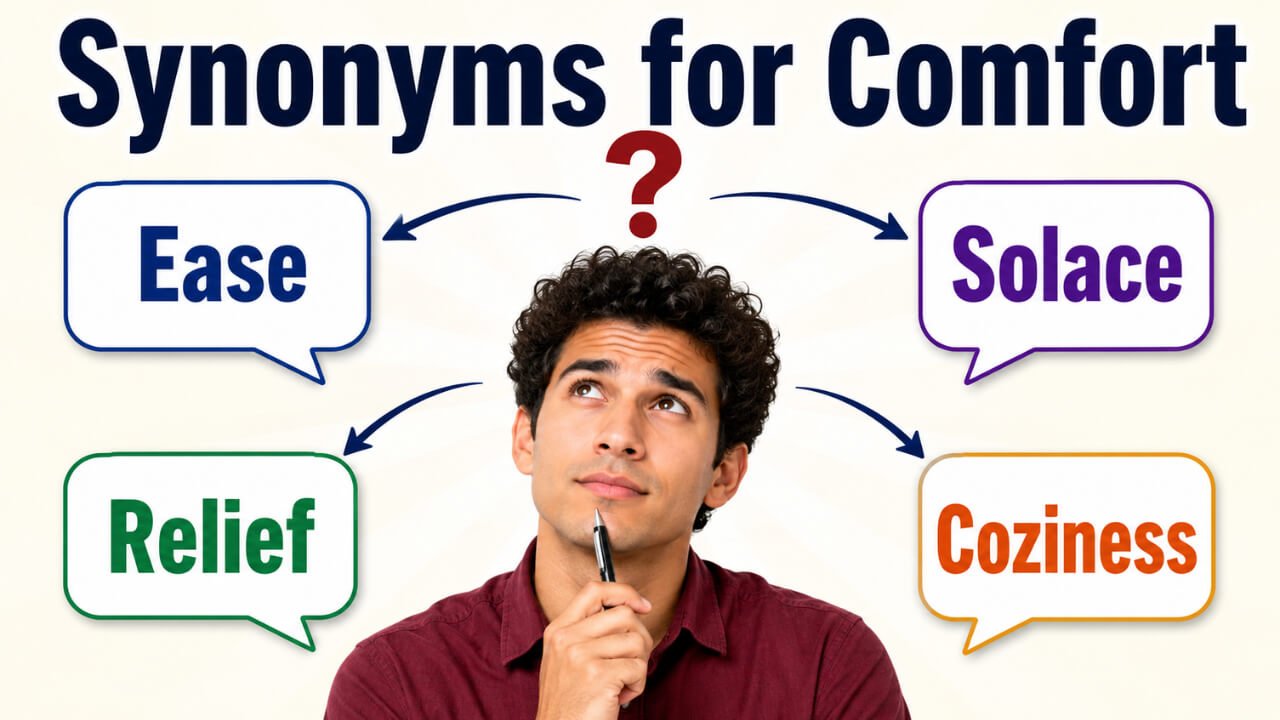
Quick Answer: The best synonyms for comfort include ease, relief, solace, consolation, reassurance, support, encouragement, peace, relaxation, and security. Use ease for physical freedom from difficulty, relief when pain or worry decreases, solace for emotional peace during sadness, and reassurance when someone needs confidence. Support and encouragement suit personal or professional situations, while relaxation describes a calm physical state. The most suitable choice depends on whether comfort refers to physical ease, emotional care, safety, or the act of helping someone feel better.
Pronunciation and Word Details
Word: Comfort
Pronunciation: /ˈkʌmfərt/
Part of Speech: Noun and verb
Meaning: A state of physical ease or emotional peace, or the act of helping someone feel calmer and less distressed.
US Pronunciation:
UK Pronunciation:
What Does “Comfort” Mean?
Comfort means a feeling of physical ease, emotional relief, safety, or freedom from pain and worry. As a noun, it can describe a pleasant condition, a source of reassurance, or something that makes life easier.
As a verb, comfort means to calm, support, or reassure someone who is upset, afraid, or suffering. The word appears in everyday conversation, emotional writing, health discussions, home descriptions, and formal communication.
Meaning, Tone, and Context of “Comfort”
Comfort has a warm, positive, and caring tone. It is generally neutral enough for both casual and formal writing, although some synonyms express more precise meanings.
In emotional situations, comfort suggests sympathy, reassurance, or support. In physical contexts, it refers to ease, rest, warmth, or relaxation. It may also describe useful possessions and pleasant conditions that improve daily life.
Writers should choose a synonym according to the type of comfort being discussed. Solace is more emotional, convenience is practical, and relief focuses on the removal of pain or worry.
When and How to Use “Comfort”
For Physical Ease: Use comfort when describing a pleasant condition without pain, pressure, or difficulty.
Example: The soft chair provided comfort during the long meeting.
For Emotional Support: Use comfort when someone receives kindness during sadness, fear, or disappointment.
Example: Her thoughtful words gave him comfort after the loss.
For Reassurance: Use comfort when information helps a person feel safer or more confident.
Example: The positive test results brought comfort to the family.
For Pleasant Living Conditions: Use comfort when discussing warmth, useful facilities, or an enjoyable environment.
Example: The room offers comfort, privacy, and plenty of natural light.
For Calming Someone: Use comfort as a verb when a person helps another person feel less upset.
Example: She comforted the frightened child with a gentle voice.
Best Synonyms for Comfort
Ease: Freedom from physical difficulty, pressure, or discomfort.
Example: The adjustable seat gave passengers greater ease during the journey.
Relief: A pleasant feeling that appears when pain, fear, or worry becomes weaker.
Example: Finishing the difficult task brought immediate relief.
Solace: Emotional peace received during sadness, grief, or disappointment.
Example: He found solace in the support of his family.
Consolation: Something that reduces sadness after a loss or failure.
Example: Her encouraging message offered some consolation.
Reassurance: Words or information that remove fear and restore confidence.
Example: The clear explanation gave the client reassurance.
Support: Practical or emotional help given during a difficult situation.
Example: The student appreciated the support of her teacher.
Encouragement: Words or actions that increase hope, confidence, or motivation.
Example: His encouragement helped the team continue.
Peace: A calm state without worry, conflict, or emotional disturbance.
Example: The quiet garden gave her a sense of peace.
Relaxation: A calm physical and mental state without tension.
Example: Reading before bed provides relaxation.
Security: The feeling of being safe, protected, and free from danger.
Example: A stable routine gave the children emotional security.
50 Synonyms for Comfort with Short Meanings
- Ease: Freedom from pain, difficulty, or pressure.
- Relief: A reduction in pain, worry, or distress.
- Solace: Emotional peace during sadness.
- Consolation: Something that reduces disappointment or grief.
- Reassurance: Confidence given to remove fear.
- Support: Emotional or practical help.
- Encouragement: Words or actions that create hope.
- Peace: A calm and undisturbed state.
- Calm: Freedom from fear, excitement, or stress.
- Relaxation: A state without physical or mental tension.
- Rest: A period of recovery and reduced activity.
- Contentment: Peaceful satisfaction with a situation.
- Satisfaction: A pleased feeling after a need is met.
- Security: A feeling of safety and protection.
- Safety: Freedom from danger or harm.
- Warmth: A pleasant feeling of heat or affection.
- Coziness: Warm, pleasant, and relaxing comfort.
- Convenience: A quality that makes something easier to use.
- Well being: A healthy and comfortable state.
- Tranquility: Deep peacefulness without disturbance.
- Serenity: A calm and untroubled condition.
- Cheer: Happiness or hope that reduces sadness.
- Sympathy: Understanding and concern for another person.
- Compassion: Caring concern for someone who is suffering.
- Aid: Help given during difficulty.
- Assistance: Practical support provided to someone.
- Help: Action that makes a problem easier.
- Protection: Safety provided against harm.
- Shelter: A safe place that offers protection.
- Refuge: A secure place away from danger.
- Respite: A temporary rest from difficulty.
- Soothing: A calming or pain reducing effect.
- Restoration: Recovery of strength, calm, or health.
- Refreshment: Renewed energy after rest.
- Luxury: Expensive comfort or pleasure.
- Pleasantness: The quality of being enjoyable.
- Tenderness: Gentle affection and care.
- Kindness: Friendly and considerate treatment.
- Care: Attention given to someone’s needs.
- Nurture: Care that supports growth and well being.
- Soothe: To reduce pain, fear, or distress.
- Console: To help someone feel less sad.
- Reassure: To restore confidence and remove doubt.
- Encourage: To give confidence, hope, or motivation.
- Calm: To make someone less worried or upset.
- Relieve: To reduce pain, pressure, or anxiety.
- Alleviate: To make suffering or difficulty less severe.
- Relax: To become calm and free from tension.
- Settle: To make a person or situation calmer.
- Hearten: To give someone hope and confidence.
Read Also:
Synonyms for Overall In An Essay

Synonyms for Comfort by Context
When Comfort Means Physical Ease
Ease, relaxation, rest, coziness, warmth, and well being describe pleasant physical conditions.
Example: The supportive mattress improved her comfort.
Synonym Option: The supportive mattress improved her physical ease.
When Comfort Means Emotional Relief
Solace, consolation, peace, reassurance, and relief suit sadness, worry, fear, or grief.
Example: He found comfort in familiar memories.
Synonym Option: He found solace in familiar memories.
When Comfort Means Support
Support, encouragement, sympathy, compassion, kindness, and care describe help given to another person.
Example: Her comfort helped him face the difficult situation.
Synonym Option: Her encouragement helped him face the difficult situation.
When Comfort Means Making Someone Calm
Soothe, console, reassure, calm, relieve, and settle work when comfort is used as a verb.
Example: The nurse comforted the nervous patient.
Synonym Option: The nurse reassured the nervous patient.
Another Word for Comfort
Ease is often the best general replacement for comfort when discussing physical conditions. However, solace is better for grief, reassurance suits uncertainty, and support works when someone receives practical or emotional help.
Original: The new chair provides excellent comfort.
Better Option: The new chair provides excellent support and ease.
Original: Her words gave me comfort.
Better Option: Her words gave me reassurance.
Original: Music brought him comfort during grief.
Better Option: Music brought him solace during grief.
Original: The staff offered comfort to the family.
Better Option: The staff offered emotional support to the family.
When Not to Use “Comfort”
Avoid comfort when a more specific word can explain exactly what happened. The word may sound vague if the reader cannot tell whether it means physical ease, emotional support, safety, or relief.
Weak: The medicine gave her comfort.
Better: The medicine relieved her pain.
Weak: His answer gave us comfort.
Better: His answer gave us reassurance.
Weak: The hotel provides many comforts.
Better: The hotel provides convenient facilities and relaxing rooms.
Weak: She comforted him about the interview.
Better: She encouraged him before the interview.
Words Commonly Confused With Comfort
Comfort vs Convenience: Comfort describes physical or emotional ease, while convenience describes something that saves time or effort.
Comfort vs Relief: Comfort is a broad feeling of ease or support. Relief specifically appears when pain, fear, or pressure decreases.
Comfort vs Consolation: Comfort may relate to physical or emotional ease. Consolation mainly reduces sadness after disappointment or loss.
Comfort vs Support: Comfort focuses on helping someone feel better. Support may include advice, money, assistance, or continued help.
Comfort vs Luxury: Comfort can be simple and necessary. Luxury refers to expensive or unnecessary pleasure.
Which Synonym Should You Choose?
Choose ease when describing physical movement, seating, clothing, or freedom from difficulty.
Choose relief when pain, stress, pressure, or worry becomes weaker.
Choose solace in formal or emotional writing about sadness, grief, or loneliness.
Choose reassurance when facts or words restore confidence.
Choose support in reports, essays, emails, and professional communication about practical or emotional help.
Choose encouragement when someone receives confidence or motivation.
Choose relaxation in casual speech about rest, holidays, hobbies, or calm activities.
Choose soothe or console when comfort is an action performed for someone who is upset.
Real Life Examples of “Comfort” in Sentences
Original: The warm blanket gave the child comfort.
Better Option: The warm blanket gave the child warmth and security.
Original: Her message brought me comfort.
Better Option: Her message brought me reassurance.
Original: The family found comfort in their memories.
Better Option: The family found solace in their memories.
Original: This chair was designed for comfort.
Better Option: This chair was designed for physical ease.
Original: He tried to comfort his disappointed friend.
Better Option: He tried to console his disappointed friend.
Original: The quiet room offered comfort after a stressful day.
Better Option: The quiet room offered peace after a stressful day.
Original: The results gave the patient comfort.
Better Option: The results gave the patient relief.
Original: She comforted the nervous speaker.
Better Option: She reassured the nervous speaker.
Original: Familiar routines provide comfort during change.
Better Option: Familiar routines provide security during change.
Synonym Groups and Usage Differences
Physical Ease Group
Ease, relaxation, rest, coziness, and warmth describe pleasant physical conditions. These words are useful for furniture, clothing, rooms, travel, and recovery.
Example: The loose clothing allowed greater ease of movement.
Emotional Relief Group
Solace, consolation, reassurance, relief, and peace describe emotional improvement after worry or sadness.
Example: Her sincere apology brought him relief.
Care and Support Group
Support, kindness, compassion, sympathy, and encouragement describe concern shown through words or actions.
Example: The family received support from close friends.
Safety Group
Security, safety, shelter, protection, and refuge describe freedom from danger or uncertainty.
Example: The stable environment gave the children security.
Calming Action Group
Soothe, console, reassure, calm, alleviate, and relieve describe actions that reduce distress.
Example: The clear instructions reassured the new employee.
Antonyms of Comfort
The opposite of comfort changes according to whether the word refers to physical ease, emotional peace, safety, or support.
Discomfort: Physical or emotional uneasiness.
Pain: Physical suffering or hurt.
Distress: Strong worry, sadness, or suffering.
Anxiety: Fear or nervousness about uncertainty.
Unease: A mild feeling of worry or discomfort.
Agitation: A troubled or restless emotional state.
Hardship: A difficult condition that causes suffering.
Inconvenience: A situation that creates extra difficulty.
Danger: Exposure to possible harm.
Neglect: Failure to provide proper care or attention.
Comparison Comfort vs Related Words
Comfort vs Ease
Comfort is a broad feeling of physical or emotional well being. Ease usually refers to freedom from effort, pain, or difficulty.
Example With Comfort: The familiar room gave her emotional comfort.
Example With Ease: The handle was designed for ease of use.
Comfort vs Relief
Comfort may come from care, safety, rest, or pleasant surroundings. Relief occurs when something unpleasant becomes weaker or ends.
Example With Comfort: His kind words gave her comfort.
Example With Relief: She felt relief when the pain disappeared.
Comfort vs Solace
Comfort works in physical and emotional situations. Solace is more formal and usually refers to emotional peace during sadness.
Example With Comfort: The soft cushions added comfort to the room.
Example With Solace: She found solace in peaceful memories.
Comfort vs Reassurance
Comfort is a general feeling of peace. Reassurance specifically removes doubt, fear, or uncertainty.
Example With Comfort: His presence brought her comfort.
Example With Reassurance: His explanation gave her reassurance.
Common Phrases and Expressions With Comfort
Comfort Zone: A familiar situation in which someone feels safe and confident.
Creature Comforts: Useful possessions that make daily life pleasant.
Words of Comfort: Kind statements offered to someone who is upset.
Source of Comfort: A person, object, or thought that provides peace.
Take Comfort In: To feel better because of a fact, memory, or belief.
Find Comfort In: To receive emotional peace from something.
Offer Comfort: To provide kindness or reassurance.
Physical Comfort: Freedom from pain, pressure, or unpleasant conditions.
Emotional Comfort: A feeling of calm created by care or support.
Comfort and Support: Emotional and practical help during difficulty.
Common Mistakes to Avoid
Do not use comfort repeatedly when a more precise synonym would improve clarity. Replace it with relief for reduced pain, solace for grief, reassurance for uncertainty, or ease for physical conditions.
Avoid confusing comfort with convenience. A convenient service saves effort, while a comfortable service creates physical or emotional ease.
Check the part of speech before choosing a synonym. Console and soothe are verbs, while solace and relief are usually nouns.
Avoid unnatural phrases such as “make comfort to someone.” Use “give someone comfort,” “offer comfort,” or “comfort someone.”
Conclusion
The best synonyms for comfort depend on the kind of ease or support being described. Ease and relaxation suit physical situations, while solace and consolation express emotional peace during sadness. Relief works when pain or worry decreases, reassurance restores confidence, and support describes practical or emotional help. When comfort is used as a verb, soothe, console, calm, and reassure are strong choices. Understanding these differences helps you select natural, accurate words for conversations, essays, descriptions, reports, and caring messages.
FAQs About Synonyms for Comfort
What Is the Best Synonym for Comfort?
Ease is the best general synonym for physical comfort. Solace, relief, or reassurance may be better in emotional situations.
What Is a Formal Synonym for Comfort?
Solace is a formal synonym for emotional comfort. Alleviate and console are formal choices when comfort is used as a verb.
What Is Another Word for Emotional Comfort?
Solace, reassurance, consolation, support, and peace are useful alternatives for emotional comfort.
Are Comfort and Relief the Same?
Not completely. Comfort is a broad state of ease, while relief is the feeling that appears when pain or worry decreases.
What Word Means to Comfort Someone?
Console, soothe, reassure, calm, encourage, and support can all mean to comfort someone.
Can Convenience Be a Synonym for Comfort?
Convenience can be a close alternative when discussing practical ease, but it does not usually describe emotional peace or physical relaxation.
What Is the Opposite of Comfort?
Common opposites include discomfort, pain, distress, anxiety, hardship, danger, and unease.
