
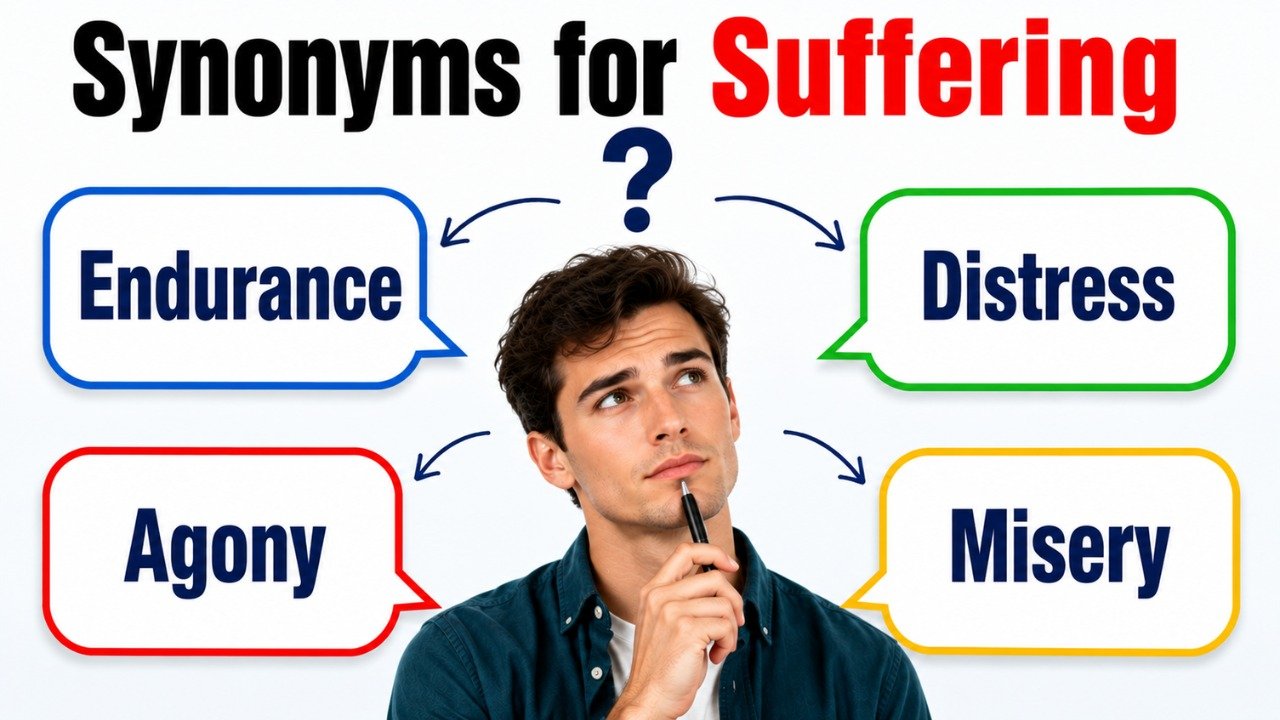
Quick Answer: The best synonyms for suffering include pain, distress, anguish, agony, misery, torment, hardship, affliction, adversity, and grief. Pain is the broadest choice for physical or emotional suffering. Distress works well in formal writing and reports. Anguish and agony express severe emotional or physical pain. Misery describes lasting unhappiness, while hardship and adversity suit difficult life circumstances. Torment suggests intense or continuing pain. Affliction is useful for illness or serious trouble, and grief specifically describes suffering caused by loss.
Pronunciation and Word Details
Word: Suffering.
Pronunciation: /ˈsʌf.ər.ɪŋ/
Part of Speech: Noun, adjective, and present participle of the verb suffer.
Meaning: The experience of physical pain, emotional distress, hardship, illness, or serious difficulty.
US Pronunciation:
UK Pronunciation:
What Does “Suffering” Mean?
Suffering means experiencing physical pain, emotional distress, illness, loss, hardship, or another serious difficulty.
As a noun, suffering refers to the painful experience itself.
Example: The disaster caused widespread suffering.
As the present participle of suffer, it describes someone who is currently experiencing pain, illness, or difficulty.
Example: She is suffering from a severe headache.
The word can also function as an adjective before a noun.
Example: The suffering families needed immediate support.
Suffering may describe physical pain, such as pain caused by an injury or illness. It can also refer to emotional pain caused by grief, rejection, loneliness, fear, or disappointment.
In broader contexts, suffering may describe poverty, oppression, conflict, deprivation, or difficult living conditions. The exact meaning depends on what is causing the pain and how serious or lasting it is.
Meaning, Tone, and Context of “Suffering”
Suffering has a serious, emotional, and often compassionate tone. It is stronger than ordinary words such as discomfort, inconvenience, or sadness.
The word is common in formal writing, everyday conversation, literature, health discussions, humanitarian writing, psychology, philosophy, and descriptions of difficult experiences.
In medical contexts, suffering may include pain, illness, fear, exhaustion, or reduced quality of life.
In emotional contexts, it may refer to grief, anguish, loneliness, despair, or heartbreak.
In social and humanitarian contexts, suffering can describe the effects of poverty, hunger, oppression, persecution, violence, or displacement.
In casual conversation, speakers often use more specific words such as pain, trouble, sadness, or hardship. In formal or emotional writing, suffering can be effective because it expresses the seriousness of an experience.
When and How to Use “Suffering”
For Physical Pain: Use suffering when someone is experiencing significant pain, illness, injury, or discomfort.
Example: He had been suffering from back pain for several months.
For Emotional Pain: Use the word for intense sadness, grief, anxiety, heartbreak, or emotional distress.
Example: She hid her suffering from the people around her.
For Illness: Use suffering with the word from when identifying a disease, condition, or symptom.
Example: Many patients were suffering from fever and exhaustion.
For Hardship: Use suffering to describe serious difficulties caused by poverty, conflict, unemployment, hunger, or loss.
Example: The economic crisis increased the suffering of vulnerable families.
For Compassionate Writing: Use suffering when you want to acknowledge another person’s pain with seriousness and sensitivity.
Example: His words showed that he understood their suffering.
For Ongoing Difficulty: Use suffering when the pain or problem continues over time.
Example: The community had been suffering because of repeated flooding.
For Moral or Philosophical Discussion: Use suffering when discussing why people experience pain, hardship, injustice, or loss.
Example: The essay explores how people find meaning during suffering.
Best Synonyms for Suffering
Pain: Physical or emotional discomfort that may range from mild to severe.
Example: She felt deep pain after losing someone she loved.
Distress: Serious worry, pain, fear, or emotional difficulty.
Example: The unexpected news caused considerable distress.
Anguish: Extreme emotional pain, worry, or sorrow.
Example: His face revealed the anguish he had tried to hide.
Agony: Extremely severe physical or emotional pain.
Example: She was in agony after the accident.
Misery: A state of great unhappiness, discomfort, or hardship.
Example: The endless uncertainty filled him with misery.
Torment: Severe physical or mental suffering that continues or feels unbearable.
Example: The painful memory became a source of torment.
Hardship: A difficult condition that causes struggle, deprivation, or discomfort.
Example: The family survived years of financial hardship.
Affliction: An illness, condition, or serious problem that causes suffering.
Example: The treatment brought relief from the painful affliction.
Adversity: Difficult or unfortunate circumstances that test a person’s strength.
Example: She remained hopeful during adversity.
Grief: Deep emotional suffering caused by death, separation, or major loss.
Example: He needed time to process his grief.
50 Synonyms for Suffering with Short Meanings
- Pain: Physical or emotional discomfort.
- Distress: Serious emotional or physical difficulty.
- Anguish: Extreme mental or emotional pain.
- Agony: Severe and overwhelming pain.
- Misery: Great unhappiness or discomfort.
- Torment: Intense and continuing suffering.
- Hardship: A difficult condition that causes struggle.
- Affliction: An illness or serious source of pain.
- Adversity: Difficult or unfortunate circumstances.
- Grief: Deep sorrow caused by loss.
- Sorrow: A strong feeling of sadness.
- Heartache: Emotional pain caused by loss or disappointment.
- Despair: Complete loss of hope.
- Woe: Deep sadness, trouble, or misfortune.
- Discomfort: Mild physical or emotional uneasiness.
- Ailment: An illness or health problem.
- Illness: A condition of poor physical or mental health.
- Sickness: The state of being unwell.
- Injury: Physical harm or damage to the body.
- Trauma: Severe physical or emotional shock.
- Ordeal: A painful or extremely difficult experience.
- Tribulation: Serious trouble or hardship.
- Trouble: A difficult or worrying situation.
- Burden: A responsibility or problem that is difficult to carry.
- Strain: Pressure that causes physical or emotional stress.
- Struggle: A difficult effort against pain or hardship.
- Deprivation: Lack of something necessary for a healthy life.
- Oppression: Cruel or unfair control that causes suffering.
- Persecution: Unfair and harmful treatment over time.
- Abuse: Cruel, violent, or harmful treatment.
- Maltreatment: Improper or cruel treatment of a person.
- Torture: Deliberate infliction of severe pain.
- Agitation: Emotional disturbance, worry, or restlessness.
- Anxiety: Persistent worry, fear, or nervousness.
- Desolation: Extreme sadness, loneliness, or emptiness.
- Despondency: A state of deep discouragement and lost hope.
- Unhappiness: The condition of not feeling happy or satisfied.
- Sadness: Emotional pain caused by an upsetting experience.
- Melancholy: A quiet and lasting feeling of sadness.
- Lamentation: An expression of grief or sorrow.
- Desperation: Distress caused by a situation that feels hopeless.
- Exhaustion: Extreme physical or emotional tiredness.
- Fatigue: Persistent weakness or lack of energy.
- Ache: A continuous and often dull pain.
- Hurt: Physical or emotional pain.
- Privation: Lack of basic comforts or necessities.
- Misfortune: An unlucky event or difficult circumstance.
- Calamity: A disastrous event that causes great suffering.
- Wretchedness: Extreme misery or unhappiness.
- Soreness: Physical pain or tenderness in part of the body.
Read Also:
Synonyms for As

Synonyms for Suffering by Context
When Suffering Means Physical Pain
Pain is the broadest synonym for physical suffering. Agony describes extreme pain, while ache and soreness usually describe a more specific physical sensation.
Pain: General physical discomfort.
Example: The medication reduced her pain.
Agony: Extremely intense physical pain.
Example: He cried out in agony when he moved his injured leg.
Ache: A dull or continuous physical pain.
Example: She felt an ache in her shoulder.
Soreness: Tenderness or discomfort in a body part.
Example: The exercise caused muscle soreness.
Discomfort: Mild or moderate physical uneasiness.
Example: He experienced some discomfort after the procedure.
When Suffering Means Emotional Pain
Anguish, heartache, grief, sorrow, and despair are useful when suffering is emotional.
Anguish: Severe emotional pain or worry.
Example: The uncertainty caused months of anguish.
Heartache: Emotional pain connected with love, loss, or disappointment.
Example: Their separation brought considerable heartache.
Grief: Deep sadness after death or another major loss.
Example: She received support while dealing with grief.
Sorrow: A serious feeling of sadness.
Example: His voice was filled with sorrow.
Despair: Emotional suffering combined with a loss of hope.
Example: He refused to give in to despair.
When Suffering Means Hardship
Hardship, adversity, ordeal, tribulation, and struggle describe difficult circumstances rather than pain alone.
Hardship: A condition that makes life difficult.
Example: They faced financial hardship after losing their income.
Adversity: Serious difficulty that tests resilience.
Example: The team remained united during adversity.
Ordeal: A highly unpleasant or painful experience.
Example: The long legal process was an exhausting ordeal.
Tribulation: Prolonged trouble or suffering.
Example: Her courage remained strong through every tribulation.
Struggle: Continuing effort against difficulty.
Example: His recovery was a long struggle.
When Suffering Means Illness
Affliction, illness, sickness, ailment, and fatigue are useful in health related contexts.
Affliction: A serious or lasting condition that causes pain.
Example: The rare affliction affected his ability to walk.
Illness: A physical or mental health condition.
Example: Her illness required several weeks of rest.
Sickness: The state of being physically unwell.
Example: The medicine helped reduce the sickness.
Ailment: A usually minor or specific health problem.
Example: The doctor treated the common ailment.
Fatigue: Lasting tiredness caused by illness, stress, or effort.
Example: Fatigue made it difficult for her to concentrate.
When Suffering Means Cruel Treatment
Oppression, persecution, abuse, maltreatment, and torture describe suffering caused by another person, group, or system.
Oppression: Unfair control that limits freedom and causes harm.
Example: The people demanded an end to oppression.
Persecution: Repeated unfair treatment directed at a person or group.
Example: The family fled to escape persecution.
Abuse: Harmful physical, emotional, or verbal treatment.
Example: The organization provided protection from abuse.
Maltreatment: Cruel, neglectful, or improper treatment.
Example: The investigation uncovered years of maltreatment.
Torture: The deliberate use of extreme pain.
Example: Survivors spoke about the lasting effects of torture.
Another Word for Suffering
Pain is often the best single replacement for suffering because it can describe both physical and emotional experiences. However, the best alternative depends on the exact cause, intensity, and duration.
Use distress for formal emotional difficulty, agony for extreme pain, hardship for difficult circumstances, and grief for pain caused by loss.
Original: The patient was experiencing considerable suffering.
Better Option: The patient was experiencing considerable pain.
Original: The uncertainty caused her great suffering.
Better Option: The uncertainty caused her severe distress.
Original: The family endured years of suffering.
Better Option: The family endured years of hardship.
Original: His suffering after the loss was difficult to express.
Better Option: His grief after the loss was difficult to express.
When Not to Use “Suffering”
Do not use suffering when a more specific word would make the sentence clearer. The word can sound vague when the reader does not know whether the problem involves pain, illness, grief, poverty, anxiety, or another difficulty.
Avoid using suffering for minor inconvenience unless the wording is intentionally dramatic. A delayed appointment may cause frustration, but it would rarely cause genuine suffering.
Do not repeat suffering several times in the same paragraph. Choose precise alternatives such as pain, distress, grief, hardship, or illness.
Weak: She was suffering because she was suffering from emotional suffering.
Better: She was in distress because she was dealing with intense grief.
Weak: I was suffering because the meeting started ten minutes late.
Better: I was frustrated because the meeting started ten minutes late.
Weak: The athlete experienced suffering in his knee.
Better: The athlete experienced sharp pain in his knee.
Weak: The report discusses suffering without identifying its cause.
Better: The report discusses the hardship caused by food shortages and unemployment.
Words Commonly Confused With Suffering
Suffering vs Pain: Suffering is a broad experience that may include physical pain, emotional distress, fear, loss, or hardship. Pain usually refers more directly to an unpleasant physical or emotional sensation.
Suffering vs Distress: Suffering may be physical, emotional, or social. Distress usually emphasizes emotional upset, worry, fear, or urgent difficulty.
Suffering vs Grief: Suffering has many possible causes. Grief specifically refers to deep sadness caused by death, separation, or another major loss.
Suffering vs Hardship: Suffering describes the painful experience. Hardship describes the difficult condition that creates struggle, deprivation, or discomfort.
Suffering vs Agony: Suffering can vary in intensity. Agony always suggests extremely severe physical or emotional pain.
Suffering vs Misery: Suffering may involve pain, illness, or hardship. Misery focuses more strongly on unhappiness, discomfort, and a deeply unpleasant state.
Suffering vs Trauma: Suffering is the experience of pain or hardship. Trauma is a severe physical injury or emotional shock that may continue affecting a person afterward.
Which Synonym Should You Choose?
Choose pain when referring broadly to physical or emotional discomfort.
Choose distress when writing formal reports, serious messages, health descriptions, or discussions of emotional difficulty.
Choose anguish when the emotional pain is extreme and deeply personal.
Choose agony when describing unbearable or extremely intense pain.
Choose misery when emphasizing prolonged unhappiness or unpleasant living conditions.
Choose hardship when discussing financial problems, poverty, difficult work, or challenging life circumstances.
Choose adversity when describing difficulties that require courage, patience, or resilience.
Choose affliction when referring to a serious illness, condition, or continuing problem.
Choose grief when the suffering is caused by death, separation, or major loss.
Choose torment when the pain is intense, continuing, and difficult to escape.
Choose ordeal when describing one specific experience that was frightening, painful, or exhausting.
Choose discomfort when the pain or difficulty is mild rather than severe.
Choose struggle in essays or conversation when emphasizing effort against a continuing problem.
Choose oppression or persecution when the suffering results from cruel, unfair, or systematic treatment.
Real Life Examples of “Suffering” in Sentences
Original: She was suffering after the sudden loss of her mother.
Better Option: She was grieving after the sudden loss of her mother.
Original: The injury caused him intense suffering.
Better Option: The injury caused him intense agony.
Original: Many families were suffering because of rising living costs.
Better Option: Many families were facing financial hardship because of rising living costs.
Original: He had been suffering from headaches all week.
Better Option: He had been experiencing persistent head pain all week.
Original: The uncertainty created unnecessary suffering.
Better Option: The uncertainty created unnecessary distress.
Original: The community continued suffering after the disaster.
Better Option: The community continued facing adversity after the disaster.
Original: Her private suffering was difficult for others to recognize.
Better Option: Her private anguish was difficult for others to recognize.
Original: The treatment reduced the patient’s suffering.
Better Option: The treatment reduced the patient’s discomfort.
Original: The long journey became a period of suffering.
Better Option: The long journey became a difficult ordeal.
Original: He wrote about the suffering caused by unfair treatment.
Better Option: He wrote about the oppression caused by unfair treatment.
Synonym Groups and Usage Differences
Physical Pain Group
Pain, agony, ache, soreness, discomfort, injury, and hurt describe physical suffering at different levels.
Pain is general. Agony is extreme. Ache is usually dull and continuous. Soreness is tenderness in a particular area. Discomfort is milder than pain.
Example: The patient felt soreness rather than severe pain.
Emotional Distress Group
Anguish, distress, heartache, despair, sorrow, sadness, and grief describe emotional suffering.
Anguish is intense. Distress may involve fear or worry. Heartache often relates to relationships or disappointment. Grief follows major loss. Despair includes a loss of hope.
Example: The family experienced deep grief after the loss.
Hardship Group
Hardship, adversity, struggle, ordeal, tribulation, deprivation, and burden describe difficult conditions or experiences.
Hardship is a difficult living condition. Adversity is a serious challenge. An ordeal is one painful experience. Deprivation means lacking basic needs or comforts.
Example: The community showed resilience during adversity.
Illness Group
Affliction, illness, sickness, ailment, fatigue, injury, and trauma describe health related suffering.
Affliction often suggests a serious or continuing condition. Ailment is usually less severe. Trauma may refer to severe injury or emotional shock.
Example: The illness caused pain, fatigue, and weakness.
Cruel Treatment Group
Oppression, persecution, abuse, maltreatment, and torture describe suffering caused by deliberate or unfair treatment.
Oppression is broad and systematic. Persecution targets a person or group. Abuse may be physical, emotional, or verbal. Torture involves deliberate extreme pain.
Example: The survivors described years of persecution and abuse.
Unhappiness Group
Misery, wretchedness, melancholy, unhappiness, desolation, and woe describe states of deep sadness or dissatisfaction.
Misery is strong and often prolonged. Melancholy is quieter and more reflective. Desolation suggests loneliness and emptiness. Wretchedness indicates extreme misery.
Example: Isolation filled him with unhappiness and desolation.
Antonyms of Suffering
The opposite of suffering depends on whether the word refers to pain, sadness, hardship, illness, or emotional distress.
Comfort: A state of physical ease and freedom from pain.
Relief: The reduction or removal of pain, worry, or difficulty.
Pleasure: A feeling of enjoyment or satisfaction.
Happiness: A positive emotional state of joy or contentment.
Joy: A strong feeling of delight or gladness.
Wellness: A condition of good physical and mental health.
Health: The state of being physically and mentally well.
Ease: Freedom from difficulty, effort, or discomfort.
Peace: A calm state without conflict, fear, or distress.
Contentment: Satisfaction with one’s circumstances.
Prosperity: A state of success, security, or material comfort.
Recovery: The process of becoming healthy or strong again.
Healing: The process of recovering from physical or emotional pain.
Safety: Protection from danger, harm, or cruel treatment.
Hope: A belief that circumstances can improve.
Comparison of Suffering and Related Words
Suffering vs Pain
Suffering is broader than pain. It may include fear, grief, helplessness, hardship, and emotional distress in addition to physical pain.
Pain refers more directly to an unpleasant physical or emotional sensation.
Example With Suffering: The long illness caused suffering for the entire family.
Example With Pain: The medicine reduced the pain in her shoulder.
Suffering vs Distress
Suffering may result from illness, injury, loss, poverty, or unfair treatment. Distress usually focuses on worry, fear, emotional upset, or an urgent difficult situation.
Example With Suffering: The conflict caused widespread suffering.
Example With Distress: The missing child’s parents were in severe distress.
Suffering vs Anguish
Suffering can be mild, moderate, or severe. Anguish always describes intense emotional pain or worry.
Example With Suffering: He spoke openly about his suffering.
Example With Anguish: He waited in anguish for news from the hospital.
Suffering vs Agony
Suffering is a general term. Agony represents the highest degree of physical or emotional pain.
Example With Suffering: She experienced suffering during her recovery.
Example With Agony: She was in agony immediately after the injury.
Suffering vs Misery
Suffering may involve any form of pain or hardship. Misery emphasizes deep unhappiness, discomfort, or an unpleasant condition.
Example With Suffering: The disease caused years of suffering.
Example With Misery: The cold and isolation made the journey a misery.
Suffering vs Hardship
Suffering is the painful effect of a difficult situation. Hardship is the situation or condition that creates difficulty.
Example With Suffering: Food shortages increased the suffering of local families.
Example With Hardship: Food shortages created serious hardship for local families.
Suffering vs Grief
Suffering can come from many causes. Grief is specifically connected with death, separation, or another meaningful loss.
Example With Suffering: His suffering affected every area of his life.
Example With Grief: His grief became stronger near the anniversary of the loss.
Suffering vs Trauma
Suffering is the experience of pain or hardship. Trauma is a severe injury or emotional shock that may produce lasting effects.
Example With Suffering: She described the suffering she experienced during the event.
Example With Trauma: She received professional support to process the trauma.
Common Phrases and Expressions With “Suffering”
Human Suffering: Physical or emotional pain experienced by people.
End Suffering: Stop or remove pain, hardship, or distress.
Relieve Suffering: Reduce someone’s pain or difficulty.
Cause Suffering: Create physical pain, emotional distress, or hardship.
Unnecessary Suffering: Pain or difficulty that could have been prevented.
Great Suffering: Extremely serious pain or hardship.
Emotional Suffering: Mental pain caused by grief, fear, rejection, or distress.
Physical Suffering: Pain or discomfort affecting the body.
Silent Suffering: Pain that a person experiences without openly discussing it.
Prolonged Suffering: Pain or hardship that continues for a long period.
Common Mistakes to Avoid
One common mistake is using suffering when the experience is only a small inconvenience. The word has a serious tone, so it may sound exaggerated in minor situations.
Another mistake is using suffering without explaining its cause. A specific term such as grief, pain, illness, anxiety, or financial hardship often gives the reader more useful information.
Avoid choosing an overly intense synonym. Agony, torment, torture, and anguish should describe severe experiences rather than ordinary discomfort.
Do not confuse suffering with struggle. Suffering emphasizes pain or distress, while struggle emphasizes effort against difficulty.
Be careful with the phrase suffering from. It is normally followed by an illness, condition, symptom, or serious problem.
Correct: She is suffering from severe anxiety.
Incorrect: She is suffering from a pleasant holiday.
Avoid repeating the same noun throughout a paragraph. Use suitable alternatives, but do not replace the word merely for variety. Each synonym should match the intended meaning.
Use grief for loss, pain for physical or emotional discomfort, hardship for difficult circumstances, distress for worry or emotional difficulty, and agony for extreme pain.
Conclusion
The best synonyms for suffering depend on the type, intensity, and cause of the painful experience. Pain is the most flexible alternative, while distress suits emotional or formal contexts. Anguish and agony express extreme pain, grief describes loss, and hardship or adversity describes difficult circumstances. Misery suggests lasting unhappiness, while affliction often refers to illness. Choosing precise synonyms for suffering helps readers understand whether the sentence concerns physical pain, emotional distress, poor health, cruel treatment, or a challenging life situation.
FAQs About Synonyms for Suffering
What Is the Best Synonym for Suffering?
Pain is the broadest synonym for suffering. Distress, anguish, misery, hardship, and grief may be better in more specific contexts.
What Is a Stronger Word Than Suffering?
Agony, torment, and anguish are stronger words. Agony often describes extreme physical or emotional pain, while anguish focuses mainly on severe emotional pain.
What Is Another Word for Emotional Suffering?
Anguish, distress, heartache, grief, sorrow, and despair are useful alternatives for emotional suffering.
What Is Another Word for Physical Suffering?
Pain, agony, ache, soreness, discomfort, and hurt can describe physical suffering.
Are Suffering and Hardship the Same?
Not exactly. Hardship is a difficult condition, while suffering is the pain or distress that may result from that condition.
Can Misery Replace Suffering?
Misery can replace suffering when the sentence describes deep unhappiness or extremely unpleasant conditions. It is less suitable when referring specifically to an injury or medical symptom.
Is Suffering a Noun or a Verb?
Suffering can be a noun, an adjective, or the present participle of the verb suffer. Its grammatical role depends on the sentence.
