

Quick Answer: Synonyms for home include house, residence, dwelling, abode, domicile, household, place, shelter, haven, and sanctuary. Use house for the physical building, residence for formal writing, dwelling for legal or descriptive contexts, abode for literary style, domicile for official or legal use, and haven or sanctuary when home means comfort, safety, and emotional belonging.
Pronunciation and Word Details
Word: Home.
Pronunciation: /hoʊm/.
Part of Speech: Noun, adjective, and adverb.
Meaning: A place where someone lives, belongs, or feels safe and comfortable.
US Pronunciation:
UK Pronunciation:
What Does “Home” Mean?
Direct Answer: “Home” means the place where a person lives or feels a sense of comfort, safety, and belonging.
“Home” is most often used as a noun, but it can also work as an adjective or adverb. As a noun, it refers to a living place, family space, or emotional place of belonging. As an adjective, it can describe something related to the home, such as home cooking or home life. As an adverb, it describes movement toward the place where someone lives, such as “go home” or “come home.”
The word can describe a physical building, a family environment, a hometown, a country, or a place where someone feels accepted.
Meaning, Tone, and Context of “Home”
“Home” has a warm, familiar, and emotional tone. It is common in daily conversation, personal writing, real estate descriptions, family discussions, travel writing, and emotional expression. The word is usually neutral, but it can become deeply emotional when it refers to love, safety, memory, comfort, identity, or belonging.
In formal writing, words like residence, domicile, and dwelling may be better. In casual speech, house, place, and apartment sound more natural. In emotional writing, haven, sanctuary, and refuge often express the deeper feeling of home.
When and How to Use “Home”
For a Living Place: Use “home” when talking about where someone lives.
Example: She returned home after a long day at work.
For a Physical Building: Use it when the exact type of building is not important.
Example: Their home has three bedrooms and a small garden.
For Family Life: Use it when describing the place connected to family, care, and daily routines.
Example: He grew up in a loving home.
For Comfort and Safety: Use it when the meaning is emotional rather than only physical.
Example: Her grandmother’s kitchen always felt like home.
For Origin or Belonging: Use it when talking about a hometown, country, or familiar place.
Example: After many years abroad, he still called the valley home.
For Direction: Use “home” as an adverb when describing movement toward someone’s living place.
Example: They walked home before sunset.
Best Synonyms for Home
House: A building where people live.
Example: They bought a small house near the park.
Residence: A formal word for the place where someone lives.
Example: The form asks for your current residence.
Dwelling: A house, apartment, or other place used for living.
Example: The old dwelling stood near the edge of the village.
Abode: A literary or formal word for someone’s home.
Example: They welcomed guests into their peaceful abode.
Domicile: A legal or official place of permanent residence.
Example: The document required proof of domicile.
Household: The people living together in one home.
Example: The entire household gathered for dinner.
Place: A casual word for someone’s home or living space.
Example: We can meet at my place after lunch.
Shelter: A place that gives protection and safety.
Example: The small cabin gave them shelter from the storm.
Haven: A safe and peaceful place.
Example: Her room became a haven after a stressful week.
Sanctuary: A calm, protected place where someone feels safe.
Example: His home office was a quiet sanctuary for reading.
50 Synonyms for Home with Short Meanings
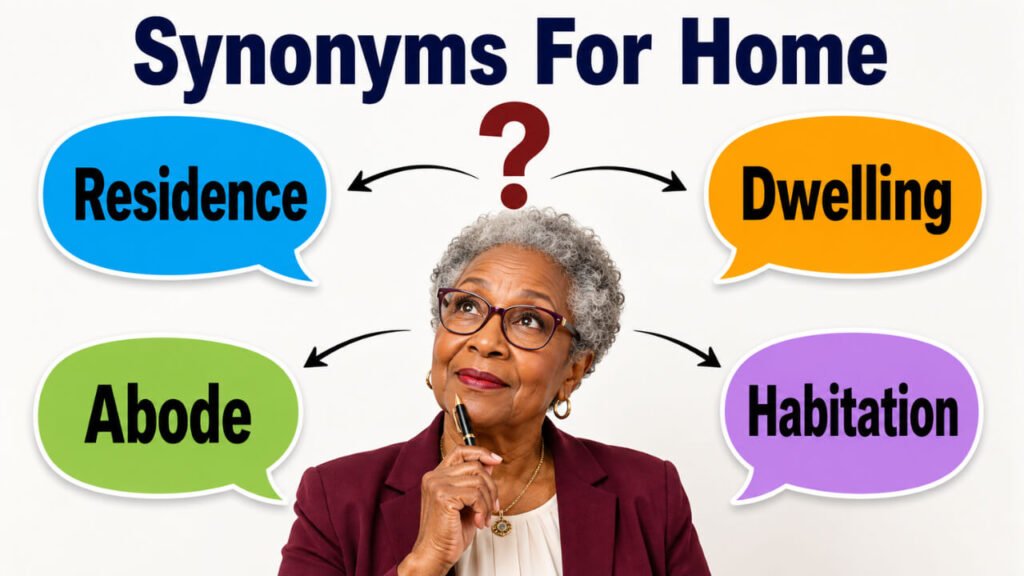
- House: A building made for people to live in.
- Residence: A formal place where someone lives.
- Dwelling: A living place or shelter.
- Abode: A poetic or formal home.
- Domicile: A legal permanent home.
- Household: People living together in one home.
- Place: A casual word for someone’s home.
- Shelter: A place that protects people.
- Haven: A safe and peaceful place.
- Sanctuary: A protected and calming place.
- Habitation: A place where people live.
- Lodging: A temporary place to stay.
- Quarters: Living space, often shared or assigned.
- Apartment: A set of rooms in a building.
- Flat: A living unit in a larger building.
- Condominium: A privately owned apartment style home.
- Townhouse: A home joined to other similar homes.
- Cottage: A small cozy house.
- Bungalow: A low house, often with one main floor.
- Villa: A large or pleasant house, often in a beautiful area.
- Mansion: A very large and impressive house.
- Farmhouse: A house on or near a farm.
- Cabin: A small simple house, often in nature.
- Hut: A small simple shelter.
- Shack: A small rough building used for living.
- Homestead: A home with land, often in a rural area.
- Hearth: A symbolic word for home and family warmth.
- Nest: A cozy or private home.
- Den: A comfortable private room or home space.
- Pad: An informal word for someone’s home.
- Roof: A place to live, especially as protection.
- Address: The place where someone lives or receives mail.
- Living Space: An area used for daily life at home.
- Family Home: A home connected with family life.
- Ancestral Home: A home connected to family history.
- Birthplace: The place where someone was born.
- Hometown: The town someone considers home.
- Base: A main place where someone lives or operates.
- Headquarters: A main location for living, working, or organizing.
- Refuge: A safe place during trouble.
- Retreat: A quiet place for rest.
- Safe Place: A location where someone feels protected.
- Comfort Zone: A familiar place or state of ease.
- Nestling Place: A cozy place to settle.
- Living Quarters: Rooms or spaces used for living.
- Boarding House: A house where people rent rooms and meals.
- Lodging House: A place that provides temporary rooms.
- Tenement: A rented living building, often divided into units.
- Premises: A building and its surrounding property.
- Property: Land or a building owned by someone.
Read Also:
Synonyms for Passionate

Synonyms for Home by Context
When Home Means a Physical Building
Use these words when you mean the actual structure where someone lives.
Useful Synonyms: House, residence, dwelling, apartment, cottage.
Example: Their house has a bright kitchen and a quiet backyard.
Example: The residence was built with large windows and stone walls.
When Home Means a Formal Living Place
Use these words in official, legal, academic, or professional writing.
Useful Synonyms: Residence, domicile, dwelling, habitation, address.
Example: Applicants must provide their current residence.
Example: His legal domicile remained in the same city.
When Home Means Family and Daily Life
Use these words when the meaning includes people, routines, and family relationships.
Useful Synonyms: Household, family home, hearth, nest, living space.
Example: The household shared meals every evening.
Example: Their family home was full of warmth and laughter.
When Home Means Safety and Comfort
Use these words when home means peace, protection, and emotional security.
Useful Synonyms: Haven, sanctuary, refuge, shelter, safe place.
Example: After a hard week, her room felt like a haven.
Example: The cottage became a refuge from noise and pressure.
When Home Means Origin or Belonging
Use these words when talking about roots, identity, birthplace, or familiar places.
Useful Synonyms: Hometown, birthplace, ancestral home, homeland, base.
Example: He returned to his hometown after many years away.
Example: The old farmhouse was their ancestral home.
When Home Means Temporary Stay
Use these words when the place is not permanent.
Useful Synonyms: Lodging, quarters, boarding house, lodging house, shelter.
Example: They found lodging near the station for the night.
Example: The workers stayed in shared quarters during the project.
Another Word for Home
Another word for home is house when you mean the physical building. However, the best single replacement depends on context. Use residence in formal writing, place in casual speech, dwelling in property descriptions, and haven when the meaning is emotional.
Original: They moved into a new home.
Better Option: They moved into a new house.
Original: Please write your home on the form.
Better Option: Please write your residence on the form.
Original: My home feels peaceful.
Better Option: My place feels peaceful.
Original: Her home became her safe space.
Better Option: Her home became her sanctuary.
When Not to Use “Home”
Do not use “home” when a more exact word gives clearer meaning. If you mean the building, house may be better. If you mean an official address, residence or domicile may be more accurate. If you mean a temporary sleeping place, lodging or quarters may fit better.
Also avoid repeating “home” too often in one paragraph. Repetition can make writing sound plain when more specific words would improve clarity.
Weak: Their home is a beautiful home with many home features.
Better: Their house is a beautiful residence with many comfortable features.
Weak: Write your home in the blank space.
Better: Write your address in the blank space.
Weak: The soldiers returned to their home for the night.
Better: The soldiers returned to their quarters for the night.
Weak: The hotel was our home during the trip.
Better: The hotel was our lodging during the trip.
Words Commonly Confused With Home
Home vs House: “Home” can mean a place of belonging, while “house” mainly means the physical building.
Home vs Residence: “Home” is warm and general, while “residence” is more formal and official.
Home vs Dwelling: “Home” is common and emotional, while “dwelling” sounds more legal, technical, or descriptive.
Home vs Domicile: “Home” is everyday language, while “domicile” is mostly used for legal or official permanent residence.
Home vs Household: “Home” is the place, while “household” means the people living together.
Home vs Shelter: “Home” can be permanent and emotional, while “shelter” focuses on protection.
Home vs Haven: “Home” can be any living place, while “haven” emphasizes safety, peace, and relief.
Which Synonym Should You Choose?
Choose house when writing about a physical building.
Choose residence when writing formally about where someone lives.
Choose dwelling when describing a living place in legal, property, or technical contexts.
Choose domicile when writing about someone’s official or legal permanent home.
Choose place when speaking casually about where someone lives.
Choose household when the focus is on the people who live together.
Choose apartment or flat when the home is a unit inside a larger building.
Choose shelter when the focus is protection from danger, weather, or hardship.
Choose haven when the meaning is emotional comfort and peace.
Choose sanctuary when home feels private, calm, safe, and protected.
Real Life Examples of “Home” in Sentences
Original: She went home after school.
Better Option: She went to her house after school.
Original: Their home is near the river.
Better Option: Their residence is near the river.
Original: He listed his home on the document.
Better Option: He listed his address on the document.
Original: The family home was quiet at night.
Better Option: The household was quiet at night.
Original: The small home protected them from the cold.
Better Option: The small shelter protected them from the cold.
Original: Her home was peaceful and private.
Better Option: Her sanctuary was peaceful and private.
Original: They rented a home downtown.
Better Option: They rented an apartment downtown.
Original: The old home stood beside the fields.
Better Option: The old farmhouse stood beside the fields.
Original: His room felt like home.
Better Option: His room felt like a haven.
Original: She missed her home during the trip.
Better Option: She missed her hometown during the trip.
Synonym Groups and Usage Differences
Physical Building Group
This group includes words that describe the structure where people live. House, apartment, cottage, bungalow, and villa focus on the type of building.
Example: They bought a cottage near the lake.
Formal Residence Group
This group is useful for official writing, forms, property descriptions, and legal contexts. Residence, domicile, dwelling, habitation, and address sound more precise than “home.”
Example: Proof of residence is required for the application.
Family and People Group
This group focuses on the people or family life connected with a home. Household, family home, hearth, and nest suggest warmth, care, and shared living.
Example: The household prepared dinner together.
Safety and Comfort Group
This group describes home as a place of protection, rest, and peace. Shelter, haven, sanctuary, refuge, and safe place work well in emotional writing.
Example: The quiet room became her refuge.
Origin and Identity Group
This group is useful when home means where someone comes from or belongs. Hometown, birthplace, ancestral home, and homeland connect home with memory, roots, and identity.
Example: His hometown shaped many of his childhood memories.
Antonyms of Home
Away: Not at home or not in the usual place.
Workplace: A place where someone works instead of lives.
Office: A professional place, not a living place.
Abroad: In another country, away from home.
Outside: Not inside the home.
Street: A public place outside private living space.
Wilderness: A natural area away from settled homes.
Exile: Forced separation from one’s home or country.
Foreign Land: A place that feels unfamiliar or not like home.
Public Space: An area open to others, not private like a home.
Comparison: Home vs Related Words
Home vs House
“Home” can describe emotional belonging, comfort, and personal connection. “House” usually means the physical building.
Example With Home: This city finally feels like home.
Example With House: They painted the house white.
Home vs Residence
“Home” is natural in conversation. “Residence” is more formal and often used in documents, applications, and official writing.
Example With Home: I am going home after dinner.
Example With Residence: Please confirm your current residence.
Home vs Dwelling
“Home” is common and warm. “Dwelling” is more technical and often describes a place where people live.
Example With Home: Their home is full of memories.
Example With Dwelling: The dwelling has two rooms and a small kitchen.
Home vs Domicile
“Home” is everyday language. “Domicile” means someone’s official or legal permanent home.
Example With Home: She calls the mountain village home.
Example With Domicile: His legal domicile is in another state.
Home vs Household
“Home” means the place. “Household” means the people who live together in that place.
Example With Home: Their home is near the school.
Example With Household: Every household received a notice.
Home vs Shelter
“Home” can be permanent, personal, and emotional. “Shelter” mainly means protection or a safe place to stay.
Example With Home: They built a home together.
Example With Shelter: The cabin gave them shelter from the rain.
Common Phrases and Expressions With Home
At Home: In the place where someone lives.
Go Home: Return to one’s living place.
Come Home: Arrive back at one’s living place.
Home Sweet Home: A phrase expressing comfort and affection for home.
Feel at Home: Feel comfortable and welcome.
Make Yourself at Home: Relax as if you are in your own home.
Home Life: Daily personal or family life at home.
Home Address: The address where someone lives.
Home Town: The town someone considers their place of origin.
Home Comforts: Familiar things that make home pleasant.
Common Mistakes to Avoid
A common mistake is using “home” when the meaning is only a physical building. In that case, house, apartment, or cottage may be clearer.
Another mistake is using household as if it means the building. A household refers to the people who live together, not the structure itself.
Writers also confuse home and residence. “Residence” is better for formal documents, while “home” is better for emotional or everyday expression.
Avoid using “home” too many times in one sentence or paragraph. Replace repeated use with more exact words such as house, place, residence, sanctuary, or shelter.
Also avoid choosing overly formal words in casual speech. Saying “I am going to my domicile” sounds unnatural in normal conversation. “I am going home” is much better.
Conclusion
Synonyms for home help you describe living places, family spaces, comfort, safety, and belonging with better accuracy. Use house for a physical building, residence for formal writing, dwelling for technical descriptions, domicile for legal contexts, and place for casual speech. When the meaning is emotional, haven, sanctuary, and refuge express peace and protection more clearly. Choosing the right synonym makes your writing more natural, specific, and meaningful.
FAQs About Synonyms for Home
What is the best synonym for home?
The best synonym for home is house when you mean the physical building. For formal writing, residence is often better.
What is a formal synonym for home?
A formal synonym for home is residence. In legal contexts, domicile can also be used.
What is a casual synonym for home?
A casual synonym for home is place. For example, “Come over to my place” sounds natural in everyday conversation.
What is another word for home as a safe place?
Another word for home as a safe place is haven. You can also use sanctuary, refuge, or shelter.
Is home the same as house?
No, home and house are not exactly the same. A house is a physical building, while a home can also mean comfort, family, safety, and belonging.
What is the opposite of home?
The opposite of home can be away, abroad, outside, workplace, or foreign land, depending on the context.
Can home be used as an adjective?
Yes, home can be used as an adjective in phrases like home address, home life, home cooking, and home comfort.
