
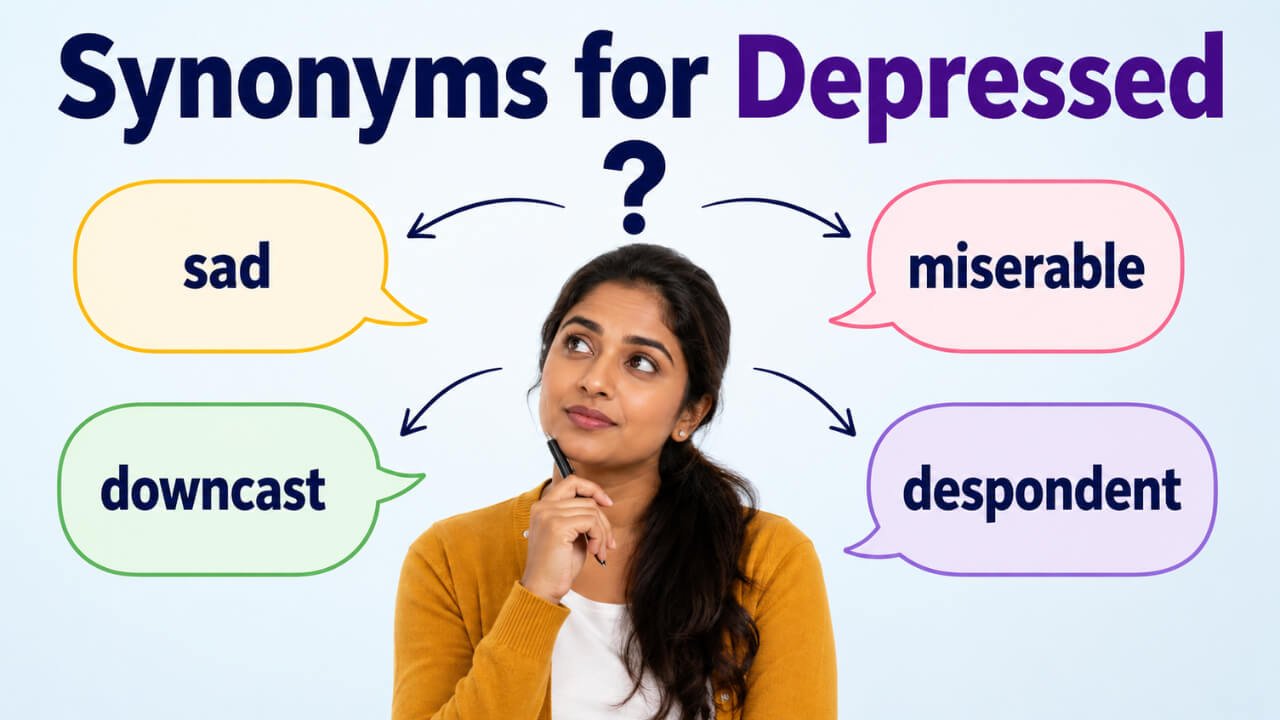
Quick Answer: Synonyms for depressed include sad, unhappy, down, low, gloomy, miserable, dejected, despondent, downhearted, and discouraged. Use sad for simple everyday emotion, unhappy for general dissatisfaction, down for casual speech, low for mood, gloomy for a dark emotional tone, miserable for strong sadness, dejected for disappointment, and despondent for deep loss of hope. In serious emotional or medical contexts, use depressed carefully and respectfully.
Pronunciation and Word Details
Word: Depressed
Pronunciation: /dɪˈprest/
Part of Speech: Adjective
Meaning: Feeling very sad, low in mood, discouraged, or without much hope.
US Pronunciation:
UK Pronunciation:
What Does “Depressed” Mean?
Direct Answer: “Depressed” means very sad, emotionally low, discouraged, or lacking hope.
Depressed is an adjective used to describe a person, mood, feeling, place, economy, or condition that feels low, weakened, unhappy, or reduced. In everyday language, it often describes emotional sadness. In more serious contexts, it can relate to a deeper mental health condition, so the word should be used with care.
Emotional Context: He felt depressed after hearing the bad news.
General Mood Context: The room had a depressed atmosphere.
Economic Context: The region faced a depressed market.
Physical Context: A depressed surface is lower than the area around it.
Meaning, Tone, and Context of “Depressed”
Tone: Depressed has a serious, emotional, and sometimes clinical tone.
Formality: It is neutral to formal, but it can also appear in everyday conversation.
Emotional Strength: Depressed is stronger than simply sad or unhappy. It often suggests a deeper or longer lasting low mood.
Polite Use: Use depressed carefully when talking about another person. Words like sad, low, upset, or discouraged may sound gentler in casual situations.
Academic Use: In academic or technical writing, depressed can describe emotional states, economic conditions, reduced activity, or lower levels.
Conversational Use: In casual speech, people may say “I feel depressed,” but for sensitive situations, clearer and more respectful wording is better.
When and How to Use “Depressed”
For Emotional Sadness: Use depressed when someone feels deeply sad or emotionally low.
Example: She felt depressed after several difficult weeks.
For Discouragement: Use depressed when someone feels disappointed and without confidence.
Example: He looked depressed after the results were announced.
For Atmosphere: Use depressed when a place or situation feels gloomy, dull, or heavy.
Example: The empty house had a depressed feeling.
For Economic Conditions: Use depressed when prices, markets, wages, or activity are low.
Example: The town struggled during a depressed economy.
For Physical Description: Use depressed when an area is lower than the surrounding surface.
Example: The metal plate had a depressed center.
For Careful Writing: Use depressed respectfully when discussing serious emotional health.
Example: The article described how people may feel depressed during stressful life changes.
Best Synonyms for Depressed
Sad: Feeling unhappy or sorrowful.
Example: She felt sad after saying goodbye.
Unhappy: Not pleased, joyful, or satisfied.
Example: He seemed unhappy with the decision.
Down: Feeling low or sad in a casual sense.
Example: I have been feeling down today.
Low: Feeling emotionally weak, sad, or tired.
Example: She felt low after a stressful week.
Gloomy: Dark, sad, or lacking hope.
Example: His gloomy mood affected the whole room.
Miserable: Very unhappy or uncomfortable.
Example: He felt miserable after the argument.
Dejected: Sad because of failure or disappointment.
Example: The team looked dejected after losing the match.
Despondent: Deeply discouraged and without hope.
Example: She became despondent after repeated setbacks.
Downhearted: Sad, discouraged, or lacking confidence.
Example: He felt downhearted after the rejection.
Discouraged: Having lost confidence, hope, or motivation.
Example: She felt discouraged after her plan failed.
50 Synonyms for Depressed with Short Meanings
- Sad: Feeling sorrow or unhappiness.
- Unhappy: Not joyful or satisfied.
- Down: Feeling low or sad.
- Low: Emotionally weak or unhappy.
- Gloomy: Dark, sad, or hopeless in mood.
- Miserable: Very unhappy or uncomfortable.
- Dejected: Sad because of disappointment.
- Despondent: Deeply discouraged or hopeless.
- Downhearted: Sad and discouraged.
- Discouraged: Lacking confidence or hope.
- Melancholy: Quietly sad or thoughtful.
- Sorrowful: Full of sadness.
- Blue: Sad in a casual way.
- Dismal: Gloomy, sad, or depressing.
- Morose: Bad tempered and gloomy.
- Glum: Quietly sad or disappointed.
- Dreary: Dull, sad, and lacking cheer.
- Joyless: Without happiness or pleasure.
- Forlorn: Lonely, sad, or abandoned.
- Despairing: Feeling no hope.
- Heartbroken: Extremely sad after loss or disappointment.
- Grief stricken: Deeply affected by grief.
- Upset: Emotionally troubled or unhappy.
- Distressed: Deeply worried, sad, or troubled.
- Troubled: Worried or emotionally unsettled.
- Somber: Serious, dark, or sad in tone.
- Heavyhearted: Feeling deep sadness.
- Disheartened: Having lost hope or courage.
- Defeated: Feeling unable to continue or win.
- Hopeless: Feeling that success or improvement is impossible.
- Wretched: Extremely unhappy or unfortunate.
- Woeful: Full of sadness or trouble.
- Cheerless: Without happiness or brightness.
- Bleak: Cold, hopeless, or depressing.
- Pessimistic: Expecting bad outcomes.
- Dispirited: Lacking energy, hope, or enthusiasm.
- Crushed: Deeply hurt or disappointed.
- Devastated: Extremely shocked or saddened.
- Lifeless: Lacking energy, spirit, or brightness.
- Withdrawn: Quiet and emotionally distant.
- Subdued: Quiet, low in energy, or restrained.
- Dampened: Reduced in spirit, joy, or excitement.
- Uncheerful: Not bright or happy.
- Mournful: Expressing sadness or grief.
- Lugubrious: Very sad in a serious or exaggerated way.
- Downcast: Looking or feeling sad.
- Disappointed: Sad because something did not happen as hoped.
- Brokenhearted: Deeply sad because of emotional pain.
- Inconsolable: So sad that comfort is difficult.
- Cast Down: Made sad or discouraged.
Read Also:
Synonyms for Thrive
Synonyms for Depressed by Context
When Depressed Means Sad
Sad: She felt sad after the conversation ended.
Unhappy: He looked unhappy during the meeting.
Blue: I felt blue on the rainy afternoon.
Sorrowful: Her sorrowful expression said everything.
Melancholy: The old song gave him a melancholy feeling.
When Depressed Means Discouraged
Discouraged: She felt discouraged after many failed attempts.
Disheartened: The team was disheartened by the result.
Downhearted: He felt downhearted after the rejection.
Defeated: She sounded defeated after the difficult interview.
Cast Down: He was cast down by the bad news.
When Depressed Means Hopeless
Despondent: He became despondent after repeated setbacks.
Despairing: Her despairing voice showed how tired she felt.
Hopeless: He felt hopeless about the situation.
Bleak: The future seemed bleak at that moment.
Pessimistic: She became pessimistic after hearing the report.
When Depressed Means Gloomy
Gloomy: The weather made the day feel gloomy.
Dismal: The old room had a dismal atmosphere.
Dreary: The street looked dreary in the fog.
Somber: The speech had a somber tone.
Cheerless: The place felt cheerless and cold.
When Depressed Means Emotionally Hurt
Heartbroken: He was heartbroken after the breakup.
Crushed: She felt crushed by the criticism.
Devastated: They were devastated by the loss.
Distressed: He was distressed by the news.
Inconsolable: She was inconsolable after the tragedy.
Another Word for Depressed
Best Single Replacement: The best single replacement for depressed is often sad, because it is simple, clear, and widely understood. However, the best synonym depends on the context. Use down for casual speech, dejected for disappointment, despondent for loss of hope, gloomy for mood or atmosphere, and miserable for strong unhappiness.
Original: He felt depressed after losing the opportunity.
Better Option: He felt dejected after losing the opportunity.
Original: She seemed depressed during the meeting.
Better Option: She seemed down during the meeting.
Original: The room looked depressed and empty.
Better Option: The room looked gloomy and empty.
Original: He was depressed by the repeated failures.
Better Option: He was discouraged by the repeated failures.
When Not to Use “Depressed”
Main Rule: Do not use depressed too casually when another word is clearer, gentler, or more accurate. The word can sound serious, especially when describing a person’s mental state.
Weak: I am depressed because my tea is cold.
Better: I am annoyed because my tea is cold.
Weak: The student was depressed after one small spelling mistake.
Better: The student was disappointed after one small spelling mistake.
Weak: The party decorations looked depressed.
Better: The party decorations looked dull.
Weak: He is depressed because he missed the bus.
Better: He is upset because he missed the bus.
Weak: The economy was sad last year.
Better: The economy was depressed last year.
Words Commonly Confused With Depressed
Depressed vs Sad: Sad means unhappy or sorrowful. Depressed is stronger and may suggest a deeper or longer lasting emotional state.
Depressed vs Upset: Upset means emotionally troubled, annoyed, or disturbed. Depressed usually means low, sad, or discouraged.
Depressed vs Anxious: Anxious means worried, nervous, or fearful. Depressed means sad, low, or without hope.
Depressed vs Dejected: Dejected means sad because of disappointment or failure. Depressed can be broader and more serious.
Depressed vs Despondent: Despondent means deeply discouraged and hopeless. It is often stronger than sad and close to deeply depressed in emotional tone.
Depressed vs Gloomy: Gloomy can describe a person, mood, place, weather, or atmosphere. Depressed usually focuses more on emotional, economic, or lowered conditions.
Depressed vs Miserable: Miserable means very unhappy or uncomfortable. Depressed can sound more serious and may describe a lasting low mood.
Which Synonym Should You Choose?
Choose sad when you want a simple, clear, everyday word for unhappiness.
Choose unhappy when describing general dissatisfaction, discomfort, or lack of joy.
Choose down when writing casual speech or light emotional description.
Choose low when describing mood, energy, or emotional weakness.
Choose gloomy when describing a dark mood, place, atmosphere, or feeling.
Choose miserable when the sadness or discomfort is strong.
Choose dejected when sadness comes from failure, rejection, or disappointment.
Choose despondent when someone feels deeply discouraged or without hope.
Choose discouraged when the focus is loss of confidence or motivation.
Choose somber when writing formal descriptions of a serious or sad tone.
Real Life Examples of “Depressed” in Sentences
Original: She felt depressed after hearing the news.
Better Option: She felt sorrowful after hearing the news.
Original: He looked depressed after the interview.
Better Option: He looked dejected after the interview.
Original: The room felt depressed and silent.
Better Option: The room felt gloomy and silent.
Original: I have been feeling depressed all week.
Better Option: I have been feeling low all week.
Original: The workers were depressed by the sudden closure.
Better Option: The workers were discouraged by the sudden closure.
Original: The movie had a depressed tone.
Better Option: The movie had a somber tone.
Original: She sounded depressed after the argument.
Better Option: She sounded upset after the argument.
Original: He became depressed after several failures.
Better Option: He became despondent after several failures.
Original: The town suffered from a depressed economy.
Better Option: The town suffered from a weak economy.
Original: His depressed expression worried his friends.
Better Option: His downcast expression worried his friends.
Synonym Groups and Usage Differences
Sadness Group
Use: This group works when depressed means emotionally sad or unhappy.
Synonyms: Sad, unhappy, sorrowful, melancholy, blue.
Example: She felt melancholy while reading the old letters.
Discouragement Group
Use: This group works when depressed means losing hope, courage, or motivation.
Synonyms: Discouraged, disheartened, downhearted, dejected, defeated.
Example: He felt discouraged after the plan failed again.
Hopelessness Group
Use: This group works when depressed means deeply hopeless or emotionally overwhelmed.
Synonyms: Despondent, despairing, hopeless, bleak, crushed.
Example: She felt despondent after receiving repeated bad news.
Gloomy Tone Group
Use: This group works when depressed describes a mood, place, atmosphere, or style.
Synonyms: Gloomy, dismal, dreary, somber, cheerless.
Example: The hallway looked dreary in the dim light.
Emotional Pain Group
Use: This group works when depressed means deeply hurt by loss, grief, or disappointment.
Synonyms: Heartbroken, devastated, distressed, mournful, inconsolable.
Example: He was heartbroken after losing someone close to him.
Antonyms of Depressed
Happy: Feeling joy or pleasure.
Cheerful: Bright, positive, and pleasant in mood.
Joyful: Full of happiness.
Upbeat: Positive, hopeful, and energetic.
Encouraged: Given hope or confidence.
Hopeful: Expecting a better result.
Optimistic: Expecting good things to happen.
Content: Calmly satisfied.
Delighted: Very pleased or happy.
Lighthearted: Cheerful and free from worry.
Confident: Feeling sure and positive.
Energized: Full of energy and motivation.
Comparison: Depressed vs Related Words
Depressed vs Sad
Difference: Sad is a general word for unhappiness. Depressed is stronger and can suggest a deeper emotional low.
Example With Depressed: He felt depressed after weeks of stress.
Example With Sad: He felt sad after hearing the news.
Depressed vs Dejected
Difference: Dejected usually means sad because of disappointment, failure, or rejection. Depressed can describe a broader emotional state.
Example With Depressed: She felt depressed during a difficult period.
Example With Dejected: She felt dejected after not getting the role.
Depressed vs Despondent
Difference: Despondent means deeply discouraged and almost without hope. It is stronger than many everyday sadness words.
Example With Depressed: He seemed depressed after the long struggle.
Example With Despondent: He seemed despondent after repeated setbacks.
Depressed vs Gloomy
Difference: Gloomy can describe mood, weather, atmosphere, or appearance. Depressed usually describes emotional, economic, or lowered conditions.
Example With Depressed: She felt depressed after the argument.
Example With Gloomy: The sky looked gloomy before the storm.
Depressed vs Miserable
Difference: Miserable means very unhappy or uncomfortable. Depressed may sound more serious and emotionally heavy.
Example With Depressed: He felt depressed during the lonely winter.
Example With Miserable: He felt miserable after being sick all night.
Depressed vs Discouraged
Difference: Discouraged means losing confidence or motivation. Depressed suggests a deeper emotional low.
Example With Depressed: She felt depressed after many difficult weeks.
Example With Discouraged: She felt discouraged after her plan failed.
Common Phrases and Expressions With Depressed
Feeling Depressed: Experiencing a very low or sad mood.
Deeply Depressed: Very sad or emotionally low.
Mildly Depressed: Somewhat low in mood.
Depressed Mood: A sad, low, or heavy emotional state.
Depressed State: A condition of low mood, low energy, or discouragement.
Depressed Economy: An economy with weak activity, low growth, or poor conditions.
Depressed Market: A market with low prices, weak demand, or reduced activity.
Depressed Area: A place facing economic difficulty or low development.
Depressed Expression: A sad or downcast look on someone’s face.
Depressed Tone: A serious, gloomy, or unhappy style of speaking or writing.
Common Mistakes to Avoid
Using Depressed Too Casually: Do not use depressed for every small annoyance. Use upset, annoyed, disappointed, or frustrated when the feeling is lighter.
Confusing Depressed With Sad: Sad is broader and simpler. Depressed is stronger and may sound more serious.
Using the Wrong Synonym: Do not use despondent for mild sadness. It suggests deep hopelessness.
Forgetting Sensitivity: Be careful when describing another person as depressed. In sensitive contexts, use respectful language and avoid guessing about someone’s condition.
Overusing One Word: Repeating depressed too often can make writing heavy. Use sad, down, low, gloomy, discouraged, or dejected when they fit better.
Mixing Emotional and Economic Meanings: A person can feel depressed, and an economy can be depressed. Make sure the sentence gives enough context.
Weak: He was depressed because his pencil broke.
Better: He was annoyed because his pencil broke.
Weak: The market was gloomy in prices.
Better: The market was depressed.
Weak: She was despondent because lunch was late.
Better: She was irritated because lunch was late.
Conclusion
Synonyms for depressed help you describe sadness, discouragement, gloomy moods, emotional pain, and low conditions with more care and accuracy. Sad is the simplest synonym, while down and low sound more casual. Use dejected for disappointment, discouraged for lost confidence, gloomy for atmosphere, miserable for strong unhappiness, and despondent for deep hopelessness. The best word depends on tone, context, emotional strength, and whether you are writing casually, formally, or sensitively.
FAQs About Synonyms for Depressed
What are the best synonyms for depressed?
Answer: The best synonyms for depressed are sad, unhappy, down, low, gloomy, miserable, dejected, despondent, discouraged, and downhearted.
What is a simple synonym for depressed?
Answer: A simple synonym for depressed is sad. It is clear, natural, and easy to understand in everyday writing.
What is a casual synonym for depressed?
Answer: A casual synonym for depressed is down. For example, “I have been feeling down today” sounds natural in conversation.
What is a formal synonym for depressed?
Answer: Formal synonyms for depressed include despondent, dejected, melancholy, somber, and disheartened, depending on the meaning.
Is depressed the same as sad?
Answer: Depressed and sad are related, but depressed is usually stronger. Sad can describe general unhappiness, while depressed may suggest a deeper or more serious low mood.
What is the opposite of depressed?
Answer: Opposites of depressed include happy, cheerful, joyful, hopeful, upbeat, encouraged, optimistic, content, and lighthearted.
Can depressed describe things other than people?
Answer: Yes, depressed can describe economies, markets, areas, surfaces, tones, and atmospheres. For example, “a depressed market” means a weak market.
