
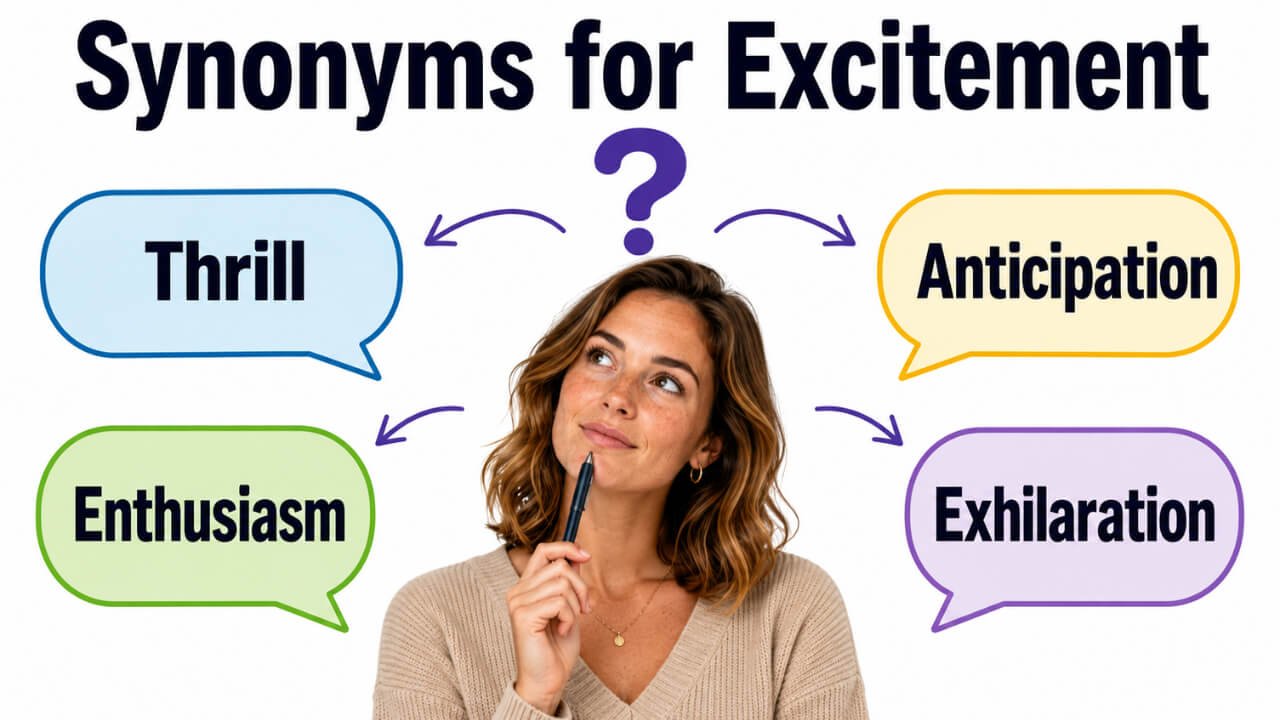
Quick Answer: The best synonyms for excitement include enthusiasm, thrill, exhilaration, eagerness, anticipation, delight, elation, suspense, buzz, and stimulation. Use enthusiasm for strong interest in an activity or idea. Choose thrill or exhilaration for an intense and enjoyable feeling. Eagerness and anticipation work best when someone is looking forward to an event. Delight and elation express happiness, while suspense describes nervous excitement caused by uncertainty. In formal writing, enthusiasm, anticipation, exhilaration, and stimulation sound natural. In casual conversation, thrill, buzz, rush, and joy are often better choices.
Pronunciation and Word Details
Word: Excitement.
Pronunciation: /ɪkˈsaɪt.mənt/
Part of Speech: Noun.
Meaning: Excitement is a strong feeling of happiness, enthusiasm, nervous energy, or eager interest caused by an event, idea, or experience.
US Pronunciation:
UK Pronunciation:
What Does “Excitement” Mean?
Excitement means a strong feeling of enthusiasm, happiness, anticipation, or emotional energy. It is a noun used to describe how a person feels when something interesting, enjoyable, surprising, or important is happening.
Excitement often has a positive meaning.
Example: The children could not hide their excitement about the trip.
It can also describe nervous anticipation before an uncertain event.
Example: A feeling of excitement filled the room before the winner was announced.
Excitement may refer to lively activity or public interest.
Example: The festival brought excitement to the quiet town.
In some contexts, excitement means emotional or physical stimulation rather than happiness.
Example: Too much excitement made it difficult for him to sleep.
The meaning depends on the cause and emotional tone. Excitement about a celebration is joyful, while excitement during a tense competition may include nervousness, suspense, and uncertainty.
Meaning, Tone, and Context of “Excitement”
Excitement is an emotional and generally positive word. It describes a stronger feeling than simple interest or happiness. The word suggests increased energy, attention, and emotional involvement.
In casual conversation, excitement is commonly used for celebrations, travel, entertainment, surprises, relationships, and personal achievements.
Example: Her excitement grew as the holiday approached.
In professional writing, excitement can describe motivation, engagement, or positive interest in a project.
Example: The new proposal generated excitement among the team.
In academic or technical contexts, stimulation, emotional arousal, activation, or enthusiasm may provide more precise meanings.
Example: The activity increased emotional stimulation and curiosity.
Excitement may also carry a nervous tone when the outcome of an event is unknown.
Example: The final minutes of the match were filled with excitement.
The word is usually polite and neutral, but it may sound too broad when a writer needs to distinguish between joy, eagerness, suspense, agitation, or intense pleasure.
When and How to Use “Excitement”
For Strong Enthusiasm
Use excitement when someone feels highly interested in an idea, activity, plan, or opportunity.
Example: She spoke with excitement about her new research project.
For Eager Anticipation
Use excitement when someone is happily looking forward to a future event.
Example: His excitement increased as the concert date approached.
For a Thrilling Experience
Excitement can describe the intense pleasure caused by adventure, competition, or surprise.
Example: The mountain ride gave them a powerful sense of excitement.
For Celebrations and Good News
The word works well when people respond emotionally to success, announcements, or special occasions.
Example: The graduation announcement created excitement throughout the family.
For Nervous Energy
Excitement may combine eagerness with nervousness before an important moment.
Example: She felt a mixture of excitement and anxiety before the interview.
For Lively Activity
Use excitement to describe an active, energetic, or eventful atmosphere.
Example: The arrival of the performers added excitement to the evening.
For Public Interest
Excitement can describe widespread attention surrounding an event, idea, or development.
Example: The discovery caused excitement among researchers.
For Storytelling
Writers use excitement to describe suspense, rapid action, emotional intensity, or an unexpected event.
Example: The final chapter is filled with excitement and uncertainty.
Best Synonyms for Excitement
Enthusiasm: Strong interest, enjoyment, or approval.
Example: Her enthusiasm encouraged everyone to participate.
Thrill: A sudden and intense feeling of pleasure or excitement.
Example: Winning the competition gave him a tremendous thrill.
Exhilaration: A powerful feeling of happiness, energy, and excitement.
Example: She experienced exhilaration as she reached the mountain peak.
Eagerness: Strong desire and readiness to do or experience something.
Example: The students showed eagerness to begin the experiment.
Anticipation: Excitement or expectation about something that will happen.
Example: The audience waited in anticipation for the performance to begin.
Delight: Great pleasure, happiness, or satisfaction.
Example: The unexpected gift filled her with delight.
Elation: Intense happiness caused by success or good news.
Example: The team celebrated its victory with elation.
Suspense: Excitement mixed with uncertainty about what will happen next.
Example: The close competition kept the crowd in suspense.
Buzz: A lively feeling of excitement, interest, or public attention.
Example: There was a real buzz around the new community project.
Stimulation: An experience that increases interest, energy, or activity.
Example: The discussion provided intellectual stimulation.
50 Synonyms for Excitement with Short Meanings
- Enthusiasm: Strong interest and enjoyment.
- Thrill: A sudden feeling of intense pleasure.
- Exhilaration: Powerful happiness and increased energy.
- Eagerness: Strong desire to begin or experience something.
- Anticipation: Excited expectation about a future event.
- Delight: Great pleasure or happiness.
- Elation: Intense joy caused by success.
- Joy: A deep feeling of happiness.
- Pleasure: A feeling of enjoyment or satisfaction.
- Happiness: A positive state of emotional well being.
- Jubilation: Open and energetic celebration.
- Glee: Lively and often playful happiness.
- Ecstasy: Overwhelming happiness or pleasure.
- Rapture: Intense emotional joy or admiration.
- Euphoria: An unusually strong feeling of happiness.
- Fervor: Intense and sincere enthusiasm.
- Passion: Powerful emotional interest or devotion.
- Zeal: Great energy and enthusiasm for a purpose.
- Zest: Energetic enjoyment and interest.
- Ardor: Strong enthusiasm, love, or devotion.
- Animation: Lively energy and emotional expression.
- Liveliness: Active, cheerful, and energetic behavior.
- Vivacity: Attractive energy and enthusiasm.
- Energy: Physical or emotional strength and activity.
- Spirit: Enthusiastic energy or determination.
- Rush: A sudden intense feeling of excitement.
- Buzz: A lively atmosphere of interest and excitement.
- Charge: A sudden feeling of emotional energy.
- Stimulation: Increased interest, energy, or activity.
- Arousal: A state of increased emotional or physical alertness.
- Suspense: Excitement caused by uncertainty.
- Tension: Nervous emotional pressure before an outcome.
- Expectancy: A feeling that something is about to happen.
- Expectation: Belief and interest concerning a future event.
- Impatience: Restless eagerness for something to happen.
- Curiosity: A strong desire to know or discover something.
- Interest: Attention or concern focused on something.
- Fascination: Powerful interest and attraction.
- Wonder: Surprise and admiration caused by something impressive.
- Amazement: Great surprise and emotional interest.
- Surprise: A feeling caused by an unexpected event.
- Agitation: Nervous or disturbed excitement.
- Commotion: Noisy activity and confusion.
- Stir: A noticeable increase in interest or activity.
- Flurry: A sudden period of hurried excitement.
- Uproar: Loud excitement, protest, or confusion.
- Frenzy: Wild and uncontrolled excitement.
- Ferment: Widespread activity, emotion, or unrest.
- Celebration: Joyful activity marking a special event.
- Rejoicing: Expression of happiness and pleasure.
Read Also:
Synonyms for Master

Synonyms for Excitement by Context
When Excitement Means Enthusiasm
Enthusiasm, zeal, fervor, passion, zest, ardor, and spirit describe strong interest and emotional commitment.
Enthusiasm: A natural choice for positive interest in an activity or idea.
Example: Her enthusiasm for reading inspired the entire class.
Zeal: Strong and determined enthusiasm for a goal or cause.
Example: He approached the project with impressive zeal.
Fervor: Deep and intense enthusiasm, often connected with beliefs or values.
Example: The speaker defended the proposal with fervor.
Passion: Powerful emotional interest in a subject or activity.
Example: Her passion for music shaped her career.
Zest: Cheerful and energetic enjoyment.
Example: He accepted each challenge with zest.
When Excitement Means Thrill
Thrill, exhilaration, rush, charge, ecstasy, euphoria, and rapture describe intense emotional pleasure.
Thrill: A sudden and enjoyable feeling caused by adventure, success, or surprise.
Example: Meeting her favorite author was a real thrill.
Exhilaration: A strong combination of happiness, freedom, and energy.
Example: The runners felt exhilaration as they crossed the finish line.
Rush: A sudden burst of powerful excitement.
Example: He felt a rush of excitement when the doors opened.
Euphoria: An unusually intense state of happiness.
Example: Victory created a feeling of euphoria among the players.
Rapture: Deep emotional pleasure, admiration, or joy.
Example: The audience listened to the music in rapture.
When Excitement Means Anticipation
Anticipation, eagerness, expectancy, expectation, impatience, and suspense refer to feelings about something that has not happened yet.
Anticipation: Positive excitement while waiting for a future event.
Example: The children waited in anticipation for the celebration.
Eagerness: A strong desire to begin or take part.
Example: Her eagerness to learn impressed the teacher.
Expectancy: A feeling that an important event is approaching.
Example: A mood of expectancy filled the hall.
Impatience: Restless excitement caused by waiting.
Example: He checked the time repeatedly with growing impatience.
Suspense: Nervous excitement caused by an uncertain result.
Example: The final announcement kept everyone in suspense.
When Excitement Means Happiness
Joy, delight, elation, jubilation, glee, pleasure, celebration, and rejoicing express positive emotional responses.
Joy: Deep and sincere happiness.
Example: The family welcomed the good news with joy.
Delight: Great pleasure caused by something enjoyable or surprising.
Example: The children laughed with delight.
Elation: Intense happiness after achievement or success.
Example: Her elation was clear when she received the award.
Jubilation: Energetic and public celebration.
Example: The final result caused jubilation in the hall.
Glee: Bright, lively, and sometimes playful happiness.
Example: He opened the package with glee.
When Excitement Means Lively Activity
Buzz, animation, liveliness, stir, flurry, commotion, frenzy, and uproar describe active situations or energetic atmospheres.
Buzz: Lively public interest or energetic conversation.
Example: The exhibition created a buzz throughout the city.
Animation: Visible liveliness in speech, movement, or expression.
Example: She described the journey with great animation.
Stir: Increased public interest or reaction.
Example: The announcement caused a stir among local residents.
Flurry: A short period of hurried activity.
Example: The final preparations produced a flurry of activity.
Commotion: Noisy excitement, movement, or confusion.
Example: A sudden commotion began near the entrance.
When Excitement Means Nervous Arousal
Arousal, agitation, tension, suspense, frenzy, and ferment can describe excitement that is uncomfortable, uncertain, or difficult to control.
Arousal: Increased emotional or physical alertness.
Example: The unexpected sound caused immediate emotional arousal.
Agitation: Restless or disturbed excitement.
Example: His agitation became noticeable as the discussion continued.
Tension: Nervous pressure caused by uncertainty or conflict.
Example: Tension grew as the deadline approached.
Frenzy: Wild and uncontrolled excitement.
Example: The sudden announcement sent the crowd into a frenzy.
Another Word for Excitement
Enthusiasm is one of the best general replacements for excitement when the feeling comes from strong interest, motivation, or enjoyment. However, the most accurate alternative depends on whether the feeling involves happiness, anticipation, suspense, stimulation, or intense pleasure.
Original: She spoke with excitement about the new opportunity.
Better Option: She spoke with enthusiasm about the new opportunity.
Original: He felt excitement as the race began.
Better Option: He felt a thrill as the race began.
Original: The audience waited with excitement for the result.
Better Option: The audience waited with anticipation for the result.
Original: The successful announcement filled the team with excitement.
Better Option: The successful announcement filled the team with elation.
When Not to Use “Excitement”
Excitement is flexible, but it may be too general when the exact emotion is important.
When the Feeling Is Deep Happiness
Use joy, delight, elation, or jubilation when happiness is more important than energy.
Weak: She felt excitement when her family arrived safely.
Better: She felt deep joy when her family arrived safely.
When Someone Is Strongly Interested
Use enthusiasm, passion, zeal, or eagerness when the sentence focuses on motivation.
Weak: His excitement for science influenced his career choice.
Better: His passion for science influenced his career choice.
When the Feeling Comes From Waiting
Anticipation, expectancy, or suspense may be clearer when an event has not happened yet.
Weak: There was excitement before the results were announced.
Better: There was growing anticipation before the results were announced.
When the Emotion Is Nervous
Use tension, agitation, suspense, or anxiety when the experience is uncomfortable.
Weak: Excitement spread through the room during the emergency.
Better: Agitation spread through the room during the emergency.
When Describing Lively Public Activity
Buzz, commotion, stir, or flurry can create a more vivid image.
Weak: There was excitement outside the theater.
Better: There was a lively buzz outside the theater.
When the Word Becomes Repetitive
Using excitement several times can make a paragraph sound weak.
Weak: The excitement of the crowd increased the excitement of the players, creating more excitement.
Better: The crowd’s enthusiasm energized the players and intensified the thrill of the event.
When Writing Formally About Physical Responses
In scientific, medical, or technical contexts, emotional arousal, stimulation, or activation may be more exact.
Weak: The study measured excitement in the participants.
Better: The study measured emotional arousal in the participants.
Words Commonly Confused With Excitement
Excitement vs Enthusiasm: Excitement is a broad emotional response that may be brief or intense. Enthusiasm usually describes positive interest and motivation toward an activity, subject, or goal.
Excitement vs Happiness: Excitement includes increased energy and alertness. Happiness may be calmer, deeper, and longer lasting.
Excitement vs Joy: Excitement can result from anticipation, surprise, or stimulation. Joy is a strong feeling of happiness and emotional satisfaction.
Excitement vs Eagerness: Excitement describes the emotional feeling. Eagerness emphasizes the desire and readiness to act.
Excitement vs Anticipation: Excitement can occur during or after an event. Anticipation specifically concerns something expected in the future.
Excitement vs Thrill: Excitement is a general term. A thrill is usually a sudden, intense, and enjoyable form of excitement.
Excitement vs Exhilaration: Excitement can vary in strength. Exhilaration describes an especially powerful and uplifting feeling.
Excitement vs Suspense: Excitement may be completely positive. Suspense includes uncertainty and concern about what will happen next.
Excitement vs Anxiety: Both can involve increased energy, a fast heartbeat, and alertness. Excitement is usually connected with positive expectation, while anxiety involves worry or fear.
Excitement vs Agitation: Excitement is often enjoyable. Agitation is usually uncomfortable and suggests restlessness, irritation, or emotional disturbance.
Which Synonym Should You Choose?
Choose enthusiasm when describing strong interest in an idea, activity, project, or subject.
Choose thrill for a sudden, enjoyable, and intense experience.
Choose exhilaration when the feeling is powerful, uplifting, and full of energy.
Choose eagerness when someone strongly wants to begin, join, learn, or experience something.
Choose anticipation when someone is happily waiting for a future event.
Choose suspense when the excitement comes from uncertainty about an outcome.
Choose delight when something causes great pleasure or joyful surprise.
Choose elation when success or good news creates intense happiness.
Choose jubilation for public celebration after an important victory or achievement.
Choose buzz in casual speech when describing widespread interest or a lively atmosphere.
Choose stimulation in formal writing about mental, emotional, or physical activity.
Choose passion when enthusiasm is deep, personal, and long lasting.
Choose zeal when someone shows energetic commitment to a purpose.
Choose tension when the emotion is nervous and connected with pressure or uncertainty.
Choose agitation when excitement becomes restless, uncomfortable, or disturbed.
Choose frenzy when the behavior is wild, uncontrolled, or extremely energetic.
Choose animation when someone speaks or behaves with visible liveliness.
Choose joy in personal writing when happiness is more important than nervous energy.
Real Life Examples of “Excitement” in Sentences
Original: The children showed excitement about the school trip.
Better Option: The children showed eagerness about the school trip.
Original: She spoke with excitement about her new position.
Better Option: She spoke with enthusiasm about her new position.
Original: He felt excitement when the race began.
Better Option: He felt a powerful thrill when the race began.
Original: Excitement filled the room before the announcement.
Better Option: Anticipation filled the room before the announcement.
Original: The victory caused excitement among the players.
Better Option: The victory caused jubilation among the players.
Original: The new discovery created excitement among researchers.
Better Option: The new discovery generated enthusiasm among researchers.
Original: There was excitement in the market after the announcement.
Better Option: There was a lively buzz in the market after the announcement.
Original: Her excitement was obvious when she received the award.
Better Option: Her elation was obvious when she received the award.
Original: The final scene was full of excitement.
Better Option: The final scene was full of suspense and tension.
Original: The adventure gave us a feeling of excitement.
Better Option: The adventure gave us a feeling of exhilaration.
Synonym Groups and Usage Differences
Enthusiasm Group
Enthusiasm, zeal, passion, fervor, ardor, zest, and spirit describe excitement connected with interest, dedication, or motivation. Passion and ardor are deep and emotional. Zeal and fervor suggest determined commitment. Zest feels cheerful and energetic.
Example: Her enthusiasm and passion for teaching motivated her students.
Joy Group
Joy, delight, happiness, pleasure, elation, glee, jubilation, ecstasy, and rapture describe excitement that comes from happiness. Joy and happiness can be calm or deep. Elation and jubilation are stronger and often follow success. Ecstasy and rapture suggest overwhelming pleasure.
Example: The announcement produced joy, delight, and open jubilation.
Anticipation Group
Eagerness, anticipation, expectancy, expectation, impatience, and suspense focus on future events. Eagerness shows desire to act. Anticipation is usually positive, while suspense includes uncertainty. Impatience suggests difficulty waiting.
Example: The audience waited with eagerness and anticipation for the show to begin.
Thrill Group
Thrill, exhilaration, rush, charge, stimulation, euphoria, and ecstasy describe intense emotional energy. Thrill and rush are often sudden. Exhilaration feels uplifting. Stimulation is more formal and may describe mental or physical activation.
Example: Reaching the summit brought a rush of exhilaration.
Liveliness Group
Buzz, animation, liveliness, vivacity, energy, stir, and flurry describe visible activity or an energetic atmosphere. Buzz often refers to public interest. Animation and vivacity describe lively behavior or expression. Flurry suggests brief hurried action.
Example: A lively buzz and a flurry of activity filled the hall.
Nervous Excitement Group
Suspense, tension, arousal, agitation, frenzy, commotion, uproar, and ferment describe excitement that includes uncertainty, pressure, disorder, or loss of control. These words may have negative meanings and should not replace excitement in every positive sentence.
Example: Suspense turned into tension as the situation became more uncertain.
Antonyms of Excitement
The opposite of excitement depends on whether the word means enthusiasm, pleasure, emotional energy, anticipation, or lively activity.
Boredom: A lack of interest, enjoyment, or stimulation.
Calmness: A peaceful state without strong emotional activity.
Indifference: A lack of interest, concern, or enthusiasm.
Apathy: An absence of emotion, motivation, or interest.
Disinterest: A lack of attention or curiosity.
Dullness: A lack of energy, interest, or liveliness.
Stillness: A state without movement, noise, or activity.
Tranquility: A calm and peaceful emotional condition.
Composure: Emotional control during an intense situation.
Detachment: Lack of emotional involvement.
Weariness: Physical or emotional tiredness.
Disappointment: Sadness caused by an unmet hope or expectation.
Gloom: A dark or unhappy emotional state.
Routine: Ordinary and predictable activity without novelty.
Inactivity: A lack of movement, action, or energetic involvement.
Comparison: Excitement vs Related Words
Excitement vs Enthusiasm
Excitement is a broad emotional feeling caused by something interesting, surprising, or enjoyable. Enthusiasm usually refers to lasting positive interest and motivation.
Example With Excitement: The children shouted with excitement when the gates opened.
Example With Enthusiasm: The students approached the project with enthusiasm.
Excitement vs Thrill
Excitement may be mild or intense and can last for some time. A thrill is usually sudden, powerful, and connected with pleasure or adventure.
Example With Excitement: She felt excitement throughout the journey.
Example With Thrill: She felt a thrill as the aircraft left the ground.
Excitement vs Eagerness
Excitement describes an emotional state. Eagerness focuses on the strong desire and readiness to do something.
Example With Excitement: His excitement about the course was obvious.
Example With Eagerness: His eagerness to begin the course was obvious.
Excitement vs Anticipation
Excitement may occur before, during, or after an event. Anticipation mainly describes the feeling experienced while waiting for something.
Example With Excitement: The festival created excitement across the town.
Example With Anticipation: Residents waited in anticipation for the festival to begin.
Excitement vs Exhilaration
Excitement covers many levels of emotional energy. Exhilaration is stronger and usually feels joyful, refreshing, and uplifting.
Example With Excitement: The ride gave us a sense of excitement.
Example With Exhilaration: Reaching the top filled us with exhilaration.
Excitement vs Joy
Excitement includes heightened energy and alertness. Joy is deep happiness and may feel peaceful rather than energetic.
Example With Excitement: The unexpected invitation caused excitement.
Example With Joy: The family welcomed her return with joy.
Excitement vs Suspense
Excitement may come from pleasure or interest. Suspense develops when people are uncertain or anxious about what will happen.
Example With Excitement: The announcement created excitement.
Example With Suspense: The delay kept everyone in suspense.
Excitement vs Anxiety
Excitement is usually connected with positive expectation. Anxiety involves worry, fear, or discomfort, although both feelings may cause similar physical reactions.
Example With Excitement: She felt excitement before beginning her new role.
Example With Anxiety: She felt anxiety about making a serious mistake.
Common Phrases and Expressions With Excitement
Full of Excitement: Experiencing or showing strong enthusiasm and energy.
Example: The children were full of excitement before the celebration.
A Sense of Excitement: A noticeable feeling of enthusiasm or anticipation.
Example: A sense of excitement spread through the audience.
With Great Excitement: In a highly enthusiastic or joyful manner.
Example: She opened the letter with great excitement.
Contain Your Excitement: Control an intense emotional response.
Example: He could barely contain his excitement after hearing the news.
Build Excitement: Gradually increase interest and anticipation.
Example: The early announcement helped build excitement for the event.
Generate Excitement: Cause people to become interested and enthusiastic.
Example: The new project generated excitement among the participants.
Nervous Excitement: A mixture of eagerness and anxiety.
Example: She felt nervous excitement before entering the hall.
Growing Excitement: A feeling of enthusiasm that becomes stronger.
Example: Growing excitement filled the town as the festival approached.
Burst of Excitement: A sudden and strong emotional reaction.
Example: He felt a burst of excitement when his name was announced.
Add Excitement: Make an experience more interesting, energetic, or enjoyable.
Example: Music and decorations added excitement to the celebration.
Common Mistakes to Avoid
Repeating Excitement Too Often
Frequent repetition makes writing sound flat and limits emotional detail. Use thrill, enthusiasm, anticipation, joy, suspense, or buzz when those words match the meaning.
Weak: The excitement of the event created excitement among the guests.
Better: The thrill of the event created enthusiasm among the guests.
Treating All Synonyms as Identical
Excitement, joy, anxiety, suspense, and agitation describe different emotional experiences. Select a word that reflects whether the feeling is positive, negative, calm, nervous, sudden, or lasting.
Weak: The emergency caused delight among the residents.
Better: The emergency caused agitation among the residents.
Confusing Excitement With Excited
Excitement is a noun, while excited is an adjective.
Incorrect: She was full of excited before the trip.
Correct: She was full of excitement before the trip.
Correct: She was excited before the trip.
Using an Unnatural Preposition
Writers commonly use excitement about, excitement over, excitement at, and excitement surrounding. The most natural choice depends on the sentence.
Natural: The children expressed excitement about the holiday.
Natural: There was excitement over the unexpected announcement.
Natural: He shouted with excitement at the result.
Using Too Strong a Synonym
Ecstasy, euphoria, rapture, and frenzy express extreme feelings. They may sound exaggerated in ordinary situations.
Weak: She was in ecstasy because lunch arrived.
Better: She was delighted when lunch arrived.
Ignoring Negative Context
Excitement is usually positive, but agitation, tension, frenzy, and commotion often carry negative meanings.
Weak: A pleasant agitation filled the family during the celebration.
Better: A joyful excitement filled the family during the celebration.
Using Vague Language
Explain what caused the excitement when the context is not already clear.
Vague: There was excitement everywhere.
Better: There was growing excitement as the final results appeared.
Confusing Anticipation With the Event Itself
Anticipation describes the feeling before an event, while thrill or exhilaration may describe the feeling during it.
Before the Event: She waited in anticipation for the journey.
During the Event: She experienced exhilaration during the journey.
Conclusion
The best synonyms for excitement depend on the emotion and situation. Use enthusiasm, passion, zeal, or zest for strong interest. Choose anticipation, eagerness, or suspense for feelings about a future event. Thrill, exhilaration, rush, and euphoria express intense pleasure, while joy, delight, and elation focus on happiness. Buzz, stir, and animation describe lively activity. Understanding these differences helps you select natural words that make conversations, essays, reports, stories, and descriptions more vivid and precise.
FAQs About Synonyms for Excitement
What Is the Best Synonym for Excitement?
Enthusiasm is a strong general synonym when excitement means positive interest. Thrill, anticipation, joy, or exhilaration may be better in specific contexts.
What Is Another Word for Great Excitement?
Exhilaration, elation, euphoria, ecstasy, jubilation, and thrill can describe great excitement.
What Is a Formal Synonym for Excitement?
Enthusiasm, anticipation, exhilaration, stimulation, emotional arousal, and fervor work well in formal writing.
What Is a Casual Synonym for Excitement?
Thrill, buzz, rush, joy, and eagerness are natural choices in casual speech.
Is Enthusiasm the Same as Excitement?
Not exactly. Enthusiasm usually involves strong interest and motivation, while excitement can result from surprise, anticipation, pleasure, or nervous energy.
What Word Describes Nervous Excitement?
Suspense, tension, anticipation, agitation, and nervous eagerness can describe excitement mixed with uncertainty or anxiety.
What Is the Opposite of Excitement?
Boredom, calmness, indifference, apathy, dullness, and tranquility are common opposites, depending on the context.
