
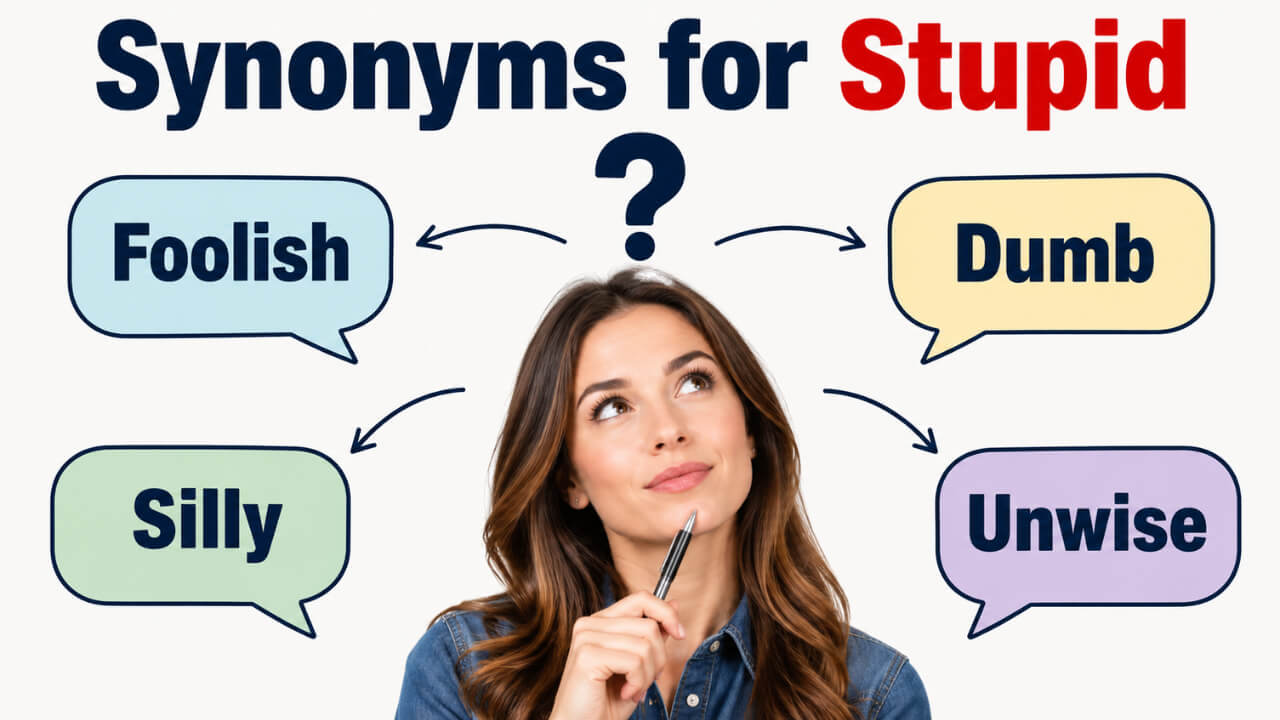
Quick Answer: The best synonyms for stupid are foolish, silly, unwise, senseless, absurd, ridiculous, irrational, illogical, unreasonable, and mindless. Use foolish for poor judgment, unwise for formal writing, silly for mild casual speech, absurd for ideas that make no sense, illogical for weak reasoning, and ridiculous for something that deserves strong criticism.
Pronunciation and Word Details
Word: Stupid.
Pronunciation: /ˈstuːpɪd/.
Part of Speech: Adjective and informal noun.
Meaning: Stupid means showing poor judgment, lack of sense, weak reasoning, or foolish behavior.
US Pronunciation:
UK Pronunciation:
What Does “Stupid” Mean?
Direct Answer: Stupid means lacking good sense, careful thought, practical judgment, or logical reasoning.
The word stupid is mainly used as an adjective. It can describe a person, action, choice, idea, mistake, rule, question, or situation. It often carries a negative and insulting tone, especially when used for a person.
In everyday speech, people may say “a stupid mistake,” “a stupid idea,” or “that was stupid.” In careful writing, it is often better to use more specific words such as foolish, unwise, illogical, careless, or unreasonable.
Meaning, Tone, and Context of “Stupid”
Tone: Stupid has a strong, negative, and sometimes insulting tone.
Formality: Stupid is mostly casual and direct. It is not the best choice for formal, academic, or professional writing.
Emotion: The word can sound angry, annoyed, dismissive, or rude.
Politeness: Stupid is often impolite when used for a person. It is safer to describe the action, idea, or decision instead.
Common Contexts: Stupid appears in casual conversation, criticism, emotional reactions, character descriptions, and informal writing.
Better Writing Choice: In formal writing, use more exact alternatives such as unwise, illogical, irrational, careless, or poorly reasoned.
When and How to Use “Stupid”
For Poor Judgment: Use stupid when someone made a choice that lacked common sense, but be careful because it can sound rude.
Example: It was a stupid decision to ignore the warning signs.
For Silly Behavior: Use stupid in casual speech when something seems childish, pointless, or not serious.
Example: We laughed about the stupid game we made up as children.
For Bad Ideas: Use stupid when an idea seems unreasonable, impractical, or weak.
Example: That plan sounds stupid because it creates more problems than it solves.
For Emotional Reaction: Use stupid when expressing frustration, but choose a softer word in polite writing.
Example: I felt stupid after forgetting the meeting time.
For Objects or Situations: Use stupid informally when something is annoying or badly designed.
Example: This stupid lock gets stuck every morning.
Best Synonyms for Stupid
Foolish: Showing poor judgment or lack of wisdom.
Example: It was foolish to spend all the money at once.
Silly: Not serious, sensible, or practical.
Example: That was a silly mistake, but it was easy to fix.
Unwise: Not sensible or carefully thought out.
Example: It was unwise to sign the agreement without reading it.
Senseless: Having no clear meaning, reason, or purpose.
Example: The argument turned into a senseless fight.
Absurd: Completely unreasonable or not logical.
Example: The claim was absurd and impossible to believe.
Ridiculous: So unreasonable or silly that it deserves criticism.
Example: The rule seemed ridiculous to everyone in the room.
Irrational: Not based on reason or clear thinking.
Example: His fear was irrational, but it felt real to him.
Illogical: Not following reason or proper thinking.
Example: Her conclusion was illogical because the facts did not support it.
Unreasonable: Not fair, sensible, or practical.
Example: The demand was unreasonable for such a small team.
Mindless: Done without thought, care, or attention.
Example: The mindless copying caused several errors.
50 Synonyms for Stupid with Short Meanings
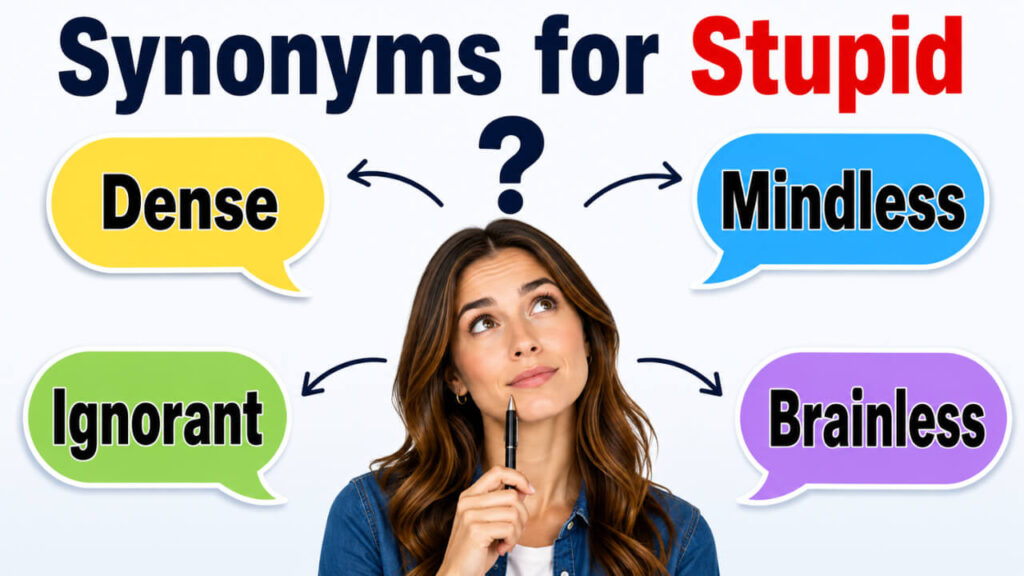
- Foolish: Showing poor judgment.
- Silly: Lacking seriousness or sense.
- Unwise: Not showing good judgment.
- Senseless: Having no clear reason.
- Absurd: Completely unreasonable.
- Ridiculous: Worthy of strong criticism or laughter.
- Irrational: Not based on reason.
- Illogical: Not following clear thinking.
- Unreasonable: Not fair or sensible.
- Mindless: Done without thought.
- Careless: Not giving enough attention.
- Thoughtless: Not considering results or feelings.
- Imprudent: Not careful or wise.
- Reckless: Acting without concern for danger.
- Foolhardy: Bold in a risky and foolish way.
- Rash: Acting too quickly without thought.
- Shortsighted: Ignoring future results.
- Misguided: Based on wrong ideas or advice.
- Mistaken: Wrong in belief or judgment.
- Wrongheaded: Stubbornly wrong in thinking.
- Unsound: Not based on good reasoning.
- Weak minded: Lacking firm or careful judgment.
- Dense: Slow to understand in informal speech.
- Clueless: Not understanding what is happening.
- Ignorant: Lacking knowledge about something.
- Naive: Too trusting or inexperienced.
- Simpleminded: Thinking in an overly simple way.
- Brainless: Very foolish in informal speech.
- Dim: Slow to understand in informal speech.
- Dull: Slow in thought or understanding.
- Unthinking: Acting without careful thought.
- Emptyheaded: Lacking serious thought.
- Half baked: Not fully planned or considered.
- Poorly reasoned: Based on weak logic.
- Flawed: Having serious faults.
- Faulty: Not correct or reliable.
- Baseless: Having no real support.
- Nonsensical: Making no sense.
- Pointless: Having no useful purpose.
- Ludicrous: Extremely unreasonable or laughable.
- Laughable: So weak that it seems silly.
- Preposterous: Completely unreasonable or unbelievable.
- Inane: Empty, silly, or lacking meaning.
- Trivial: Not important or serious.
- Childish: Immature or not sensible.
- Immature: Lacking adult judgment.
- Uninformed: Lacking needed knowledge.
- Injudicious: Not wise or sensible.
- Fatuous: Silly and pointless.
- Daft: Silly or foolish in informal speech.
Read Also:
Synonyms for Kind
Synonyms for Stupid by Context
When Stupid Means Foolish
Useful Synonyms: Foolish, unwise, imprudent, rash, reckless.
Example: It was foolish to ignore expert advice.
Best Use: Use these words when someone makes a poor choice or acts without good judgment.
When Stupid Means Illogical
Useful Synonyms: Illogical, irrational, unreasonable, unsound, poorly reasoned.
Example: The argument was illogical because it contradicted itself.
Best Use: Use these words when an idea, claim, or explanation does not follow reason.
When Stupid Means Silly
Useful Synonyms: Silly, childish, inane, daft, laughable.
Example: The joke was silly, but everyone enjoyed it.
Best Use: Use these words when something is not serious, mature, or practical.
When Stupid Means Careless
Useful Synonyms: Careless, thoughtless, mindless, unthinking, shortsighted.
Example: A careless mistake changed the final result.
Best Use: Use these words when the problem comes from lack of attention or planning.
When Stupid Means Lacking Knowledge
Useful Synonyms: Ignorant, uninformed, clueless, naive, mistaken.
Example: His answer was uninformed because he did not know the full situation.
Best Use: Use these words when someone lacks facts, experience, or awareness, not natural ability.
Another Word for Stupid
Direct Answer: The best single replacement for stupid is foolish because it describes poor judgment without always sounding as harsh as stupid.
The best alternative depends on context. Use unwise in formal writing, illogical for weak reasoning, silly for light situations, and careless for mistakes caused by lack of attention.
Original: That was a stupid decision.
Better Option: That was an unwise decision.
Original: His stupid argument made no sense.
Better Option: His illogical argument made no sense.
Original: I made a stupid mistake in the form.
Better Option: I made a careless mistake in the form.
Original: The rule sounds stupid to me.
Better Option: The rule sounds unreasonable to me.
When Not to Use “Stupid”
Direct Answer: Avoid stupid when it insults a person, weakens formal writing, or fails to explain the real problem.
Stupid can sound harsh, emotional, and unclear. In school, work, essays, and polite conversation, it is usually better to describe the action, idea, choice, or reasoning. This makes your sentence more respectful and more accurate.
Weak: He is stupid.
Better: He made an uninformed decision.
Weak: Your idea is stupid.
Better: Your idea seems impractical because it may cost too much.
Weak: That report is stupid.
Better: That report is poorly reasoned and missing key details.
Weak: I asked a stupid question.
Better: I asked a basic question because I needed clarification.
Words Commonly Confused With Stupid
Stupid vs Foolish: Stupid is harsher and more insulting, while foolish usually means lacking good judgment.
Stupid vs Silly: Stupid can be strongly negative, while silly is often lighter and less serious.
Stupid vs Ignorant: Stupid suggests poor sense or judgment, while ignorant means lacking knowledge about a topic.
Stupid vs Careless: Stupid is general, while careless means not paying enough attention.
Stupid vs Irrational: Stupid is broad and informal, while irrational means not based on reason.
Stupid vs Illogical: Stupid can describe many things, while illogical specifically describes weak reasoning.
Stupid vs Naive: Stupid sounds insulting, while naive means inexperienced or too trusting.
Which Synonym Should You Choose?
Choose foolish when describing poor judgment in a clear but less harsh way.
Choose unwise for formal writing, essays, reports, and professional communication.
Choose silly when the situation is light, harmless, or not serious.
Choose illogical when writing about weak reasoning, arguments, claims, or conclusions.
Choose irrational when a belief, fear, or reaction is not based on reason.
Choose careless when the problem comes from lack of attention.
Choose thoughtless when someone fails to consider another person’s feelings.
Choose absurd when an idea is extremely unreasonable or impossible to accept.
Choose ridiculous when you want strong criticism in casual or expressive writing.
Choose uninformed when someone lacks facts or knowledge about the topic.
Real Life Examples of “Stupid” in Sentences
Original: That was a stupid thing to say.
Better Option: That was a thoughtless thing to say.
Original: I made a stupid error on the test.
Better Option: I made a careless error on the test.
Original: His stupid plan failed quickly.
Better Option: His unwise plan failed quickly.
Original: The idea sounds stupid.
Better Option: The idea sounds impractical.
Original: She felt stupid after the mistake.
Better Option: She felt embarrassed after the mistake.
Original: That stupid rule causes delays.
Better Option: That unreasonable rule causes delays.
Original: He gave a stupid answer.
Better Option: He gave an uninformed answer.
Original: Their argument was stupid.
Better Option: Their argument was illogical.
Original: It was stupid to drive in that storm.
Better Option: It was reckless to drive in that storm.
Original: This is a stupid problem to have.
Better Option: This is a frustrating problem to have.
Synonym Groups and Usage Differences
Poor Judgment Group
Use: Foolish, unwise, imprudent, rash, and reckless describe bad decisions or risky choices.
Example: A reckless choice can create serious consequences.
Weak Reasoning Group
Use: Illogical, irrational, unsound, poorly reasoned, and unreasonable describe ideas that do not make sense.
Example: The conclusion was unsound because it ignored important evidence.
Light Casual Group
Use: Silly, daft, childish, inane, and laughable describe things that are not serious or mature.
Example: The silly comment made the tense room feel relaxed.
Careless Action Group
Use: Careless, thoughtless, mindless, and unthinking describe actions done without enough attention.
Example: A mindless mistake caused the numbers to be copied wrongly.
Lack of Knowledge Group
Use: Ignorant, uninformed, clueless, naive, and mistaken describe missing knowledge or experience.
Example: The speaker sounded uninformed about the actual problem.
Antonyms of Stupid
Intelligent: Able to understand, learn, and think well.
Smart: Quick in understanding or making good choices.
Wise: Showing good judgment and experience.
Sensible: Practical and reasonable.
Logical: Based on clear reason.
Rational: Guided by reason, not emotion.
Thoughtful: Careful and considerate in thinking.
Careful: Giving proper attention to avoid mistakes.
Prudent: Wise and careful about future results.
Informed: Having the facts or knowledge needed.
Reasonable: Fair, practical, and sensible.
Clever: Quick and skillful in thinking.
Comparison: Stupid vs Related Words
Stupid vs Foolish
Difference: Stupid is stronger and can sound insulting, while foolish focuses on poor judgment.
Example With Stupid: It was stupid to ignore the warning.
Example With Foolish: It was foolish to ignore the warning.
Stupid vs Silly
Difference: Stupid sounds more negative, while silly can be light, playful, or harmless.
Example With Stupid: That was a stupid excuse.
Example With Silly: That was a silly excuse.
Stupid vs Ignorant
Difference: Stupid suggests lack of sense or judgment, while ignorant means lacking information.
Example With Stupid: His comment sounded stupid.
Example With Ignorant: His comment sounded ignorant because he did not know the facts.
Stupid vs Illogical
Difference: Stupid is general and emotional, while illogical specifically means the reasoning does not make sense.
Example With Stupid: The explanation was stupid.
Example With Illogical: The explanation was illogical because it contradicted the evidence.
Stupid vs Careless
Difference: Stupid can describe poor judgment broadly, while careless means a mistake happened because of lack of attention.
Example With Stupid: I made a stupid spelling mistake.
Example With Careless: I made a careless spelling mistake.
Common Phrases and Expressions With Stupid
Stupid Mistake: A mistake caused by poor attention or judgment.
Stupid Idea: An idea that seems unreasonable or impractical.
Stupid Question: A question someone feels embarrassed to ask, though it may still be useful.
Stupid Decision: A choice made without enough thought.
Stupid Rule: A rule that seems unreasonable or ineffective.
Stupid Thing to Say: A comment that sounds thoughtless or inappropriate.
Stupid Behavior: Actions that show poor judgment.
Feel Stupid: Feel embarrassed, foolish, or ashamed after a mistake.
Stupid Argument: A weak or poorly reasoned argument.
Stupid Risk: A danger taken without a good reason.
Common Mistakes to Avoid
Using Stupid for People: Calling a person stupid can sound insulting. It is usually better to describe the action or decision.
Better Choice: Say “That was an unwise choice” instead of “You are stupid.”
Repeating Stupid Too Often: Too much repetition makes writing sound emotional and weak.
Better Choice: Use foolish, careless, illogical, unreasonable, or uninformed depending on the context.
Using Silly for Serious Problems: Silly sounds too light for dangerous or harmful behavior.
Better Choice: Use reckless, irresponsible, or unwise for serious actions.
Using Ignorant Incorrectly: Ignorant means lacking knowledge, not always lacking intelligence.
Better Choice: Use uninformed when the person simply does not have the facts.
Using Ridiculous in Formal Writing: Ridiculous can sound emotional or dismissive.
Better Choice: Use unreasonable, impractical, or poorly reasoned in essays and reports.
Making Vague Criticism: Saying “That is stupid” does not explain the problem.
Better Choice: Explain why something is illogical, risky, careless, or impractical.
Conclusion
Understanding synonyms for stupid helps you choose words that are clearer, more respectful, and more accurate. Use foolish for poor judgment, unwise for formal writing, illogical for weak reasoning, careless for mistakes, and silly for light situations. Since stupid can sound insulting, better alternatives often make your writing stronger. The best synonym depends on whether you mean lack of sense, poor planning, weak logic, risky behavior, or missing knowledge.
FAQs About Synonyms for Stupid
What are the best synonyms for stupid?
Answer: The best synonyms for stupid are foolish, silly, unwise, senseless, absurd, ridiculous, irrational, illogical, careless, and unreasonable.
What is a polite word for stupid?
Answer: A polite word for stupid is unwise, uninformed, mistaken, careless, or poorly reasoned, depending on the context.
What is a formal synonym for stupid?
Answer: Unwise, illogical, irrational, imprudent, and unreasonable are formal synonyms that work better in essays and professional writing.
Is foolish the same as stupid?
Answer: Foolish and stupid are similar, but foolish usually sounds less harsh and focuses more on poor judgment.
What is another word for a stupid idea?
Answer: Another word for a stupid idea is an illogical idea, unreasonable idea, impractical idea, absurd idea, or poorly reasoned idea.
What is the opposite of stupid?
Answer: The opposite of stupid can be intelligent, smart, wise, sensible, logical, rational, careful, informed, or reasonable.
Should I use stupid in formal writing?
Answer: It is better to avoid stupid in formal writing because it can sound emotional or rude. Use unwise, illogical, careless, or unreasonable instead.
