
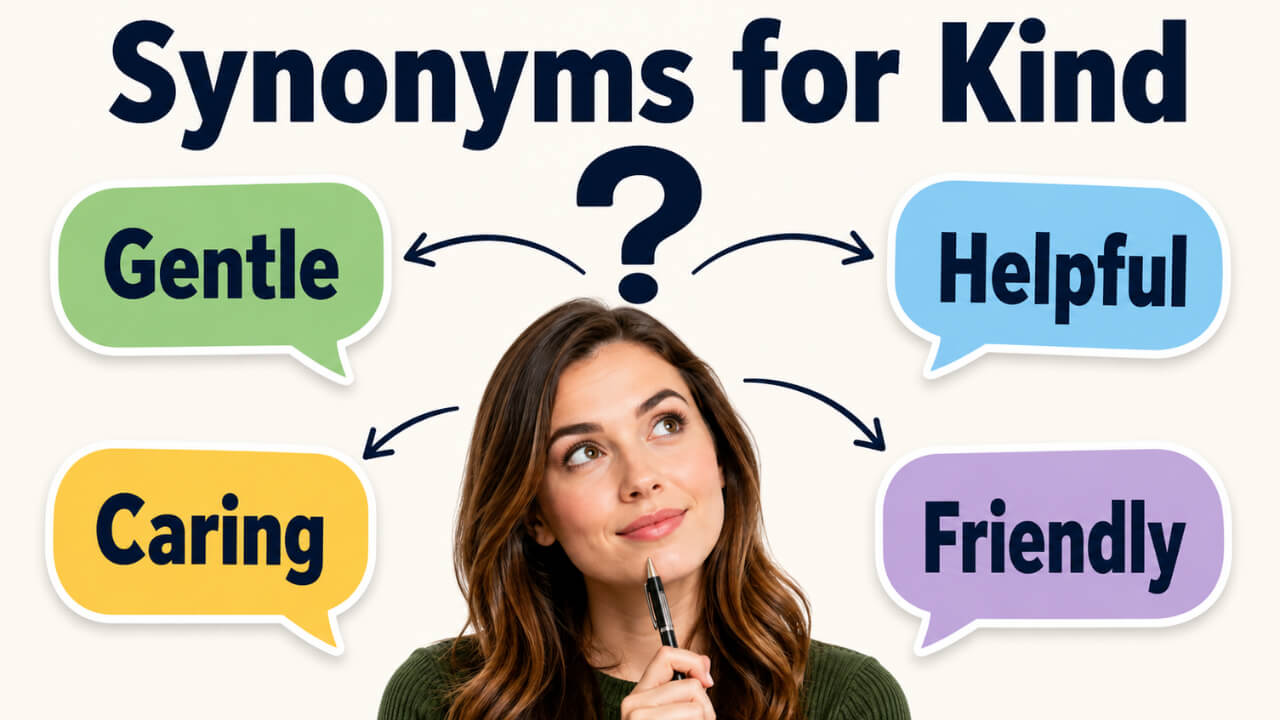
Quick Answer: The best synonyms for kind are compassionate, caring, generous, considerate, thoughtful, gentle, benevolent, helpful, warm, and gracious. Use compassionate when someone shows deep concern for others, considerate for polite awareness of feelings, generous for giving freely, gentle for soft behavior, and benevolent for formal writing about goodwill.
Pronunciation and Word Details
Word: Kind.
Pronunciation: /kaɪnd/.
Part of Speech: Adjective and noun.
Meaning: As an adjective, kind means caring, helpful, gentle, or considerate toward others.
US Pronunciation:
UK Pronunciation:
What Does “Kind” Mean?
Direct Answer: Kind means showing care, goodness, patience, or helpfulness toward another person, animal, or situation.
The word kind is most often used as an adjective. It describes someone who acts with compassion, respect, sympathy, or goodwill. A kind person may help others, speak gently, forgive mistakes, or show emotional support.
Kind can also work as a noun when it means a type or category, as in “a kind of flower.” In this article, the focus is on kind as a positive character word that describes attitude, behavior, and moral quality.
Meaning, Tone, and Context of “Kind”
Tone: Kind has a warm, polite, positive, and emotionally gentle tone.
Context: It is commonly used in everyday speech, personal writing, school essays, character descriptions, thank you messages, and professional communication.
Formality: Kind is neutral. It works in both casual and formal situations.
Emotional Strength: Kind is positive but not too intense. Words like compassionate, benevolent, and selfless can sound stronger.
Common Use: Kind often describes people, actions, words, gestures, offers, support, and behavior.
When and How to Use “Kind”
For Character: Use kind when describing a person who treats others with care and respect.
Example: She is a kind teacher who listens patiently to every student.
For Actions: Use kind when an action shows help, support, or goodwill.
Example: It was kind of him to carry the heavy bags.
For Speech: Use kind when words are gentle, respectful, or encouraging.
Example: Her kind words helped him feel calm.
For Gratitude: Use kind when thanking someone for help or support.
Example: Thank you for your kind offer.
For Emotional Support: Use kind when someone shows sympathy or comfort.
Example: His kind response made the difficult day easier.
Best Synonyms for Kind
Compassionate: Showing deep care and sympathy for others.
Example: A compassionate nurse comforted the patient during treatment.
Caring: Showing concern, attention, and emotional support.
Example: He is a caring friend who always checks on others.
Generous: Willing to give time, help, money, or support freely.
Example: Her generous nature made everyone feel welcome.
Considerate: Thinking about the feelings, needs, or comfort of others.
Example: It was considerate of you to call before visiting.
Thoughtful: Showing careful attention to what others may need or feel.
Example: His thoughtful note brightened her morning.
Gentle: Soft, calm, and careful in behavior or speech.
Example: She used a gentle voice with the frightened child.
Benevolent: Formal word for kind, charitable, and full of goodwill.
Example: The benevolent leader supported families in need.
Helpful: Ready to assist or make something easier for others.
Example: The helpful neighbor fixed the broken gate.
Warm: Friendly, kind, and emotionally welcoming.
Example: They gave us a warm greeting at the door.
Gracious: Kind, polite, respectful, and pleasant, especially in difficult situations.
Example: She gave a gracious reply even after the mistake.
50 Synonyms for Kind with Short Meanings
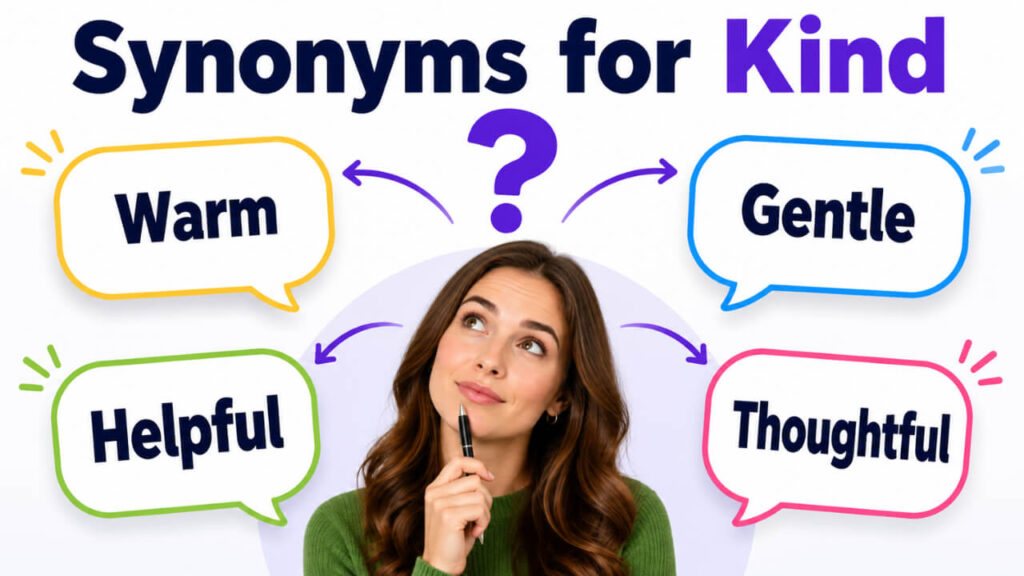
- Compassionate: Deeply caring toward others.
- Caring: Concerned and supportive.
- Generous: Willing to give freely.
- Considerate: Aware of other people’s feelings.
- Thoughtful: Attentive to someone’s needs.
- Gentle: Soft and calm in manner.
- Benevolent: Full of goodwill and kindness.
- Helpful: Ready to give assistance.
- Warm: Friendly and emotionally welcoming.
- Gracious: Polite, kind, and respectful.
- Sympathetic: Understanding another person’s feelings.
- Tender: Soft, loving, and caring.
- Goodhearted: Naturally kind and sincere.
- Charitable: Giving help to people in need.
- Humane: Showing mercy and compassion.
- Merciful: Willing to forgive or show pity.
- Patient: Calm and understanding with others.
- Friendly: Pleasant and welcoming.
- Supportive: Giving help and encouragement.
- Loving: Showing affection and care.
- Nurturing: Helping someone grow or feel safe.
- Selfless: Caring about others before oneself.
- Altruistic: Helping others without selfish reasons.
- Gentlehearted: Soft and caring in nature.
- Good natured: Pleasant, kind, and easy to like.
- Softhearted: Easily moved by sympathy.
- Bighearted: Very generous and caring.
- Warmhearted: Emotionally kind and friendly.
- Tenderhearted: Sensitive and compassionate.
- Understanding: Able to accept and respect feelings.
- Forgiving: Ready to excuse mistakes.
- Courteous: Polite and respectful.
- Respectful: Showing regard for others.
- Civil: Polite and controlled in behavior.
- Pleasant: Friendly and agreeable.
- Mild: Gentle and not harsh.
- Sweet: Kind, pleasant, and lovable.
- Nice: Pleasant and kind in a simple way.
- Decent: Morally good and fair.
- Good: Morally right or kind.
- Neighborly: Helpful and friendly like a good neighbor.
- Hospitable: Welcoming and generous to guests.
- Affectionate: Showing love and warmth.
- Empathetic: Able to feel or understand another person’s emotions.
- Encouraging: Giving confidence and support.
- Reassuring: Making someone feel safe or calm.
- Polite: Respectful in words and behavior.
- Kindhearted: Naturally caring and generous.
- Charitable minded: Inclined to help others.
- Good willed: Having positive and kind intentions.
Read Also:
Synonyms for Stupid
Synonyms for Kind by Context
When Kind Means Caring
Useful Synonyms: Compassionate, caring, sympathetic, empathetic, nurturing.
Example: She was compassionate toward the injured animal.
Best Use: Use these words when kindness includes emotional concern, sympathy, or protection.
When Kind Means Generous
Useful Synonyms: Generous, charitable, bighearted, selfless, benevolent.
Example: His generous donation helped many families.
Best Use: Use these words when kindness involves giving time, money, effort, or resources.
When Kind Means Gentle
Useful Synonyms: Gentle, tender, mild, softhearted, tenderhearted.
Example: The doctor gave a gentle explanation to the worried patient.
Best Use: Use these words when kindness appears through softness, patience, or calm behavior.
When Kind Means Polite
Useful Synonyms: Considerate, courteous, respectful, gracious, civil.
Example: Her considerate reply showed maturity and respect.
Best Use: Use these words when kindness is shown through manners, respect, and social awareness.
When Kind Means Helpful
Useful Synonyms: Helpful, supportive, encouraging, reassuring, neighborly.
Example: A supportive mentor can make learning less stressful.
Best Use: Use these words when kindness includes practical help, guidance, or emotional strength.
Another Word for Kind
Direct Answer: The best single replacement for kind is compassionate, especially when you mean someone is deeply caring and thoughtful.
The best alternative depends on the sentence. Use considerate for polite behavior, generous for giving, gentle for soft treatment, and helpful for useful support.
Original: She is kind to everyone in the class.
Better Option: She is compassionate toward everyone in the class.
Original: Thank you for your kind message.
Better Option: Thank you for your thoughtful message.
Original: He made a kind offer.
Better Option: He made a generous offer.
Original: Please be kind to the new student.
Better Option: Please be considerate toward the new student.
When Not to Use “Kind”
Direct Answer: Avoid kind when a more exact synonym can explain the type of goodness more clearly.
Kind can sound too general if the sentence needs detail. For formal essays, reports, or character analysis, words like compassionate, considerate, generous, or benevolent may be stronger. In casual speech, kind is natural, but repeating it too often can make writing sound plain.
Weak: She is kind, and her kind actions show she is kind.
Better: She is compassionate, and her thoughtful actions show genuine care.
Weak: The kind person gave money.
Better: The generous person gave money to support the family.
Weak: He used a kind voice.
Better: He used a gentle voice.
Weak: The manager was kind during the meeting.
Better: The manager was considerate during the meeting.
Words Commonly Confused With Kind
Kind vs Nice: Kind describes genuine care or helpfulness, while nice can simply mean pleasant or agreeable.
Kind vs Good: Kind focuses on caring behavior, while good can mean moral, useful, skilled, or suitable.
Kind vs Gentle: Kind describes care and goodwill, while gentle describes soft behavior, touch, tone, or manner.
Kind vs Generous: Kind may include many caring actions, while generous specifically means giving freely.
Kind vs Compassionate: Kind is general, while compassionate suggests deeper sympathy for suffering or difficulty.
Kind vs Polite: Kind involves care, while polite focuses on manners, respect, and proper behavior.
Which Synonym Should You Choose?
Choose compassionate when describing deep care, sympathy, or concern for someone’s pain.
Choose considerate when writing about polite behavior, respect, or awareness of another person’s needs.
Choose generous when someone gives time, money, help, gifts, or support freely.
Choose gentle when describing a soft voice, careful action, calm attitude, or mild behavior.
Choose benevolent in formal writing when describing goodwill, charity, leadership, or moral kindness.
Choose thoughtful when someone does something careful, personal, and meaningful.
Choose helpful when kindness appears through practical assistance or useful action.
Choose warm when describing friendly greetings, welcoming behavior, or emotional comfort.
Choose gracious when kindness appears with politeness, dignity, and respect.
Real Life Examples of “Kind” in Sentences
Original: She is kind to her younger brother.
Better Option: She is gentle with her younger brother.
Original: He gave a kind answer.
Better Option: He gave a thoughtful answer.
Original: It was kind of you to help.
Better Option: It was generous of you to help.
Original: The teacher was kind to the nervous student.
Better Option: The teacher was compassionate toward the nervous student.
Original: They sent kind wishes after the accident.
Better Option: They sent heartfelt wishes after the accident.
Original: Our neighbor is very kind.
Better Option: Our neighbor is very helpful.
Original: Her kind smile made me feel safe.
Better Option: Her warm smile made me feel safe.
Original: Please use kind words.
Better Option: Please use considerate words.
Original: He showed a kind attitude.
Better Option: He showed a caring attitude.
Original: A kind leader listens to people.
Better Option: A benevolent leader listens to people.
Synonym Groups and Usage Differences
Caring Group
Use: Compassionate, caring, sympathetic, empathetic, and nurturing show emotional concern.
Example: A compassionate friend listens without judging.
Giving Group
Use: Generous, charitable, bighearted, and selfless describe kindness through giving.
Example: A generous host made sure every guest felt welcome.
Gentle Behavior Group
Use: Gentle, tender, mild, and softhearted describe kindness through calm, careful behavior.
Example: His gentle manner helped the child relax.
Polite Respect Group
Use: Considerate, courteous, respectful, civil, and gracious describe kindness through manners.
Example: Her courteous response kept the conversation peaceful.
Helpful Support Group
Use: Helpful, supportive, encouraging, reassuring, and neighborly describe kindness through useful action.
Example: A supportive coach gives confidence during difficult practice.
Antonyms of Kind
Cruel: Intentionally causing pain or suffering.
Mean: Unkind, hurtful, or unpleasant.
Harsh: Severe, rough, or lacking gentleness.
Selfish: Caring mainly about oneself.
Uncaring: Not showing concern for others.
Cold: Emotionally distant or unfriendly.
Rude: Disrespectful or impolite.
Heartless: Showing no sympathy or mercy.
Unhelpful: Not giving assistance or support.
Inconsiderate: Not thinking about other people’s feelings or needs.
Comparison: Kind vs Related Words
Kind vs Compassionate
Difference: Kind is a broad word for caring behavior, while compassionate means feeling and showing deep sympathy.
Example With Kind: She was kind to the lost child.
Example With Compassionate: She was compassionate toward the child who had been crying.
Kind vs Considerate
Difference: Kind means caring, while considerate means thinking about how your actions affect others.
Example With Kind: He was kind enough to help.
Example With Considerate: He was considerate enough to lower his voice during the call.
Kind vs Generous
Difference: Kind can describe any caring action, while generous focuses on giving freely.
Example With Kind: She made a kind gesture.
Example With Generous: She made a generous donation.
Kind vs Gentle
Difference: Kind describes goodwill, while gentle describes softness in speech, touch, or behavior.
Example With Kind: The nurse was kind to the patient.
Example With Gentle: The nurse used a gentle tone with the patient.
Kind vs Nice
Difference: Kind usually suggests sincere care, while nice can mean pleasant, friendly, or agreeable.
Example With Kind: His kind support helped her recover.
Example With Nice: He gave a nice compliment after the speech.
Common Phrases and Expressions With Kind
Kind Person: Someone who treats others with care and respect.
Kind Words: Gentle, supportive, or encouraging words.
Kind Gesture: A helpful or caring action.
Kind Heart: A caring and generous nature.
Kind Soul: A person with a gentle and caring spirit.
Kind Offer: A generous or helpful proposal.
Kind Reminder: A polite and gentle reminder.
Kind Response: A respectful and caring reply.
Kind Deed: A good action done to help someone.
Kind Nature: A naturally caring personality.
Common Mistakes to Avoid
Repeating Kind Too Often: Use synonyms like compassionate, thoughtful, helpful, or generous to avoid dull writing.
Choosing Nice Instead of Kind: Nice can sound weaker when you mean genuine care or moral goodness.
Using Generous for Every Kind Action: Generous works best when someone gives something, not when they simply speak gently or act respectfully.
Confusing Gentle With Kind: Gentle describes softness, while kind describes care and goodwill.
Using Benevolent in Casual Speech: Benevolent can sound formal, so use it in essays, reports, or serious descriptions.
Making the Sentence Too Vague: Instead of saying “a kind thing,” explain the action clearly.
Better Choice: Say “a thoughtful note,” “a generous offer,” or “a compassionate response.”
Conclusion
Learning synonyms for kind helps you describe care, respect, generosity, and gentle behavior with more accuracy. Use compassionate for deep sympathy, considerate for polite awareness, generous for giving, gentle for soft behavior, and thoughtful for meaningful care. The word kind is useful in everyday writing, but stronger alternatives can make your sentences clearer, richer, and more specific. Choose the synonym that best matches the action, tone, and situation.
FAQs About Synonyms for Kind
What are the best synonyms for kind?
Answer: The best synonyms for kind are compassionate, caring, generous, considerate, thoughtful, gentle, helpful, warm, gracious, and benevolent.
What is another word for a kind person?
Answer: Another word for a kind person is compassionate. You can also use caring, generous, thoughtful, or kindhearted.
Is nice the same as kind?
Answer: Nice and kind are similar, but not exactly the same. Nice often means pleasant, while kind means genuinely caring or helpful.
What is a formal synonym for kind?
Answer: Benevolent is a strong formal synonym for kind. Compassionate, considerate, and gracious also work well in formal writing.
What is a stronger word than kind?
Answer: Compassionate is often stronger than kind because it suggests deep emotional care and sympathy.
What is the opposite of kind?
Answer: The opposite of kind can be cruel, mean, harsh, selfish, uncaring, rude, or heartless, depending on the sentence.
Which synonym for kind is best for essays?
Answer: Compassionate, considerate, benevolent, and generous are strong choices for essays because they sound clear, specific, and thoughtful.
